


Regency Table Mirror Drawers
These regency table mirror drawers offer period charm and practical surface storage, uniting timber frames with useful compartments.
Regency Table Mirror Drawers
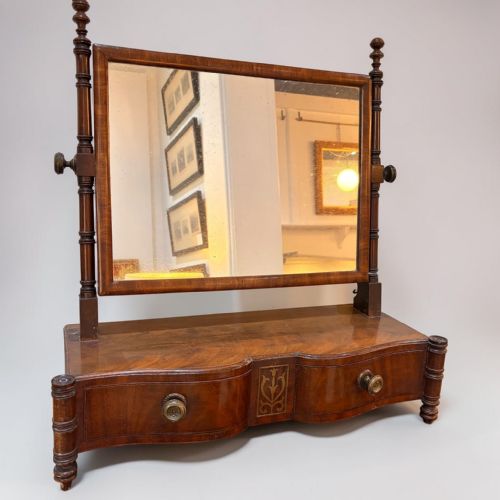
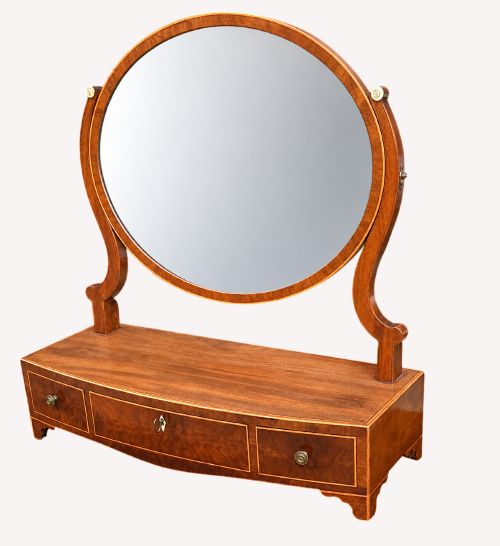
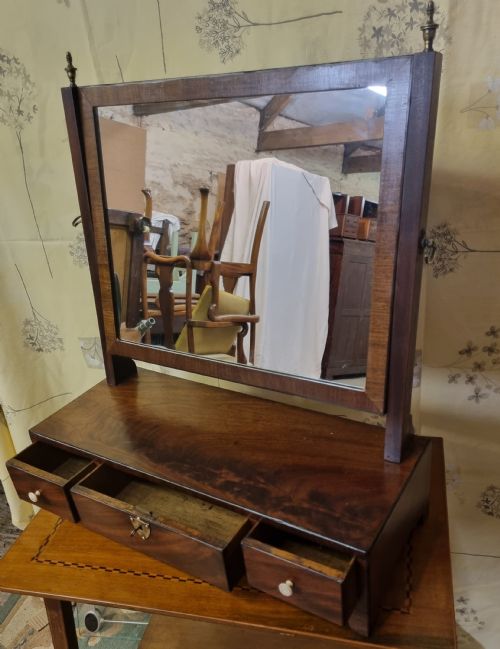
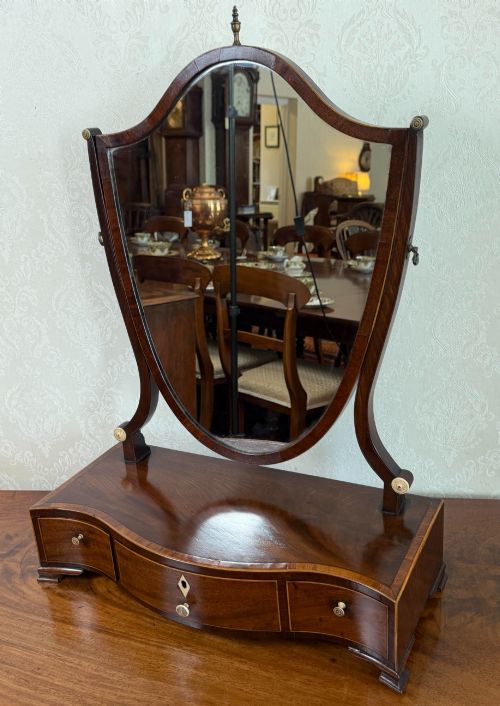
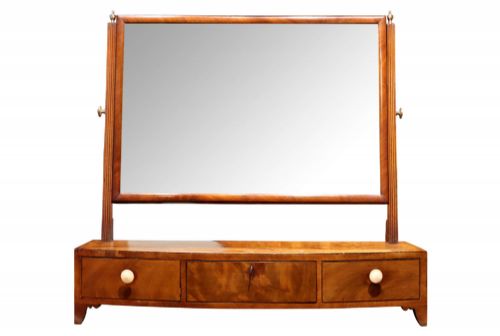
When you search for regency table mirror drawers, you encounter compact looking glasses designed to sit upon a chest or dressing surface. Most examples span the Regency and Georgian eras, taking the form of mahogany dressing table mirrors equipped with small storage compartments in the base.
The assortment on this page relies heavily on nineteenth-century pieces, including specific Regency and Victorian interpretations. Forms range from bow fronted and serpentine shapes to simple swivelling mirrors mounted on upright supports.
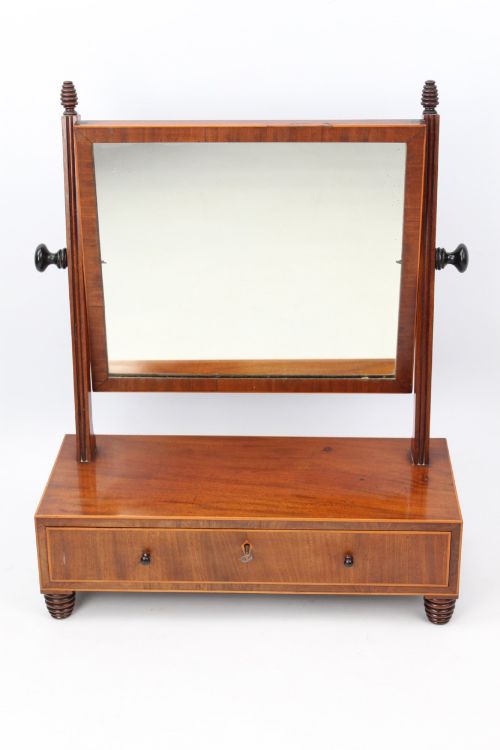
Makers of the period favoured rich timber grains, often enhancing the base with boxwood, ebony, or satinwood inlay. These pieces combine a functional reflecting glass with lidded compartments or small drawers intended for trinkets and daily accessories.
Materials and Construction
The primary timber across these pieces is solid and veneered mahogany, frequently paired with secondary woods and decorative stringing. Cabinetmakers applied contrasting boxwood inlay or satinwood panels to accent the drawer fronts and upright supports.
Original mirror glass sits within adjustable frames that pivot on turned brass screw knobs or side pins. The lower section incorporates fitted drawers constructed with traditional joinery, often retaining small bone or wooden pull knobs.
Materials recorded across the inventory include solid mahogany, glass, brass, bone, boxwood, satinwood, and mirror glass.
Judging Quality
Superior examples display crisp cabinet work with tightly fitted drawer boxes and clean dovetail joints. The selection of mahogany grain, alongside the precision of boxwood or ebony inlay, dictates the visual refinement of the base.
The condition and presence of the original mirror plate, together with intact brass hardware and smooth-turning pivot arms, elevate an individual piece. Lesser examples often feature replaced glass, mismatched drawer pulls, or clumsy timber repairs.
The Regency Table Mirror Drawers Glossary
- Toilet mirror
- A smaller table-top mirror traditionally used for personal grooming at a washstand or dressing chest.
- Swivel mirror
- A glass plate mounted on pivots between two upright arms, allowing the user to tilt the angle of reflection.
- Bow front
- A convex, curved cabinet front that projects outward in a smooth arc, frequently seen on the base of Regency pieces.
- Stringing
- Narrow inlay of a contrasting wood, such as boxwood or ebony, used in thin lines to outline panels and drawer edges.
Regency Table Mirror Drawers: Frequently Asked Questions
Where should I place a table mirror?
These mirrors suit placement on top of a heavy chest of drawers, a low sideboard, or a dedicated dressing table in a bedroom.
Ensure the surface is stable and deep enough to support the footprint of the base without overhang.
How do I adjust the mirror angle?
Most pieces utilise brass screw knobs or pins inserted through the upright side supports into the frame.
Turn these thumbscrews gently to loosen the grip, tilt the glass to your preferred position, and tighten them again to hold it steady.
Are the drawer compartments deep?
The drawers integrated into the base are typically shallow, designed originally for holding small personal items, jewellery, or cosmetic accessories.
They offer modest organisation rather than heavy storage capacity.
How do I distinguish Regency from Victorian examples?
Regency pieces often display restrained classical proportions, crisper mahogany figuring, and delicate stringing or brass accents.
Victorian interpretations can be larger and heavier in build, sometimes incorporating different secondary timbers or bolder decorative turns.