


Serpentine Base Toilet Mirror
A serpentine base toilet mirror brings a subtle, flowing curve to a dressing table, combining practical reflection with Georgian and Victorian craftsmanship.
Serpentine Base Toilet Mirror
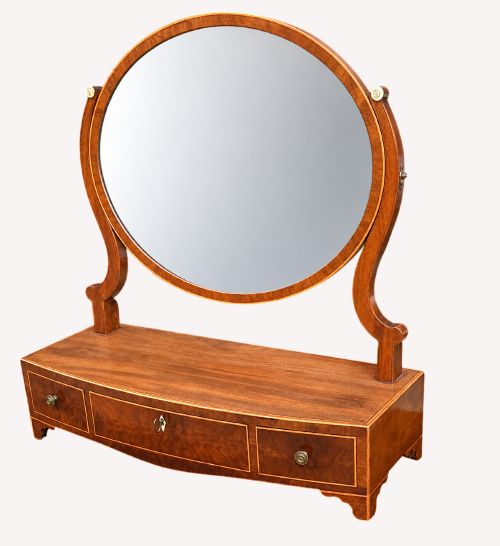
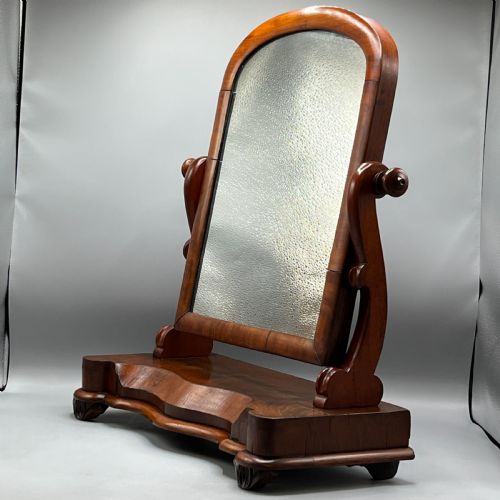
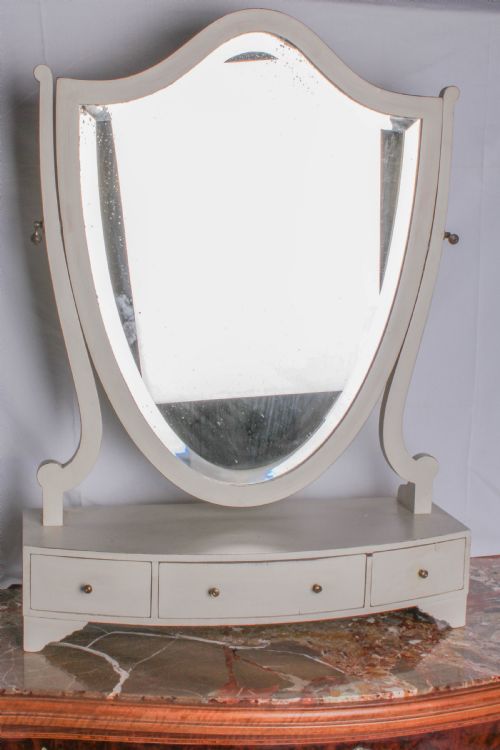
When you search for a serpentine base toilet mirror, you are looking at tabletop dressing mirrors featuring a distinctive undulating front edge to the stand or drawer base. The pieces seen across these listings span the Georgian, Victorian, and Edwardian eras, with mahogany being the predominant timber alongside occasional painted finishes.
Most examples you will encounter sit upon a set of small feet and incorporate either rectangular or oval mirror plates held by upright arms. The forms range from simple box bases to multi-drawer configurations designed for vanity items.
The aesthetic bridges utilitarian bedroom furniture and cabinet-maker artistry, with makers utilising the serpentine curve to catch the light and soften the boxy geometry of traditional dressing mirrors.
Materials and construction
The construction relies heavily on solid mahogany and mahogany veneers, often enhanced with boxwood inlay detailing along the edges and drawer fronts. Cabinet makers shaped the characteristic undulating front by carefully cutting and planning solid timber blocks or bending laminated layers.
Mirror plates are held within adjustable frames mounted on brass pivot screws, allowing the glass to tilt to the desired angle. Secondary woods line the interior drawers, while painted variants employ a smooth pigment finish over a prepared wooden base.
Serpentine Base Toilet Mirror Retail Price Guide 2026
Typical asking prices for serpentine base toilet mirror among the pieces listed under this phrase on Sellingantiques today, from the lower quarter to the upper quarter. They describe what is for sale here now, not the wider market.
Several examples include tiny drawers within the serpentine base, perfect for hiding small secrets or misplaced cuff-links.
Judging the standard
Quality in these mirrors rests upon the fluidity of the serpentine sweep and the crispness of any inlay work. A superior piece displays harmonious proportions between the pivoting glass frame and the undulating lower base, where the curves appear intentional and balanced rather than rigid.
The integration of the drawer housing dictates the standard of the joinery, with tight dovetailing and sympathetic timber selection separating workshop pieces from mass production. Original brass fittings and the survival of clear, deep-toned timber patination elevate an example above later replacements.
The Serpentine Base Toilet Mirror Glossary
- Serpentine base
- A furniture base featuring a double-curved front edge that bends inward at the centre and outward at the ends. This undulating profile requires precise woodworking skill to execute cleanly.
- Toilet mirror
- A smaller mirror designed to sit on top of a dressing chest, table, or washstand. These pieces were essential for morning grooming before larger wardrobe mirrors became common.
- Swing mirror
- A glass plate hung upon vertical side arms or pivots that allows the user to tilt the angle of reflection. The tension is typically adjusted using brass thumbscrews.
- Box base
- The lower section of a dressing mirror that incorporates one or more small drawers. It serves both as a stable foundation and storage for small personal items.
Serpentine Base Toilet Mirror: Frequently Asked Questions
What is a serpentine base toilet mirror?
It is a tabletop dressing mirror featuring an undulating, wave-like front edge on its lower wooden stand or drawer section.
These pieces were designed for bedrooms and dressing rooms to assist with grooming and personal care.
How old are these mirrors usually?
The examples on this page date primarily from the Georgian, Victorian, and Edwardian periods, spanning the eighteenth and nineteenth centuries.
Craftsmen built them using traditional timber construction methods that reflect the prevailing design tastes of each era.
Were these mirrors used for shaving?
Many table-top and toilet mirrors served dual purposes for both shaving and general dressing in bedrooms where light was best near a window.
The adjustable swing frame allowed users to alter the angle according to their height and the available daylight.
What woods were used to make them?
Mahogany is the primary timber found in these listings, often complemented by boxwood inlay and brass hardware.
Some later Victorian and Edwardian examples also feature painted wood finishes.