
Vintage Swing Toilet Mirror
These vintage swing toilet mirrors offer adjustable reflection and practical tabletop storage, originating primarily from the Georgian, Victorian, and Edwardian eras.
Vintage Swing Toilet Mirror
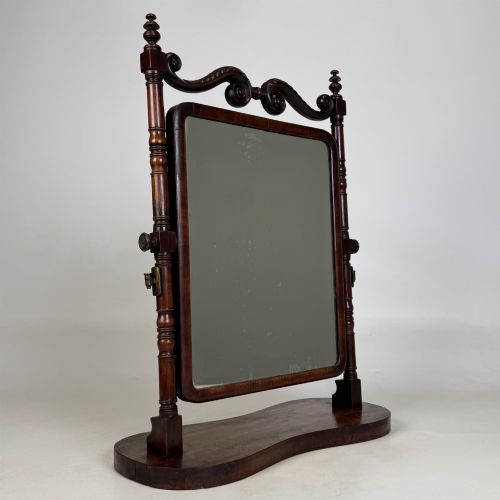
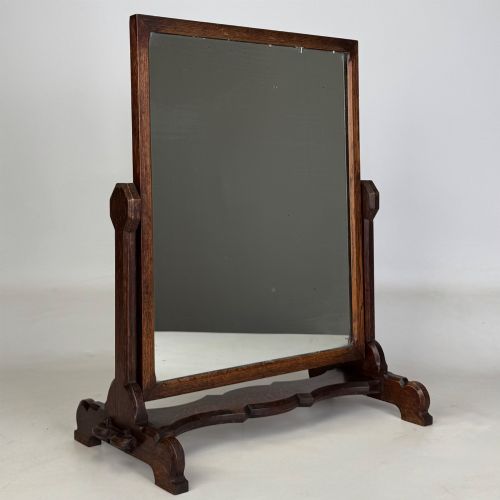
A vintage swing toilet mirror functions as a movable glass plate set within a freestanding frame, designed for placement upon a dressing table or bureau. These pieces belong to the broader categories of dressing table mirrors, toilet mirrors, and table mirrors.
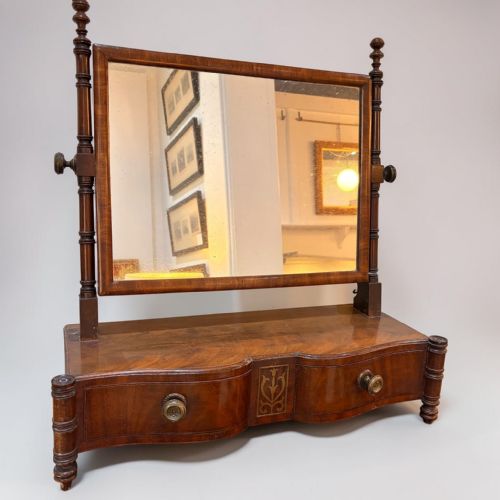
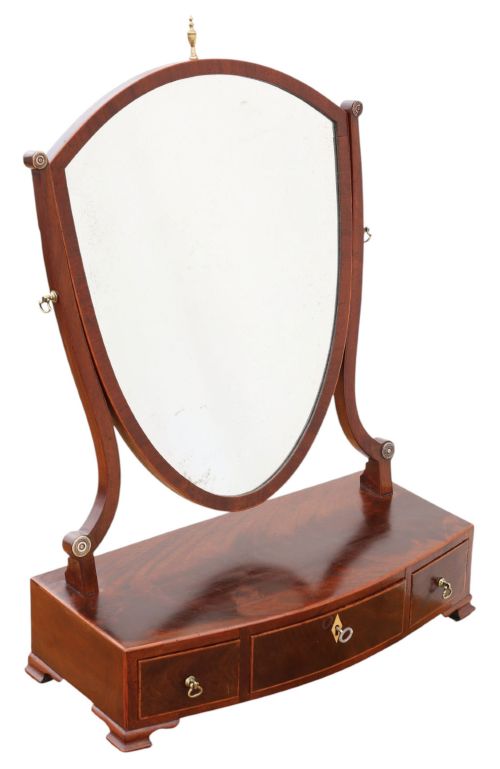
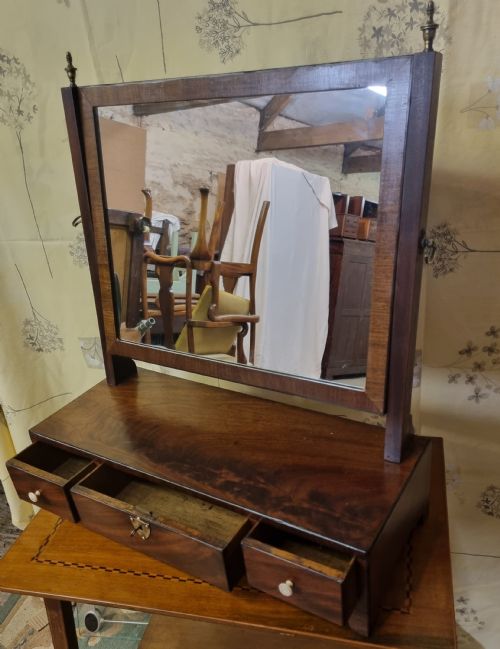
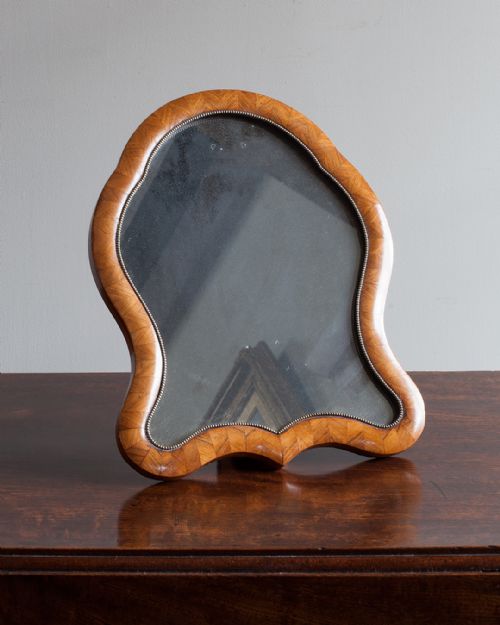
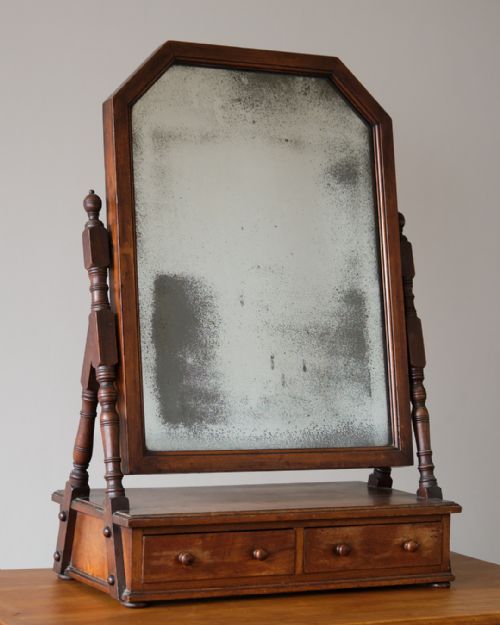
The version you encounter most frequently on this page is the mahogany swing mirror from the 19th century, often fitted with a small box base containing drawers. Variations span from walnut and satinwood constructions to oak and kingwood examples dating back to the 18th century.
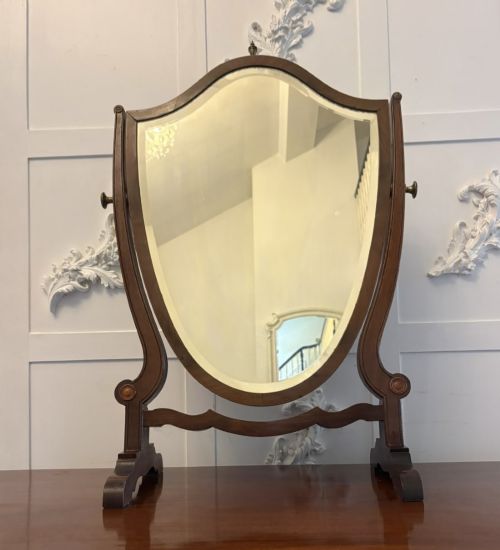
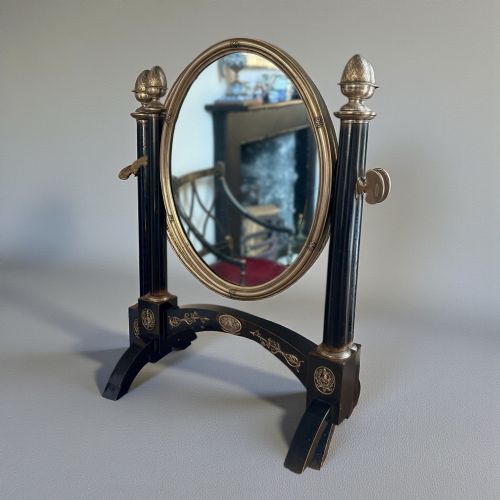
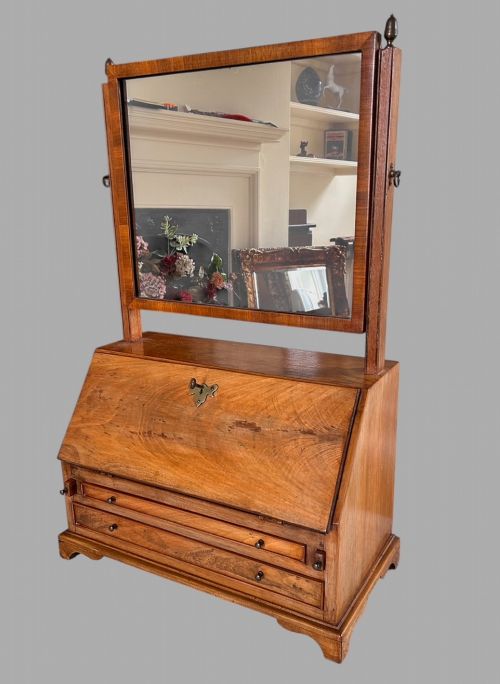
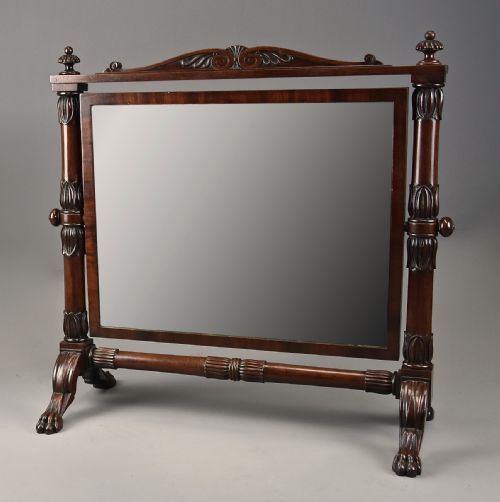
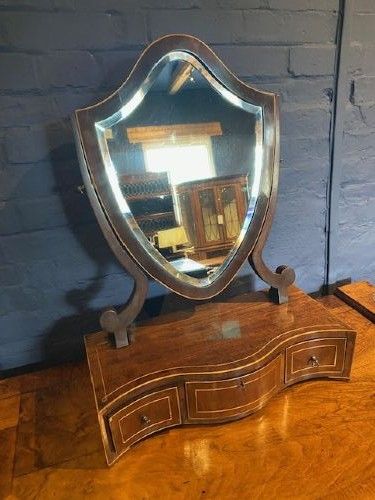
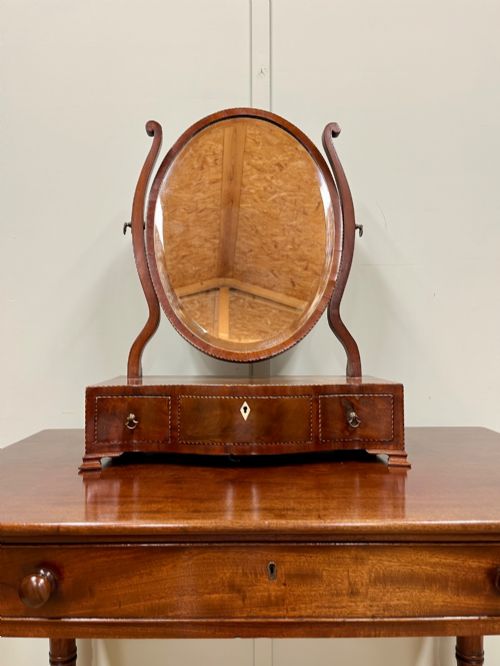
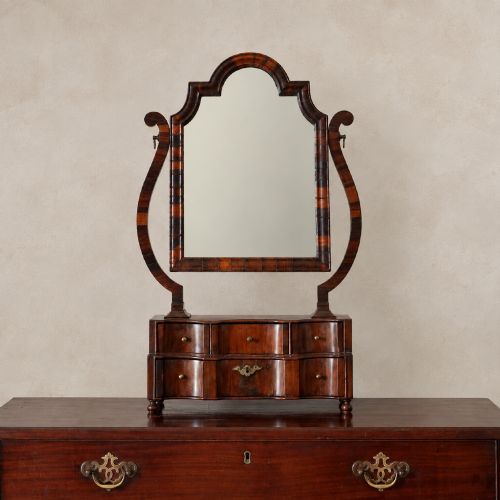
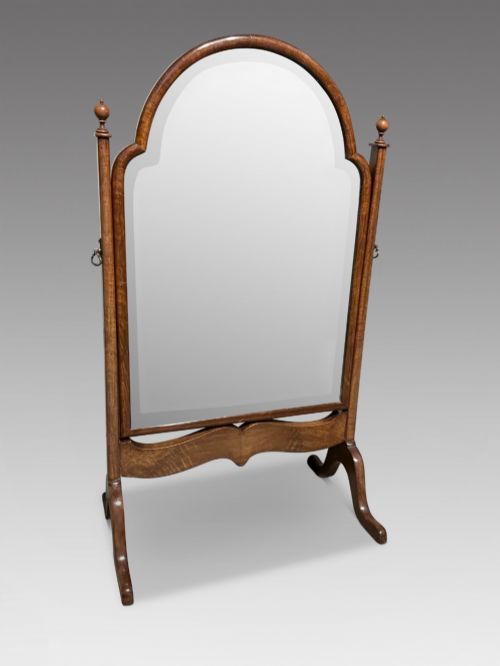
Forms range from simple shield and oval mirror plates supported by upright arms to larger cheval designs and table-top bureau combinations. Origins trace through Georgian, Regency, Victorian, and Edwardian periods, alongside regional interpretations such as Dutch marquetry and Scottish cabinet-making.
Materials and construction methods
Cabinet-makers relied heavily on timbers such as mahogany, walnut, and satinwood, frequently enhanced by crossbanding, veneer, and intricate inlay work. Structural elements sometimes incorporate secondary woods like pine or oak within the drawer carcases and backing boards.
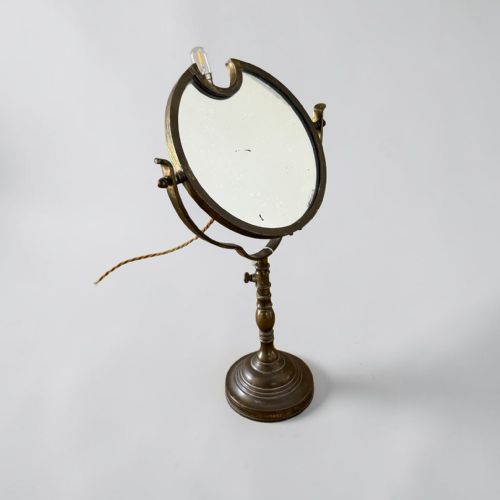
The pivoting mechanism typically relies on brass screw pins, side arms, and pivots secured to upright standards, allowing the glass plate to tilt smoothly. Mirror glass is set into rebated wooden frames, while smaller examples feature fitted boxes of dovetailed construction for stability on tabletops.
Listings feature pieces spanning from the 18th century through to the Edwardian era, predominantly constructed in mahogany and walnut.
Distinctions in quality
The refinement of the cabinet-making dictates the standing of a piece, observable in the choice of figured timber veneers and the precision of the dovetail joinery in the base drawers. Superior examples display balanced proportions, crisp crossbanding, and well-executed string inlay rather than plain surfaces.
Originality of the components plays a significant role, particularly regarding the mirror glass, brass hardware, and the timber backboards. Pieces that retain their period brass screw caps, intact pivot mechanisms, and unreplaced silvered mirror plates hold greater integrity.
Heal & Sons·P & MA Nicholson
The Vintage Swing Toilet Mirror Glossary
- Shield mirror
- A dressing glass cut into the shape of a heraldic shield, popular during the late 18th and early 19th centuries. This outline often sat atop a serpentine drawer base.
- Cheval mirror
- A large freestanding swing mirror supported by four pillar legs, allowing the user to view their entire reflection. Table-top versions scale this form down for dressing table use.
- Crossbanding
- A strip of veneer applied to the borders of a wooden surface where the grain runs at right angles to the central panel. This technique frames the primary wood on high-grade toilet mirrors.
- Parcel-gilt
- Partially gilded woodwork, where thin layers of gold leaf highlight specific carved details or mouldings against a dark timber ground such as mahogany.
- Dovetail
- A joint formed by interlocking wedge-shaped fingers, used extensively to construct the small drawer boxes beneath these mirrors. Clean, tight dovetails indicate skilled workmanship.
Vintage Swing Toilet Mirror: Frequently Asked Questions
Where were these mirrors placed?
These pieces sat primarily on top of dressing tables, chests of drawers, or bureau desks to assist with grooming and dressing. Their compact footprints allowed them to be moved around bedrooms as needed.
In period interiors, they formed a central feature of the dressing area, often paired with matching washstands and wardrobes.
How do I date a mirror?
Dating relies on observing the timber species, edge profiles, hardware, and construction methods used in the frame and base. Georgian pieces frequently utilise mahogany with fine stringing, while Victorian examples often feature heavier proportions and darker finishes.
Secondary woods and drawer construction also offer clues, as machine-sawn timber points towards later 19th-century or Edwardian production.
Why do some have drawers?
The box base fitted beneath the swing frame provided secure storage for small personal items, jewellery, and cosmetics. These compartments doubled as weighted foundations to keep the mirror stable while tilting.
Drawer configurations range from a single long compartment to small banks of two or three drawers.
Are the mirror plates original?
Many older mirrors have replacement glass because the original silvering degraded over decades of exposure to light and moisture. Replacement glass often appears flatter and brighter than antique mercury or early silvered plates.
Signs of age in original glass include light foxing, minor speckling, and slight distortions in the reflection.