

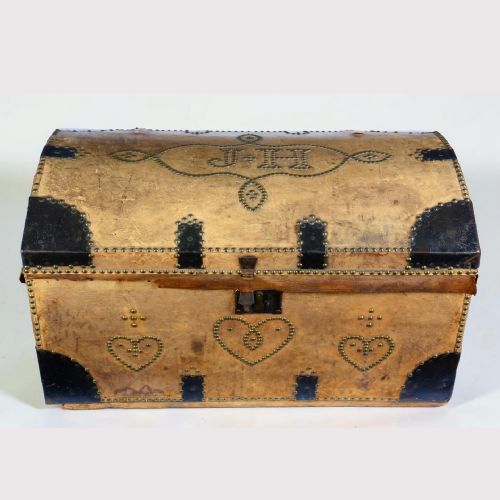


Vintage Studded Travel Chest
A vintage studded travel chest is a robust piece of historic luggage built for movement, offering rich texture and rugged utility to modern interiors.
Vintage Studded Travel Chest
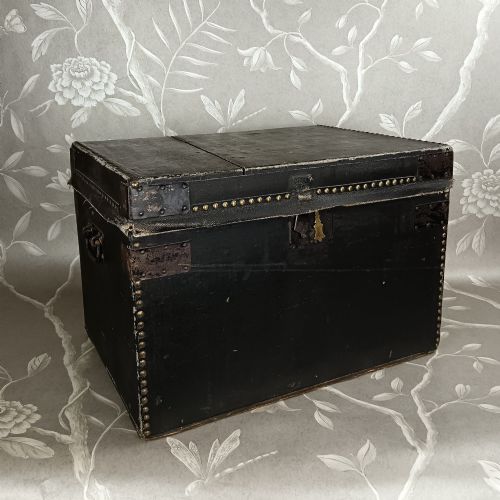
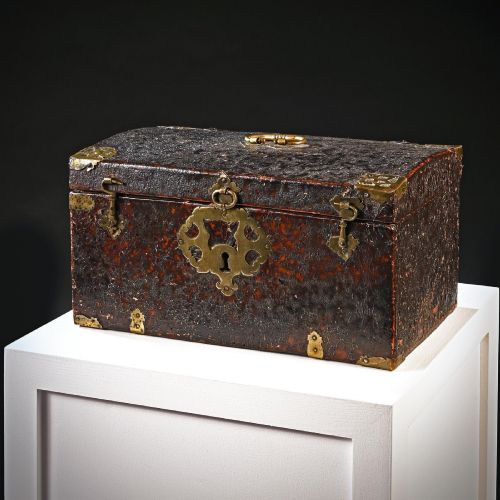
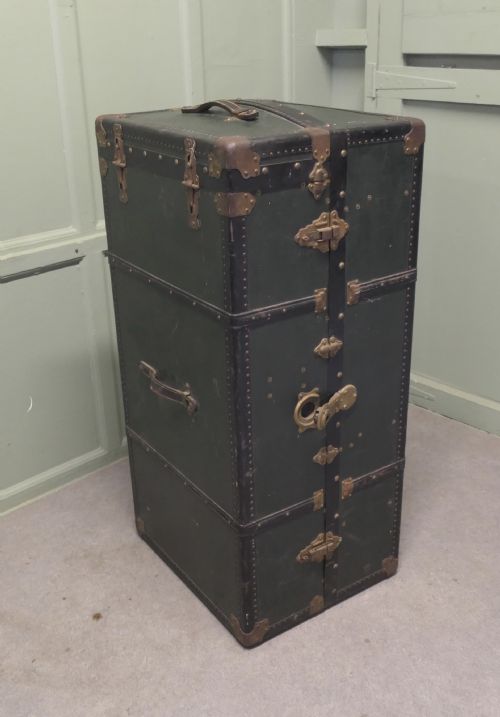
When you search for a vintage studded travel chest, you encounter heavy functional luggage created to withstand the rigours of coaching, sea voyages and distant campaigns. These sturdy receptacles range from late seventeenth-century coffers to late nineteenth-century Victorian campaign pieces and early twentieth-century steamers.
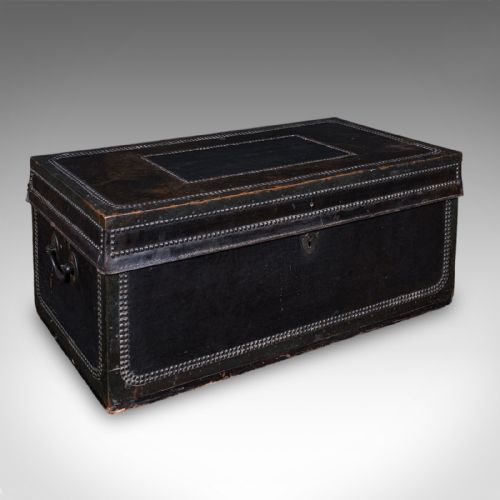
The most common examples on this page date from the nineteenth century, particularly the Victorian era and the Regency period. They take forms such as domed trunks, flat-topped coaching chests and compact camphorwood storage boxes designed for utilitarian travel.
Makers and origins vary widely, featuring English, French, Spanish and China Trade pieces alongside specialised regional boxes like East African Zanzibar chests. Each variant reflects the specific transit needs of its era, from horse-drawn carriages to steamships.
Materials and Construction
Construction relies on a sturdy core of wood, such as camphorwood, teak or general timber, encased in protective layers of leather, hide or canvas. This foundational shell is then reinforced with structural bands of iron or brass to endure the impacts of long journeys.
Metal studwork, brass tacks and corner caps serve a dual purpose by securing the leather or hide tightly to the wooden frame while providing decorative visual rhythm across the surface. Specialised hardware, including recessed drop handles and secure locks, completes the functional build.
Many camphorwood chests retain a faint, lingering aroma of natural wood oil that kept Victorian moths at bay across the centuries.
Assessing Quality and Craftsmanship
Quality separates ordinary utility containers from exceptional pieces through the integrity of the internal fittings, the choice of secondary timbers like camphorwood, and the precision of the exterior metalbound framing. Superior examples often retain original maker labels, specialised paper linings, or fitted interior compartments designed for specific garments.
The execution of the decorative brass studwork and the selection of premium leather or hide also dictate the standard of the piece. Well-preserved original surfaces and robust structural hardware indicate superior workshop origin and careful historical stewardship.
Samuel Pratt·Wm. Insall of Bristol·Arthur Wannop
The Vintage Studded Travel Chest Glossary
- Campaign trunk
- A portable storage chest designed for military officers or travellers, often featuring recessed handles and robust metal reinforcement.
- Camphorwood
- An aromatic timber frequently used for campaign chests due to its natural insect-repellent properties.
- Coaching trunk
- A heavy-duty travel chest constructed to be strapped to the roof or boot of a horse-drawn stagecoach.
- Domed trunk
- A chest featuring a curved lid designed to shed rain effectively during outdoor transit.
- Portmanteau
- A large travelling case or bag, typically opening into two equal compartments for garments.
- Zanzibar chest
- A distinct type of heavily brass-studded wooden chest originating from East African trade routes.
Vintage Studded Travel Chest: Frequently Asked Questions
What is a vintage studded travel chest?
A vintage studded travel chest is a historic piece of luggage constructed from wood and covered in leather, hide or canvas with metal reinforcement and brass tacks.
These pieces were originally built to transport belongings securely across land and sea during the seventeenth, eighteenth and nineteenth centuries.
How were these chests used?
Travellers utilised these chests to pack clothing, documents and personal valuables for long journeys by coach, ship or train.
They were designed to endure rough handling, stacking in cargo holds and strapping to the exterior of carriages.
How do I style a travel chest at home?
These chests function well as living room coffee tables, end of bed storage solutions, or decorative accent pieces in a hallway.
Their robust textures and metal details add character and historical depth to both traditional and modern interiors.
How do I date a travel chest?
Dating relies on examining the construction methods, locking mechanisms, materials and any associated maker labels or stamps.
Earlier examples from the seventeenth and eighteenth centuries often feature simpler joinery and heavy hide, while Victorian and Edwardian pieces show more sophisticated internal fittings and varied hardware.
Are these chests still suitable for travel?
While historic travel chests possess durable wooden frames and metal bindings, modern transit subjects luggage to stresses they were not recently maintained to endure.
Collectors generally treat them as static decorative furniture or domestic storage rather than active luggage.