






Vintage Stream Landscape Art
Vintage stream landscape art captures rural waters and pastoral banks through the eyes of painters working from the late nineteenth century to the post-war period.
Vintage Stream Landscape Art
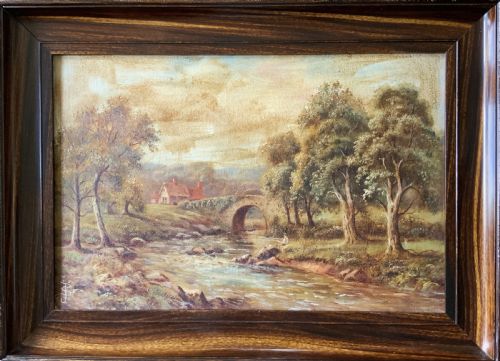
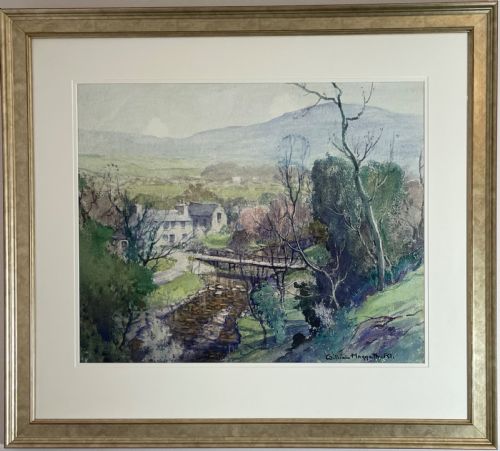
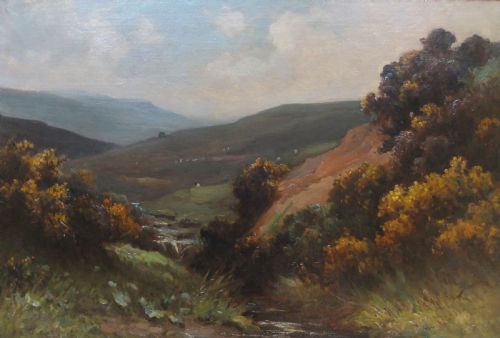
Vintage stream landscape art encompasses oil paintings and watercolour paintings depicting rural waterways, pastoral streams, and wooded riversides. These works emerge from diverse artistic traditions including British Impressionism, Victorian Realism, and early twentieth-century fine art.
The pieces on this page span from the nineteenth century through the Edwardian era and into the mid-twentieth century, capturing countryside scenes from Devonshire to Yorkshire and Switzerland. Buyers encounter both substantial canvas works rendered in oil and delicate watercolours on paper.
Rural idylls, moorland streams, and woodland areas at sunset form the primary subjects of these works. Painters record the specific light and atmosphere of countryside watercourses using traditional painterly techniques.
What varies in quality
The strength of composition and the handling of natural light distinguish exceptional works from standard decorative pieces. Masterful handling of water reflections and atmospheric perspective elevates a landscape beyond mere topographical record.
Condition of the canvas or paper surface, along with the integrity of the original medium, determines the longevity and visual impact of the artwork. Works retaining their original pigments without excessive restoration hold greater artistic integrity.
Listings feature works executed in oil paint, oil on canvas, and watercolour pigment on paper.
Sydney Yates Johnson·Ernest Higgins Rigg·Henry John Yeend King·William Hoggatt·David Watts·Sidney James Beer·Harry Sylvester Stannard·John Hobson Nicholson·Alfred Banner·Noel Harry Leaver·William Sidney Cooper·Robert Lesley Howey·Owen Bowen·Henry John Sylvester Stannard·William Greaves
The Vintage Stream Landscape Art Glossary
- Oil on Canvas
- Pigment mixed with drying oil applied to a stretched woven fabric support. This medium allows for rich colour blending and textured brushwork.
- Watercolour Pigment
- Finely ground colour mixed with a water-soluble binder, applied to paper. It creates luminous, transparent washes of tone.
- Gesso
- A primer mixture consisting of a binder mixed with chalk or gypsum, applied to prepare canvas surfaces for painting. It provides a smooth base for oil application.
- British Impressionism
- An artistic movement focusing on everyday subjects and the play of light outdoors. Painters utilise loose brushstrokes to capture transient atmospheric effects.
- Victorian Realism
- A nineteenth-century approach depicting subjects with truth to nature and unidealised detail. Artists observe rural life and scenery with close attention to specific conditions.
Vintage Stream Landscape Art: Frequently Asked Questions
What subjects appear in these paintings?
Artists record rural waterways, woodland streams, and pastoral valleys alongside cottages and figures fishing by the water.
Scenes range from Devonshire and Yorkshire to Swiss mountain streams and Irish hills.
How do oil paintings differ from watercolours here?
Oil paintings utilise pigment on canvas, offering heavier texture and deep colour layering.
Watercolours employ pigment on paper, presenting translucent washes and lighter paper supports.
Which periods do these artworks represent?
The works span from the nineteenth century through the Edwardian period and early twentieth century.
Later pieces extend into the post-war era of the mid-twentieth century.
How should I display watercolour paintings?
Watercolours require framing behind glass to protect the paper surface and pigment from atmospheric moisture.
Placement away from direct sunlight prevents fading of the delicate water-soluble colours.