




Vintage Stone Garden Urns
These vintage stone garden urns bring classical presence to a terrace, and you are most likely to meet cast stone and terracotta versions here.
Vintage Stone Garden Urns
When you search for vintage stone garden urns, you are looking at sturdy vessels shaped for planting and display across terraces and grounds. The selection spans pieces from the 18th century through the Victorian period, Edwardian era, and into the mid-20th century.
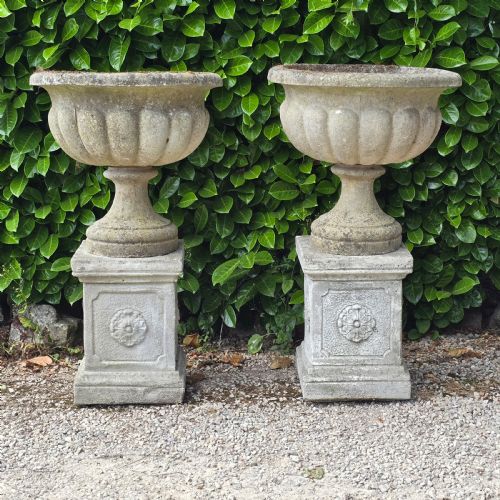
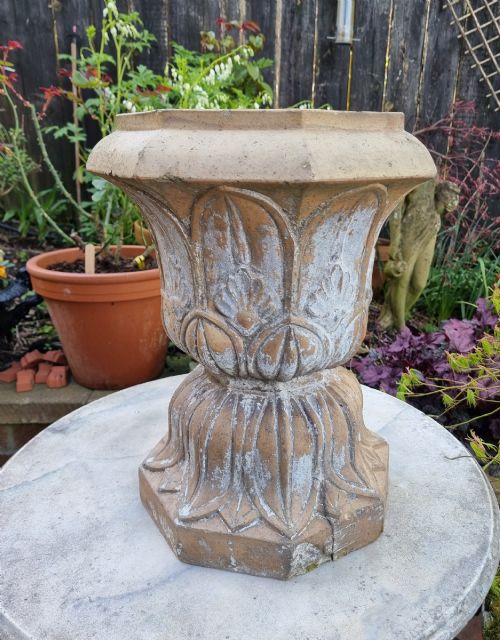
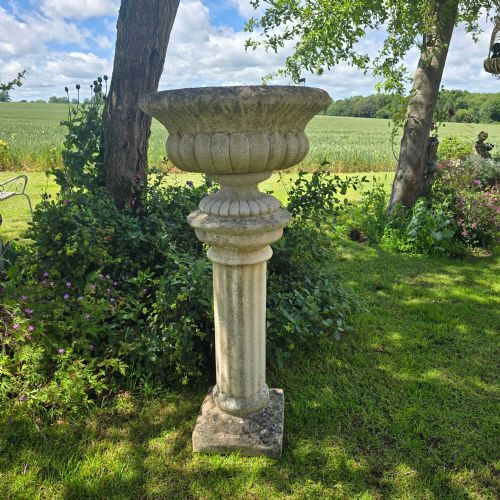
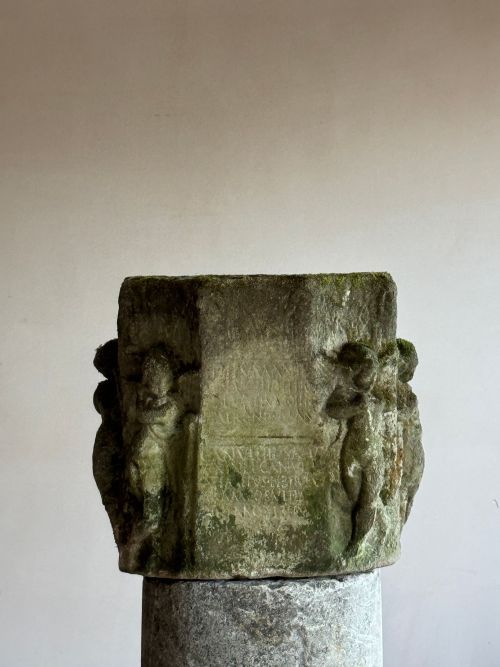
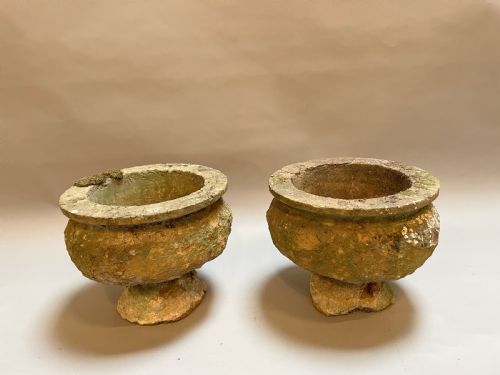
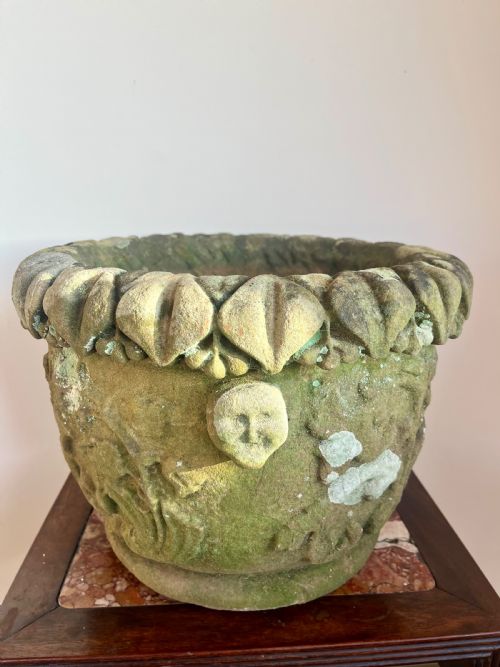
You will frequently encounter campana shapes, classical revival vessels, and simpler round or seven-sided garden planters. Many examples arrive paired on matching plinths or pedestals, designed to anchor formal garden pathways.
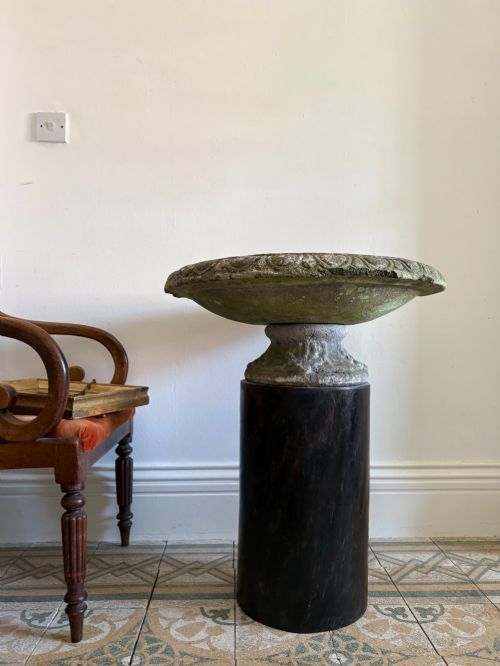
Origins stretch from English country houses to Scottish kilns, alongside pieces influenced by colonial Indian periods or Mediterranean rustic styles. The range also includes carved marble and limestone vessels intended to weather naturally outdoors.
How they were made
Makers shaped these garden ornaments from cast stone, reconstituted stone, and soft stone, alongside durable terracotta fired in kilns. Carved marble and limestone pieces demonstrate traditional hand-cutting techniques directly from solid blocks.
Iron and stoneware elements occasionally appear alongside the primary stone forms, offering varied textures and patination. Moulders also utilised composite stone mixtures poured into detailed wooden or metal forms during the early 20th century.
Listings span materials from reclaimed limestone to terracotta and cast iron across the Victorian, Edwardian, and mid-20th-century eras.
What varies in quality
Natural weathering and uniform patination dictate visual success outdoors, showing decades of exposure rather than artificial ageing. The inclusion of matching original plinths or pedestals adds considerable architectural weight to a pair.
Andrew Handyside
The Vintage Stone Garden Urns Glossary
- Campana urn
- A bell-shaped garden vessel with an everted rim and a flared body, widely produced in iron, stone, and terracotta.
- Reconstituted stone
- A durable material made from crushed natural stone aggregate mixed with a binder, moulded into classical garden ornaments.
- Terracotta
- A porous fired clay that develops a distinct weathered patina over decades of outdoor exposure.
- Plinth
- A heavy stone or concrete base block that elevates a garden urn to improve its architectural presence.
- Patination
- The surface coloration and texture acquired by stone and terracotta through age, weather, and lichen growth.
Vintage Stone Garden Urns: Frequently Asked Questions
How do I place stone urns in a garden?
Position heavier stone and cast iron urns on stable ground, patios, or dedicated stone plinths to prevent settling into soil over time.
Pair matching vessels symmetrically near doorways or at the ends of paths for a formal classical effect.
Can these garden urns stay outside in winter?
Most stone, cast stone, and iron pieces tolerate winter conditions well, provided they have adequate drainage holes to prevent freezing water from cracking the body.
Terracotta vessels benefit from being emptied or moved under cover during severe frosts to protect the fired clay.
How do I tell an 18th-century urn from a later copy?
Look closely at the tool marks, hand-carved detailing, and the depth of the mineral weathering across the stone surface.
Earlier pieces show irregular tool work and deep patination accumulated over centuries rather than uniform mechanical moulding.
What is the difference between cast stone and carved stone?
Carved stone urns are worked directly out of a solid block of limestone or marble using chisels and mallets by a stonemason.
Cast stone pieces are formed by pouring a mixture of aggregate and cement into a mould, capturing repeating classical reliefs.