
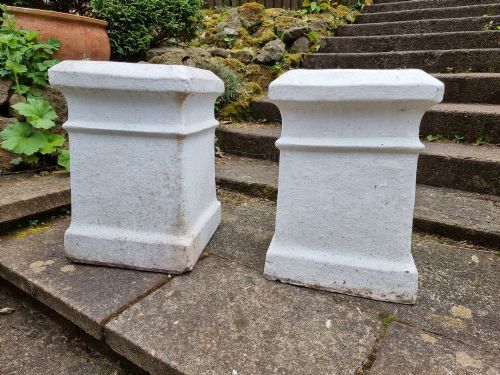
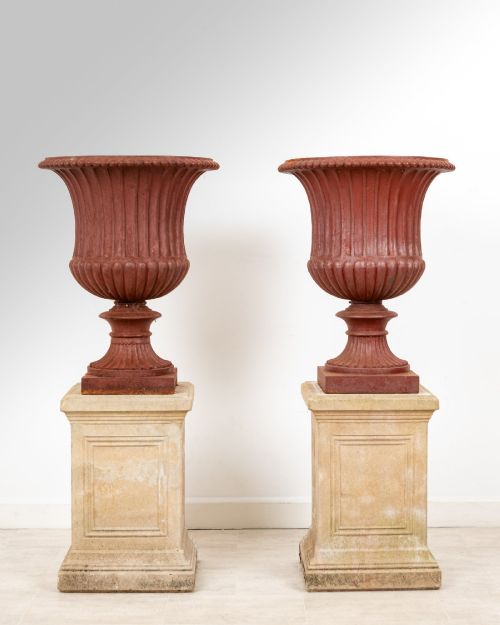
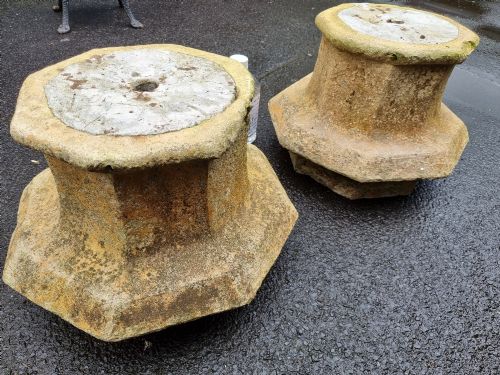
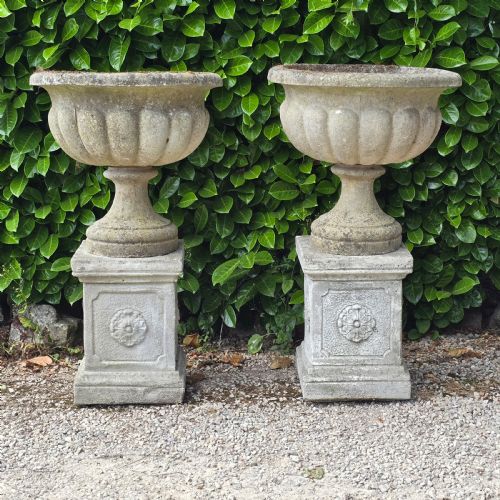


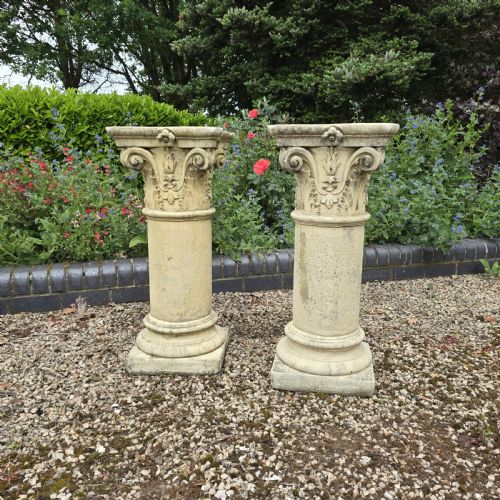
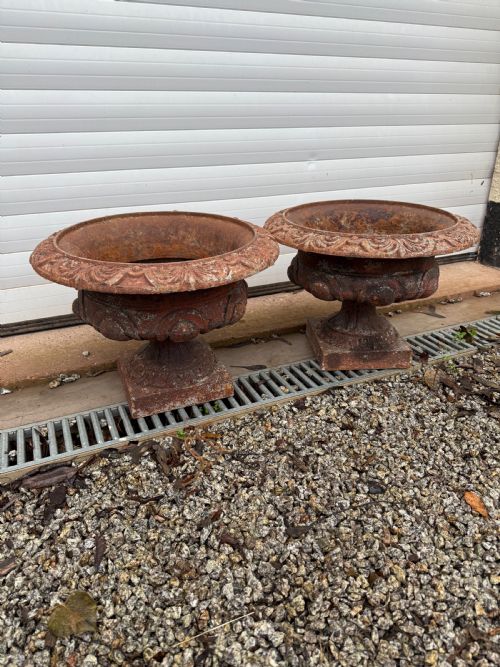


Pair Stone Garden Pedestals
Pair stone garden pedestals lift planters and statuary above the ground, bringing classical proportion and structure to outdoor spaces.
Pair Stone Garden Pedestals
When you search for pair stone garden pedestals, you encounter substantial supports designed to elevate garden ornaments, urns, and statuary. These architectural elements provide height and visual weight to outdoor spaces, anchoring planting schemes and formal garden layouts.
The pieces listed on this page predominantly date from the nineteenth century, including Victorian examples, alongside twentieth-century iterations. They appear alongside related garden furniture such as plinths, columns, and urns.
Makers and manufacturers utilised durable materials suited to exterior display, ensuring these supports withstand weathering while developing patination over decades.
How they were made
Materials span natural stones such as limestone and granite, alongside composite, reconstituted, and cast stone. Artisans carved natural blocks by hand or poured aggregate mixtures into moulds to achieve classical architectural profiles.
Iron and terracotta also appear in associated urns and planters mounted upon these bases, demonstrating diverse nineteenth-century foundry and ceramic techniques. Surfaces often exhibit natural weathering, paint, or salt glazes acquired through prolonged exterior exposure.
What varies in quality
Quality in these supports rests upon the crispness of architectural moulding, such as fluting or classical capitals, and the selection of durable material. Finer examples display precise detailing carved into natural stone or cast cleanly in composite media.
Proportion and balance dictate the visual success of the piece, where pedestals correctly match the scale of the urns or statuary they support. Weathering plays a role in character, but structural integrity separates superior examples from heavily degraded ones.
The Pair Stone Garden Pedestals Glossary
- Campana urn
- A bell-shaped garden vessel often mounted on a pedestal. This classic form dates back to antiquity and remains popular in nineteenth-century garden design.
- Plinth
- A heavy base or square block upon which a column, statue, or urn rests. It provides a stable foundation and lifts the object above ground level.
- Reconstituted stone
- A manufactured material made from crushed natural stone and a binder, moulded into architectural forms. It offers the appearance of quarried stone with consistent structural properties.
- Tazza
- A shallow cup or basin mounted on a stem and foot, used as a decorative garden ornament. These vessels often sit atop pedestals or plinths.
- Salt glaze
- A vitreous coating formed by throwing common salt into the kiln during firing, creating a glossy, pebbled texture on ceramics. This finish protects garden pottery from frost damage.
Pair Stone Garden Pedestals: Frequently Asked Questions
How do I clean old stone pedestals?
Wash stone surfaces gently with water and a soft brush to remove accumulated dirt and organic growth without damaging the aged patina.
Avoid harsh chemical cleaners or pressure washers, which can erode softer natural stones and composite materials over time.
Can these pedestals stay outside in winter?
Most stone and cast composition pedestals withstand frost and winter weather if drainage is clear and water cannot pool in crevices.
Dense natural stones and well-fired composite materials endure freezing temperatures better than porous or cracked pieces.
What goes on top of a pedestal?
Garden urns, planters, tazzas, and small statuary traditionally sit atop these architectural supports to create focal points in landscape design.
Ensure the weight and footprint of the vessel match the upper surface of the pedestal for stability.
How do I date nineteenth-century stone garden pieces?
Examine the tool marks, material composition, and style of classical revival motifs to determine the period of manufacture.
Nineteenth-century examples often display hand-chiseled details or early cast stone formulas combined with heavy weathering.