



Cast Stone Garden Urns
Cast stone garden urns bring classical presence to grounds and terraces, offering enduring form and weathered texture for outdoor planting.
Cast Stone Garden Urns
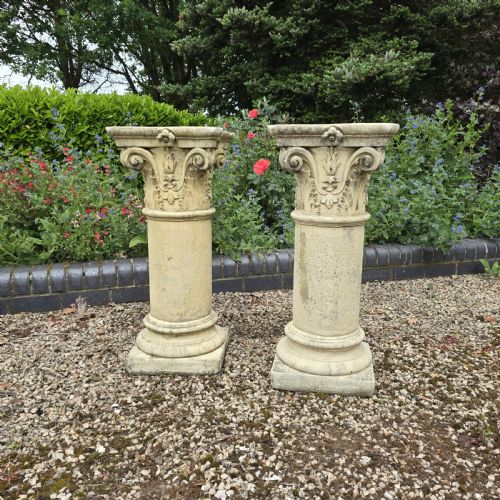
When you search for cast stone garden urns, you are looking at substantial vessels designed for landscaping, terraces, and formal gardens. These architectural pieces serve as focal points for planting, often elevated on matching pedestals or plinths to create height and structure in an outdoor setting.
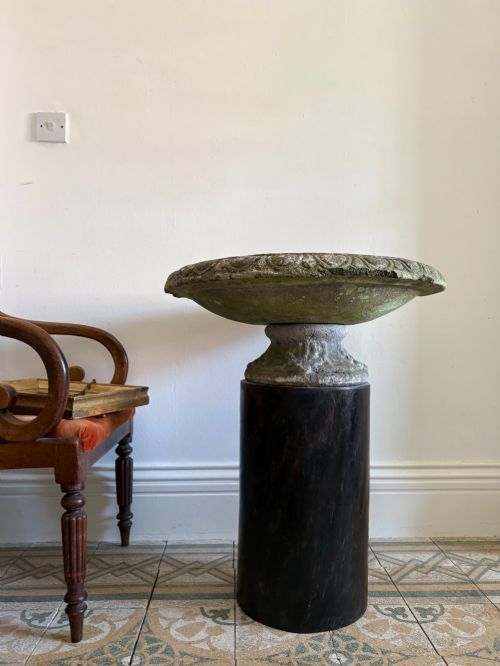
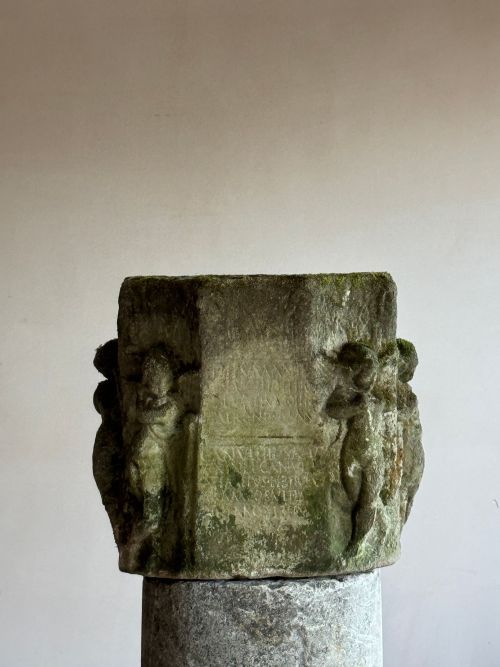
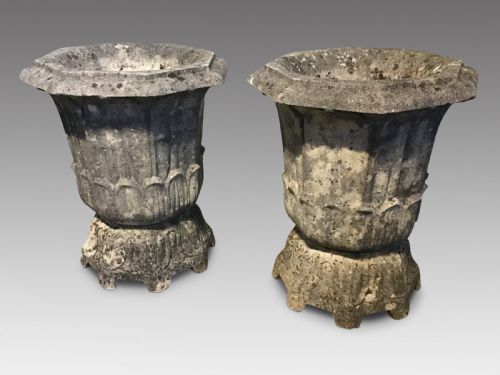
The versions you are most likely to meet on this page span the nineteenth century through the mid twentieth century, encompassing Victorian, Edwardian, and later revival periods. They range from campana shapes to multi-sided vessels and birdbath planters, drawing on neoclassical and classical traditions.
Makers and manufacturers of the period utilised durable aggregates and metals to withstand the elements while mimicking quarried stone or classical bronze. Surviving examples display the patination of decades outdoors, showing how age softens crisp moulding and develops moss and lichen growth.
How they were made
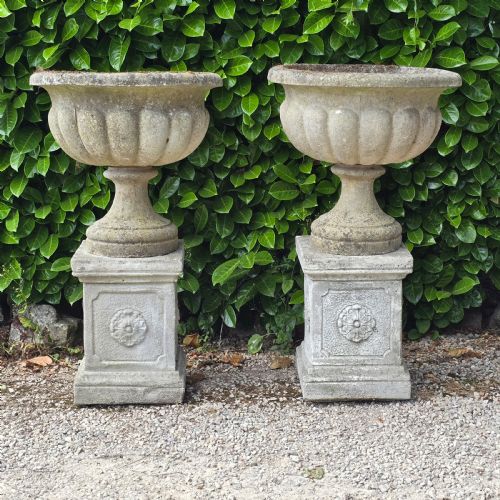
Cast stone garden urns were produced by pouring aggregate mixtures into moulds, capturing the crisp ornamentation of classical stone carving without the prohibitive cost of quarried blocks. Manufacturers combined crushed stone, sand, and cement binders, sometimes incorporating reinforcement to ensure structural integrity across larger vessels.
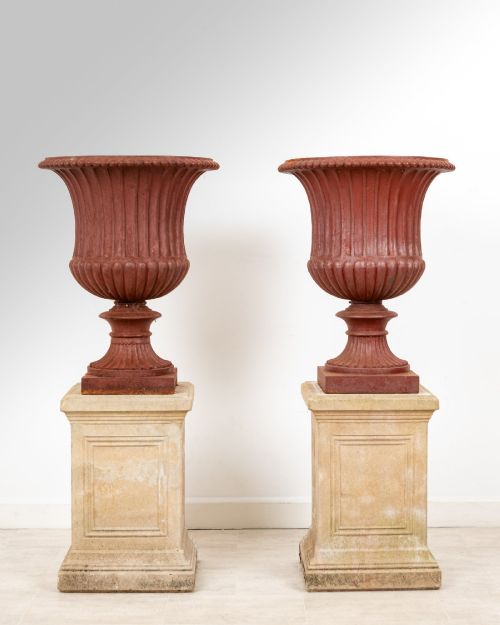
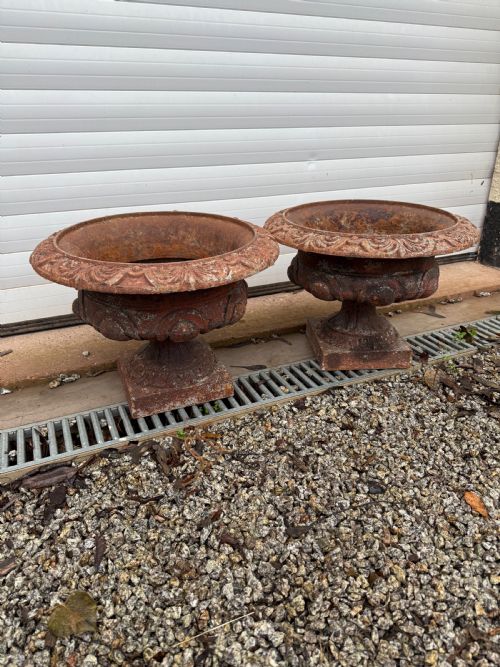
Alternative pieces in the inventory utilise cast iron, shaped in foundry moulds to create thin-walled campana profiles with integrated handles and fluted bodies. These metal vessels were often finished with protective paint layers that weathered over time, contrasting with the porous, absorbent surface of reconstituted stone.
One remarkably social urn arrives accompanied by six botanical neighbours, proving that even heavy garden ornaments prefer not to travel alone.
What varies in quality
The distinction between ordinary and exceptional cast stone garden urns lies in the depth of the modelling and the fidelity of the classical ornament. Finer examples exhibit sharp relief in details such as acanthus leaves, egg-and-dart moulding, and fluting, whereas lesser pieces can appear soft and indistinct.
Proportion and integrity also divide the range, particularly where urns sit upon matching pedestals or plinths. Superior specimens maintain balanced scale between the bowl and its base, using durable aggregates that weather gracefully rather than degrading through frost damage.
Andrew Handyside
The Cast Stone Garden Urns Glossary
- Campana urn
- A bell-shaped garden vessel with an everted rim and a flared body, derived from classical antiquity. This form frequently sits upon a short stem and square foot.
- Reconstituted stone
- A manufactured material composed of graded stone aggregates and a cement binder, moulded to replicate natural carved stone. It provides durability for outdoor statuary and garden ornaments.
- Plinth
- A heavy rectangular block or pedestal that elevates a garden urn, adding height and architectural presence to a terrace or lawn layout.
- Acanthus leaf
- A classical ornament carved or moulded in relief, modelled on the Mediterranean plant of the same name. It frequently decorates the lower bowl of formal garden urns.
- Neoclassical revival
- A nineteenth and early twentieth century style that drew directly upon Greek and Roman architectural and decorative motifs. Pieces in this idiom feature strict symmetry, classical friezes, and formal urn profiles.
Cast Stone Garden Urns: Frequently Asked Questions
Are cast stone urns frost proof?
Most quality cast stone garden urns are dense enough to withstand winter weather, though prolonged freezing water in unplanted bowls can cause hairline cracks.
Gardeners often elevate them on feet or plinths during freezing months to prevent moisture absorption from wet ground.
How do I clean a weathered urn?
Gentle brushing with water and a soft bristle brush removes loose dirt while preserving the desirable weathered lichen and moss patination.
Avoid aggressive chemical cleaners or pressure washers, which strip away the surface texture accumulated over decades.
Do urns need pedestals?
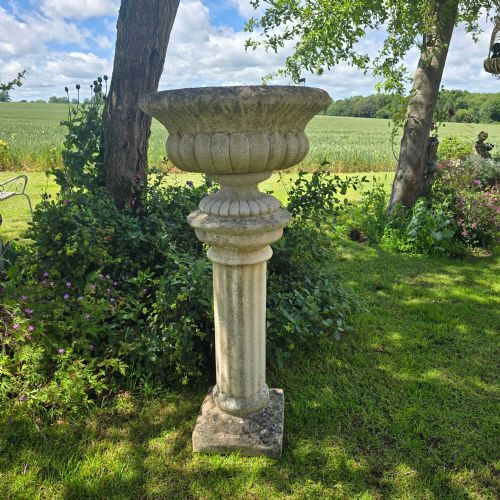
While many cast stone garden urns function well at ground level, pairing them with a matching plinth or column lifts the planting into the line of sight.
Pedestals also improve drainage and protect the base of the vessel from damp soil and lawnmowers.
How do I date a cast stone urn?
Stylistic clues such as Victorian neoclassical detailing or Edwardian proportions help narrow down the period, alongside the depth of weathering on the stone.
Foundry marks or specific aggregate compositions can occasionally point towards a particular manufacturer or era of production.