


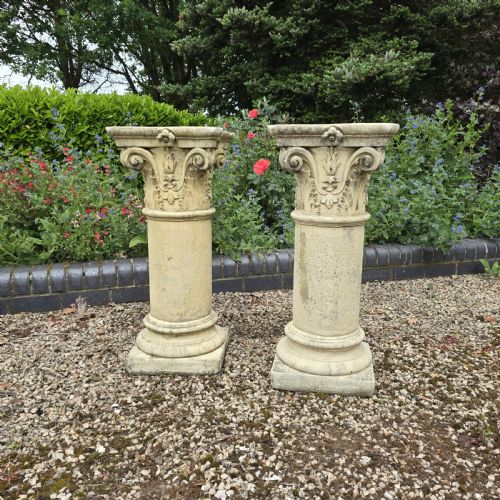


Classical Garden Urn Plinths
Classical garden urn plinths elevate heavy stone and iron vessels to command the lawn.
Classical Garden Urn Plinths
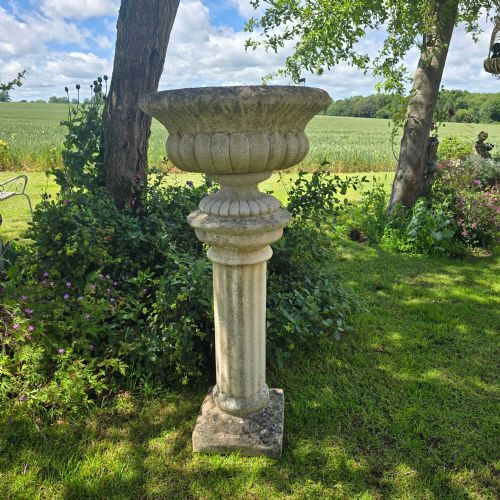
Classical garden urn plinths are sturdy pedestals and columns designed to support garden urns, planters and campana vessels. When searching for classical garden urn plinths, a buyer seeks architectural supports originating from various periods including Regency, Victorian, Georgian and the Edwardian era.
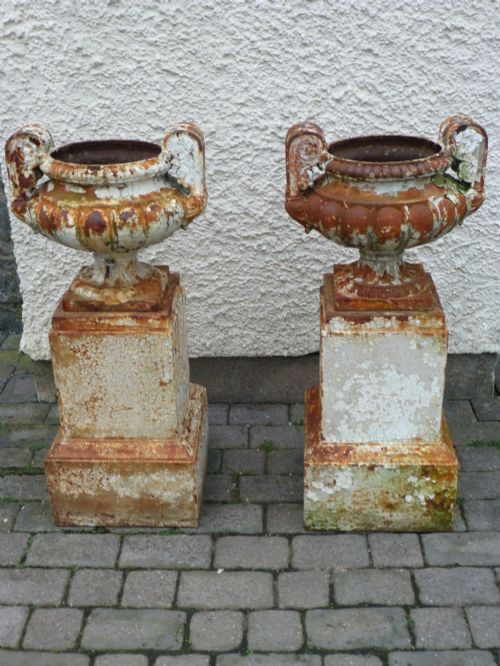
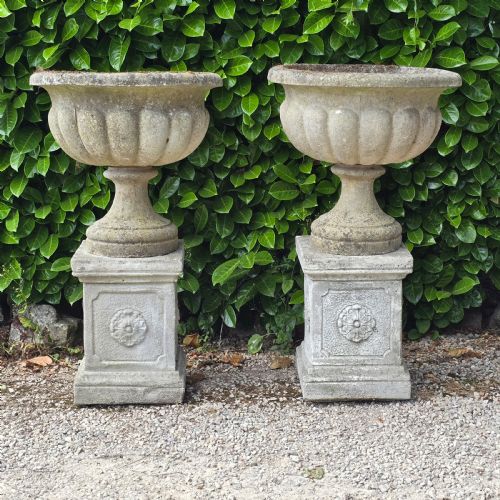
The most common versions met on this page include cast iron and cast stone pedestals, often paired with urns or columns. These pieces display classical revival, neoclassical and French classical styles, functioning as focal points in gardens and terraces.
How they were made
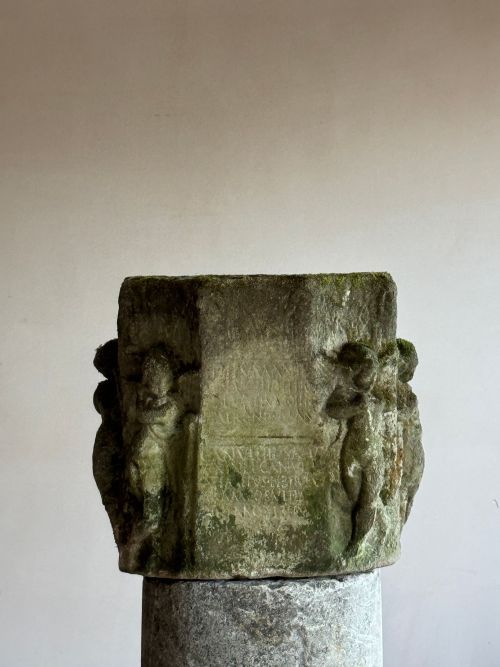
Maker foundries utilised durable metals and stone to withstand outdoor weather across centuries. Cast iron pieces required intricate mould-making, whilst carved stone and reconstituted stone items were shaped by hand or cast in aggregate mixtures.
Surfaces often show weathering, and some examples retain layers of early paint or natural patination. Foundry work from historical periods produced robust columns and plinths designed to bear substantial weight.
Some cast iron urns retain stubborn layers of old garden paint that stubbornly refuse to leave.
What varies in quality
Quality in classical garden urn plinths rests upon the crispness of classical ornament, such as acanthus leaves and gadrooning. Superior examples display precise casting or carving detail that remains sharp despite age and exposure.
The integrity of the material and the harmony between the plinth and its supporting urn dictate the overall success of the piece. Original pairings and well-weathered surfaces command greater appreciation among collectors.
Falkirk Carron foundry·Andrew Handyside
The Classical Garden Urn Plinths Glossary
- Campana
- A bell-shaped garden urn typically mounted upon a pedestal or plinth. This form derives from ancient Roman bronze and marble vessels.
- Gadrooned
- Ornamented with a series of convex curves or flutes carved or cast in a parallel sequence. This decorative motif frequently encircles the body of urns and the collars of plinths.
- Reconstituted stone
- A composite material made from crushed stone and cement binder moulded into architectural forms. It offers the appearance of natural stone with high durability.
- Plinth
- A heavy rectangular or square base supporting a column, statue or urn. It raises the vessel above ground level to improve garden sightlines.
- Neoclassical
- A style reviving the architectural forms of ancient Greece and Rome. It prioritises symmetry, restraint and classical motifs like columns and acanthus leaves.
Classical Garden Urn Plinths: Frequently Asked Questions
What holds up heavy stone garden urns?
Cast iron plinths, carved stone pedestals and reconstituted stone columns provide the necessary structural support for heavy garden urns. These bases distribute weight evenly across lawns and terraces.
They ensure large planters remain stable against wind and weather without sinking into the ground.
How do I date a cast iron plinth?
Dating relies upon foundry marks, material thickness and stylistic details linked to periods like the Regency or Victorian era. Neoclassical motifs often follow the design standards of specific decades.
Surface weathering and early paint layers also offer clues to the age of metal and stone pieces.
Can these plinths stay outside all winter?
Cast iron and cast stone plinths are built for outdoor conditions and withstand seasonal weather changes well. Well-weathered surfaces demonstrate their resilience against rain and frost.
Checking for proper drainage prevents water accumulation within hollow metal or stone structures during freezing temperatures.
Are urns and plinths sold together?
Listings feature both matched pairs of urns on original plinths and standalone pedestals or columns. Original pairings maintain historical consistency between the upper vessel and the base.
Buyers can also find individual plinths suited for pairing with existing garden vessels.