


Weathered Stone Garden Plinths
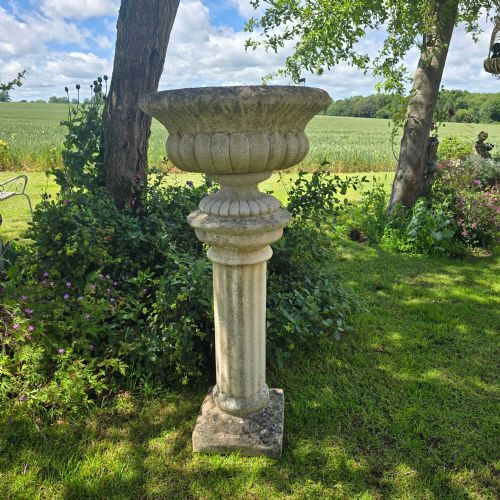
Weathered stone garden plinths anchor outdoor planting and display statuary with aged surfaces.
Weathered Stone Garden Plinths
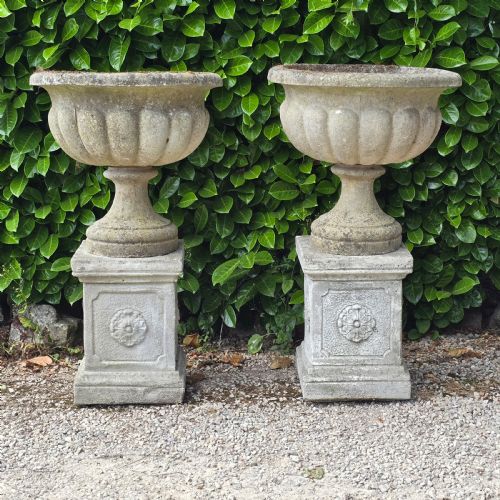
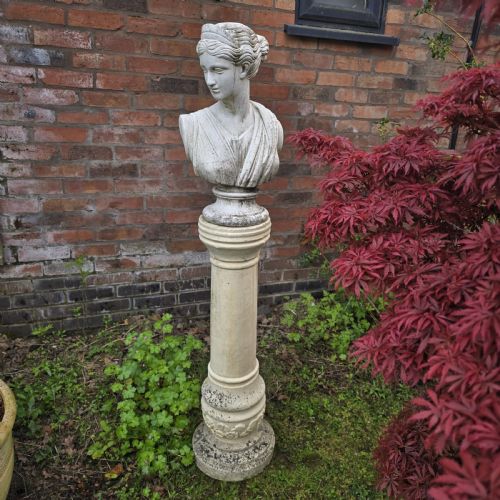
Weathered stone garden plinths provide solid architectural elevations for garden ornaments, statues, urns and sundials. When you search for weathered stone garden plinths, you encounter supporting pedestals shaped in styles ranging from classical revival to gothic revival and neoclassical.
The pieces appearing on this page span several eras, including nineteenth century items alongside items dated through the 1920s, 1930s, and 1950s. Many examples take the form of dedicated pedestals sold alongside companion figures, capitals, or planters.
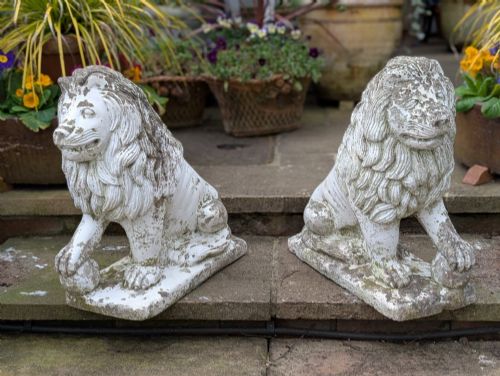
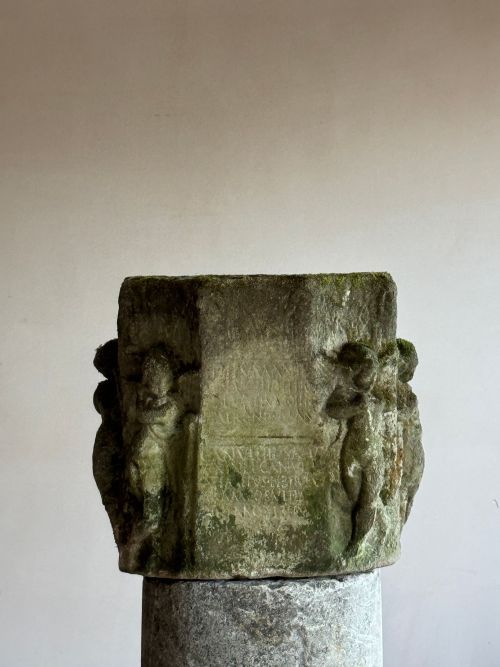
Origins and associations vary from French and Chinese carved stone lions to English garden pieces and Roman funerary altar forms. These objects elevate focal points within a garden scheme while showing natural weathering acquired outdoors.
Materials and construction methods
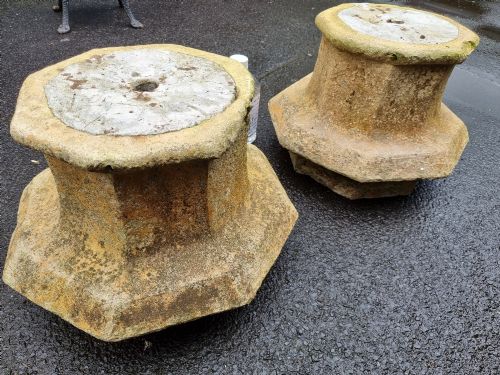
Masons and makers formed these garden supports using carved stone, limestone, and stoneware alongside cast stone, reconstituted stone, and composite stone. Hand carving yielded detailed architectural mouldings like Corinthian capitals, while casting allowed precise repetition of classical motifs.
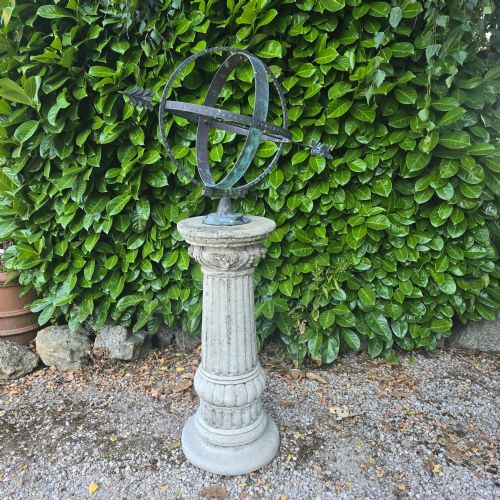
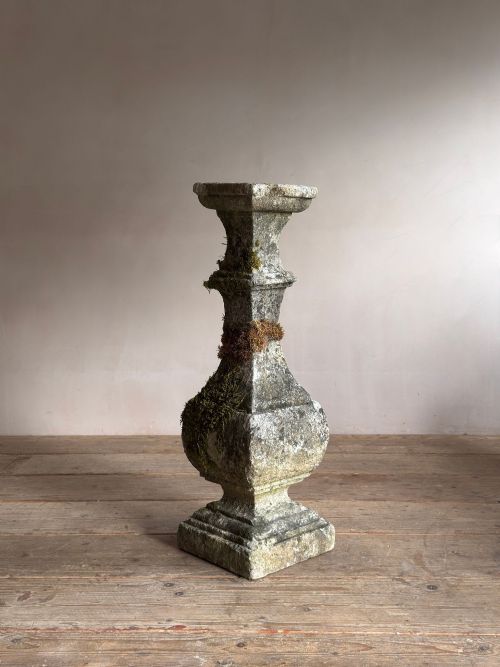
Surfaces frequently show traces of paint alongside natural lichen and weathering accrued over decades of exposure to the elements. Metal components such as bronze sundials appear integrated into stone and reconstituted stone structures.
Several stone lions keep eternal watch over these gardens, looking remarkably unbothered by the centuries.
Assessing quality in garden plinths
Quality rests upon the crispness of the original stone carving or the fidelity of the cast stone mould. Sharply defined acanthus leaves on a Corinthian capital or well-defined relief work on a pedestal distinguish finer examples from softer, worn pieces.
The integrity of the material itself dictates longevity, with dense limestone and sound reconstituted stone resisting frost damage better than porous matrices. Harmonious proportions between the supporting plinth and the urn, bust or figure placed upon it determine visual balance.
The Weathered Stone Garden Plinths Glossary
- Reconstituted stone
- A manufactured material composed of crushed aggregate and cement binders moulded to resemble natural quarried stone. It gained widespread popularity for durable garden ornaments during the twentieth century.
- Limestone
- A sedimentary rock formed mainly from skeletal fragments of marine organisms, frequently chosen by masons for carved garden plinths and capitals. Its workability allows for intricate architectural detail.
- Neoclassical
- An artistic style drawing inspiration from the classical art and culture of ancient Greece and Rome. It appears frequently in the proportions and decorative motifs of nineteenth-century garden pedestals.
- Gothic Revival
- An architectural and decorative movement reviving medieval forms, noticeable in the pointed arches and tracery found on specific nineteenth-century stone plinths.
- Corinthian capital
- The uppermost member of a column, decorated with stylized acanthus leaves. Sets of these capitals appear carved from limestone in the evidence.
Weathered Stone Garden Plinths: Frequently Asked Questions
How do I choose the right plinth height?
Consider the scale of the garden ornament, urn or bust intended to sit on top of the structure. Taller pedestals work well as terminal vistas, while lower blocks suit intimate planting areas.
Ensure the top surface dimensions match or slightly exceed the base of the object resting upon it to maintain visual stability.
Can these stone plinths remain outside year round?
Most weathered stone garden plinths are designed for outdoor exposition and tolerate seasonal weather changes. Dense stones and quality reconstituted stone withstand frost effectively.
Sitting the base on gravel or paving prevents moisture from rising continuously through the stone during winter months.
How do I clean a weathered stone plinth?
Gentle washing with water and a soft brush removes loose dirt while preserving the aged patina and lichen growth that collectors value. Avoid aggressive chemical treatments or pressure washers that strip the surface.
Allowing natural weathering to continue enhances the character of nineteenth-century and mid-century garden stone.
What is the difference between cast stone and carved stone?
Carved stone involves hand chiselling blocks of natural material like limestone into the desired architectural form. This method leaves tool marks unique to the mason.
Cast stone is poured into a mould as a wet mixture of aggregate and binder, allowing uniform production of complex classical revival shapes.