



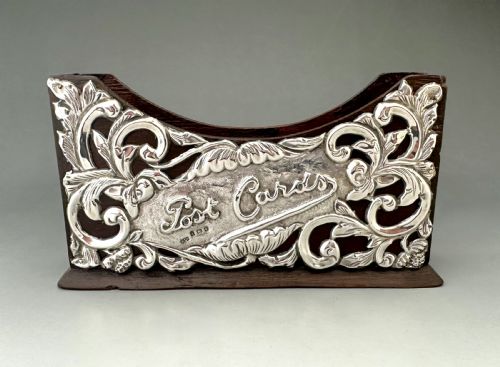
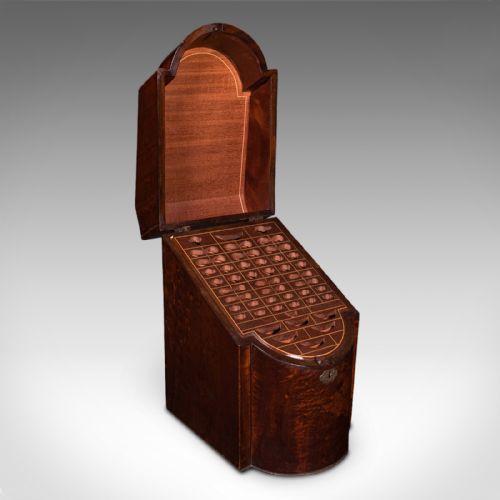


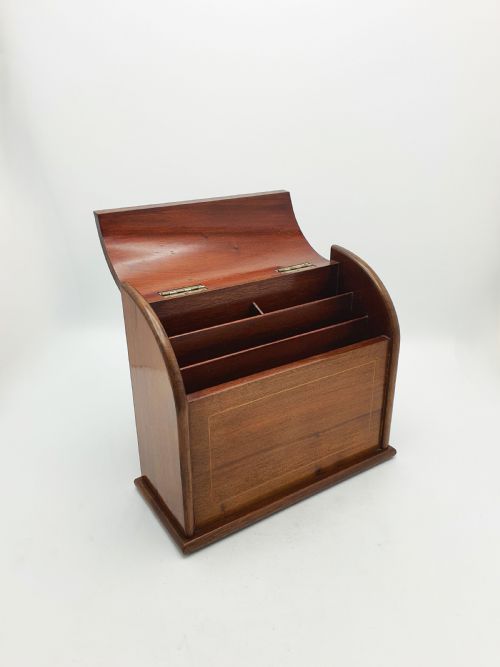


Vintage Stationery Organiser
A vintage stationery organiser brings order to papers and correspondence while holding the weight of desk work from past decades.
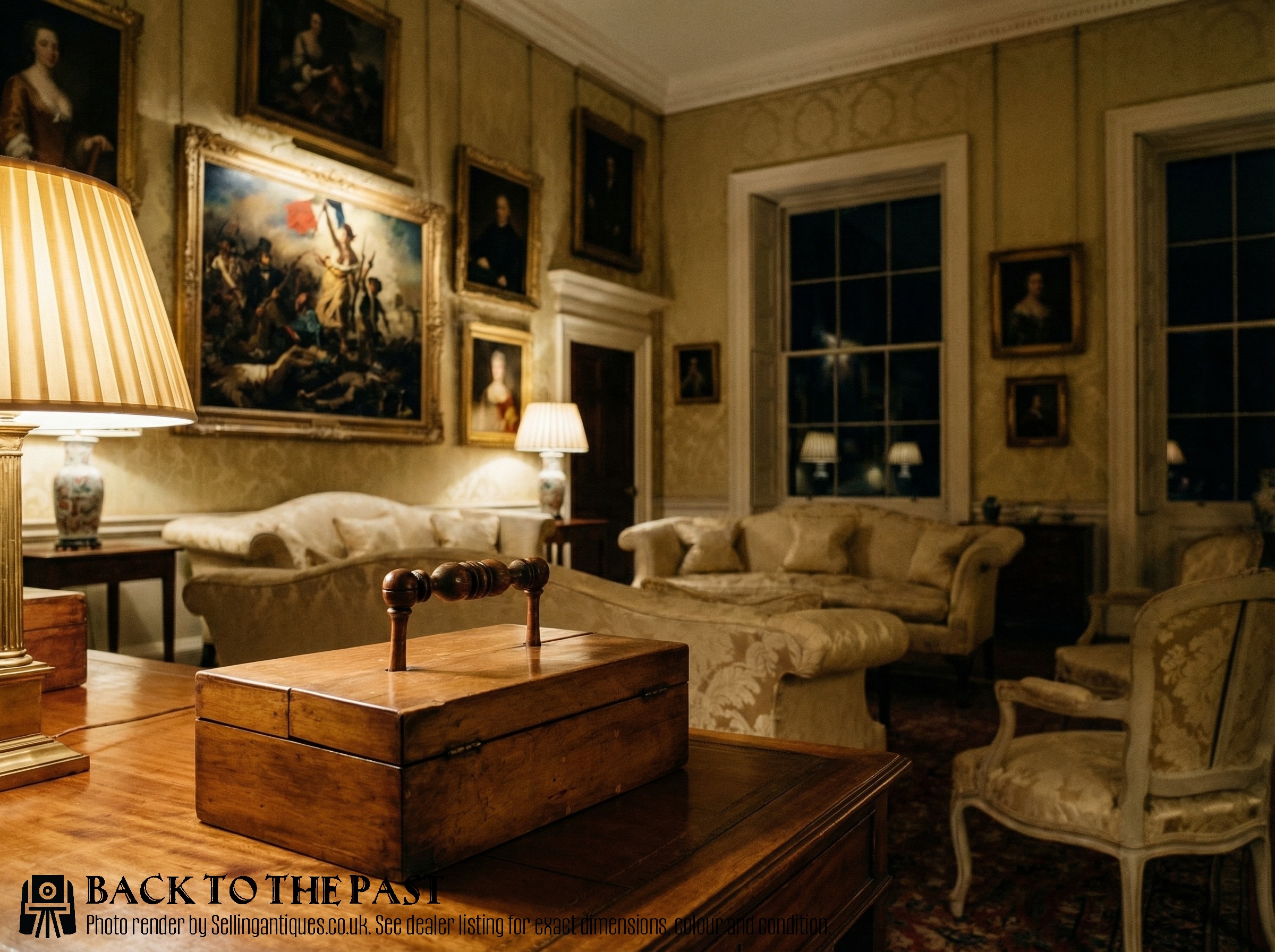
Vintage Stationery Organiser
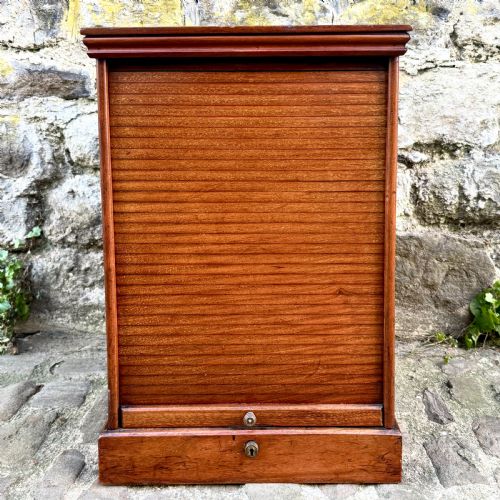
A vintage stationery organiser encompasses desk boxes, letter racks, fall-front cabinets, and writing stations designed to sort correspondence and papers. These pieces emerge from the Victorian, Edwardian, and Arts and Crafts periods, reflecting the heavy correspondence demands of offices and country houses.
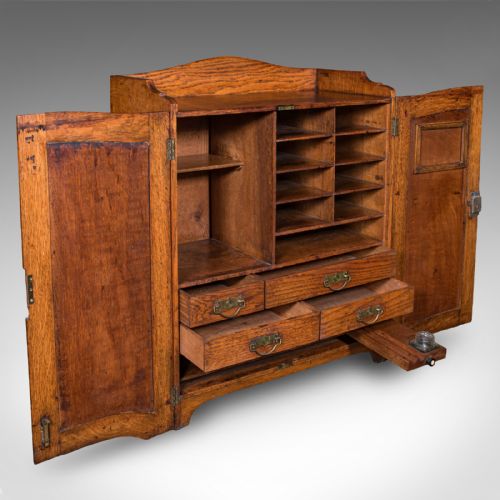
The buyer meets variations ranging from simple oak desk tidies and mahogany letter holders to elaborate brass and papier-mache desk sets. Architectural forms include wall organisers and tiered cabinets fitted with compartments for envelopes, stamps, and ink.
Materials and Construction
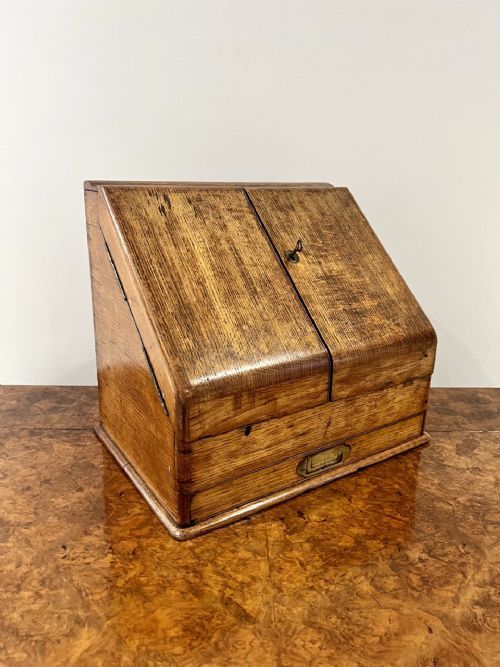
Cabinet makers utilise durable timbers such as oak, mahogany, walnut, and rosewood, often building boxes with dovetailed joints and hinged lids. Grain patterns and natural finishes define the primary structure of these timber desk accessories.
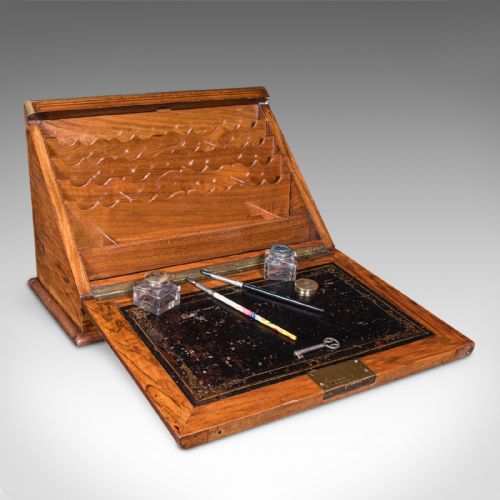
Metal and decorative elements include cast brass, copper, silver mounts, and gilded bronze. Papier-mache and marquetry inlay provide surface detail, while leather and glass furnish interior writing surfaces and inkwells.
Vintage Stationery Organiser Retail Price Guide 2026
Typical asking prices for vintage stationery organiser among the pieces listed under this phrase on Sellingantiques today, from the lower quarter to the upper quarter. They describe what is for sale here now, not the wider market.
Gilded bronze desk sets featuring playing cats bring a touch of feline mischief right into the heart of Victorian correspondence.
Gradations of Excellence
Quality rests in the precision of the joinery and the integrity of the materials, where solid hardwoods and thick brass outlast veneered pine and pressed metal. Finer examples display meticulous marquetry inlay, secret drawers, and undamaged original glass or silver components.
Design ambition separates standard desk tidies from exceptional pieces. Superior stationery cases incorporate architectural proportions, specialised filing partitions, and integrated calendar or inkstand modules that show the maker's full skill.
The Vintage Stationery Organiser Glossary
- Stationery cabinet
- A desktop box or small cupboard featuring vertical slots and tiered shelves designed specifically for holding writing paper and envelopes.
- Letter rack
- An open frame or tiered stand constructed to hold incoming and outgoing mail upright for easy sorting.
- Desk tidy
- A multipurpose desktop accessory incorporating compartments for pens, paper clips, and small stationery items.
- Inkstand
- A tray or stand holding one or more inkwells, often accompanied by pen troughs and a sander for blotting ink.
- Marquetry
- Decorative woodwork where thin pieces of contrasting timber veneer form pictorial patterns on the surface of a box or cabinet.
Vintage Stationery Organiser: Frequently Asked Questions
What fits inside a vintage stationery organiser?
These organizers accommodate standard letters, envelopes, notepaper, and small office supplies within their dedicated slots and drawers. Many include specialised partitions for stamps, sealing wax, and pens.
Larger cabinets provide deeper compartments for ledgers and folded documents, reflecting the paper sizes common in past offices.
How do I date a wooden desk box?
Dating relies on observing construction methods, timber choices, and prevailing decorative styles across the Victorian and Edwardian eras. Hand-cut dovetails and heavy oak suggest nineteenth-century origins, while lighter marquetry points toward nineteen-hundred.
Hardware styles, lock types, and secondary woods inside drawers also offer reliable clues to the exact decade of manufacture.
Were these made for homes or offices?
Stationery organisers served both domestic writing desks and professional office environments depending on their scale and construction. Sturdy oak cabinets suited clerk's offices, insurance agents, and naval architects.
Ornate brass, mahogany, and papier-mache pieces belonged in drawing rooms, libraries, and country house studies for personal correspondence.
How do I care for polished wood desk accessories?
Maintenance requires keeping wooden surfaces away from direct sunlight and extreme humidity changes to prevent timber splitting and veneer lifting. Regular dusting with a soft, dry cloth preserves the patina.
Application of appropriate wax polish maintains the moisture and sheen of old oak, mahogany, and walnut without building up heavy residue.