



Victorian Stationery Caddy
A victorian stationery caddy keeps your desk organised with the charm of nineteenth-century craftsmanship.
Victorian Stationery Caddy
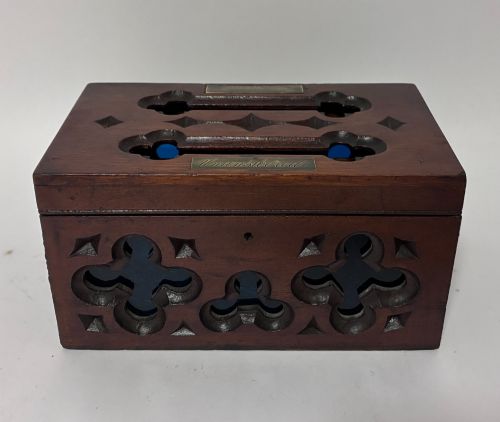
A victorian stationery caddy is a desk accessory designed to hold letters, envelopes, and writing paper in an orderly fashion. These objects appear in forms such as stationery boxes, correspondence boxes, and stationery cabinets.
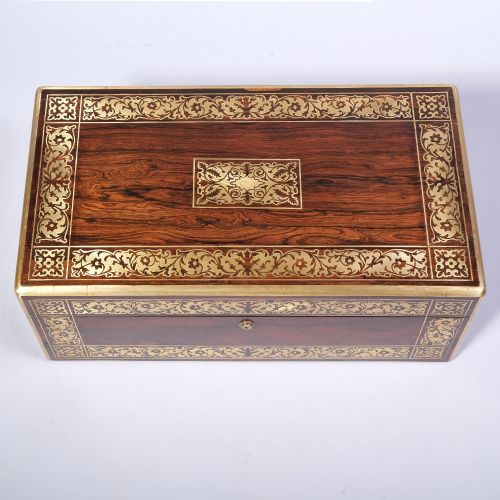
The pieces listed on this page span the nineteenth century, including examples from the eighteen-fifties, eighteen-sixties, and eighteen-eighties. They take the shape of domed boxes, rectangular cabinets, and fitted writing boxes.
Makers of the period constructed these caddies to sit upon library tables and writing desks. They provide compartmentalised storage for domestic and professional correspondence.
What varies in quality
Quality rests upon the choice of timber veneer and the precision of the cabinet work. Finely figured burr walnut and carefully matched rosewood distinguish superior examples from plain utility pieces.
The integration of decorative elements such as brass inlay and hand-painted porcelain elevates the design. The complexity of the internal dividers and the weight of the brass mounts also mark the standard of manufacture.
Victorian Stationery Caddy Retail Price Guide 2026
Typical asking prices for victorian stationery caddy among the pieces listed under this phrase on Sellingantiques today, from the lower quarter to the upper quarter. They describe what is for sale here now, not the wider market.
The listings here feature pieces spanning the nineteenth century, utilising walnut, mahogany, rosewood, and brass.
The Victorian Stationery Caddy Glossary
- Burr walnut
- A timber taken from the warted growths of the walnut tree, prized for its swirling grain patterns. It was frequently used as a veneer on high-status nineteenth-century boxes.
- Correspondence box
- A desk accessory intended for holding letters and writing paper. It functions similarly to a stationery box.
- Gothic Revival
- An architectural and decorative style popular during the nineteenth century, drawing inspiration from medieval forms. Pieces in this taste often feature pointed arches and heavy brass mounts.
- Mother-of-pearl
- The iridescent inner layer of certain mollusc shells, sliced into thin tablets for inlay work. Craftsmen used it to embellish the surfaces of desk accessories.
Victorian Stationery Caddy: Frequently Asked Questions
What is a stationery caddy used for?
A stationery caddy organises writing paper, envelopes, and incoming letters upon a desk. The internal divisions keep different sizes of paper separated for daily correspondence.
They served a practical role in nineteenth-century studies and drawing rooms where letter-writing was a daily routine.
How do I date a wooden stationery box?
Dating relies on observing the timber choice, construction methods, and decorative styles. Burr walnut and heavy brass mounts often point towards the middle decades of the nineteenth century.
Secondary woods inside the box and the style of hinges provide further clues to the period of manufacture.
Are these boxes made of solid wood?
Most nineteenth-century boxes utilise a stable secondary wood carcase covered in decorative wood veneers. Burr walnut and rosewood were applied as fine veneers rather than used in solid blocks.
This technique prevented the expensive timbers from warping while displaying striking grain patterns on the exterior.
How should I clean a polished wooden box?
Dust the surface regularly with a soft, dry cloth to prevent dirt build-up. Avoid using modern aerosol polishes or water on antique wood finishes.
Micro-wax can be applied sparingly every few months to feed the timber and maintain the lustre of the polish.