
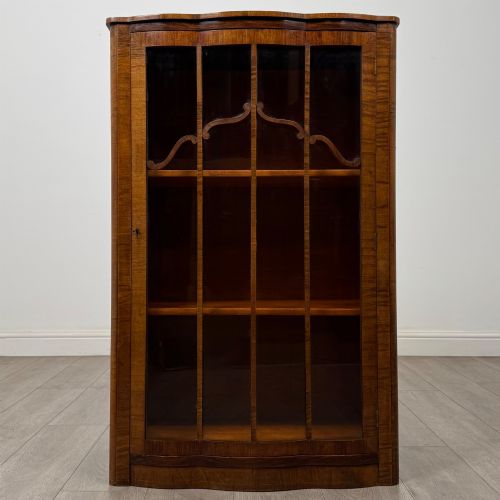
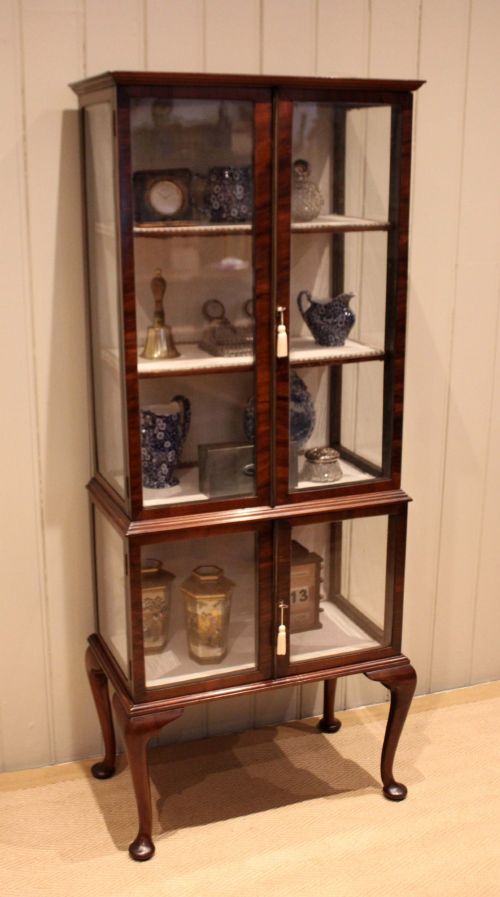
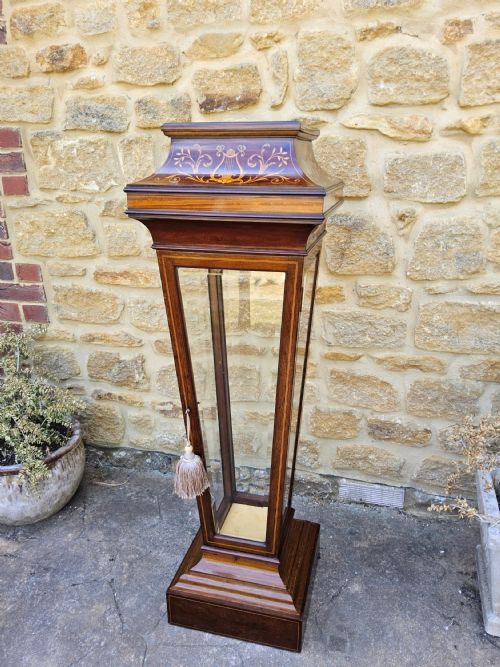
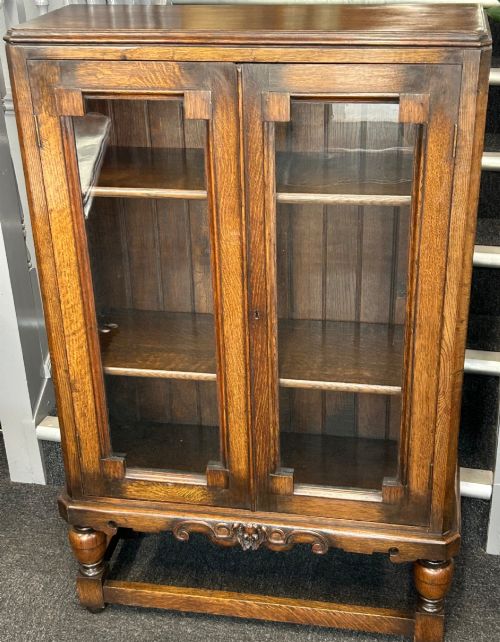
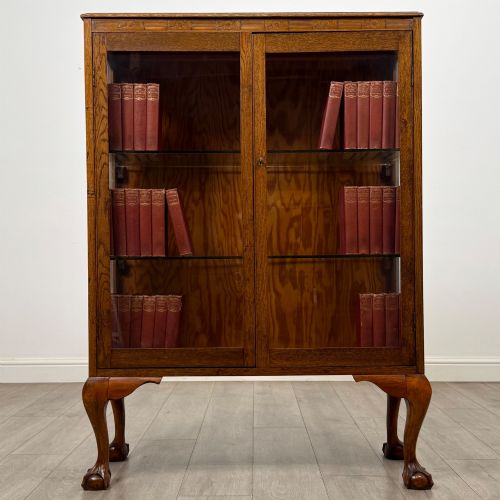
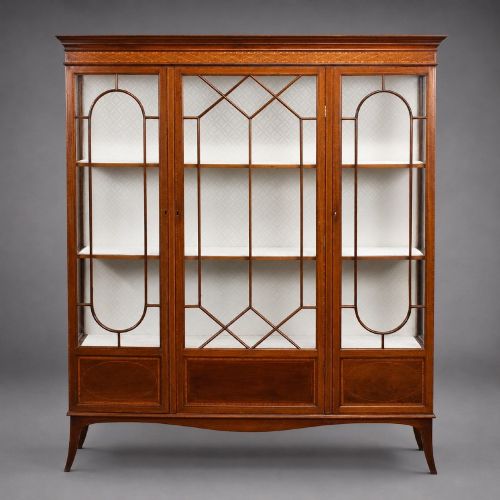
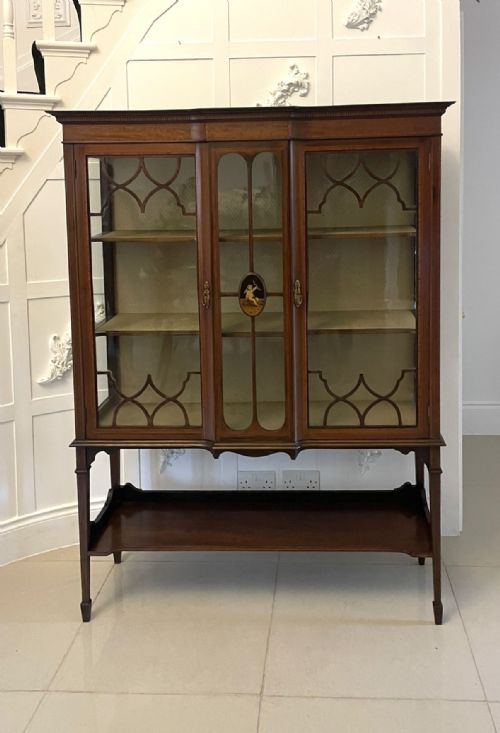
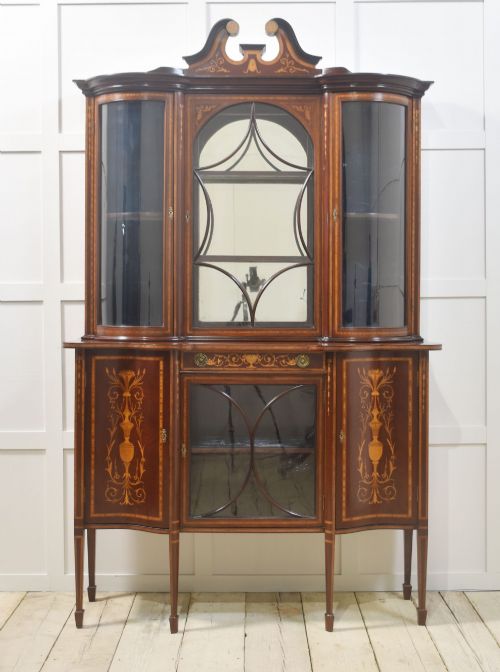

Vintage Standing Vitrine
A vintage standing vitrine protects and frames treasured collections behind glass, bringing height and elegance to a room.
Vintage Standing Vitrine
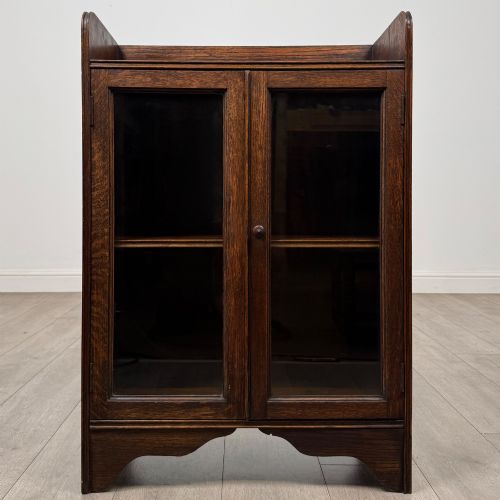
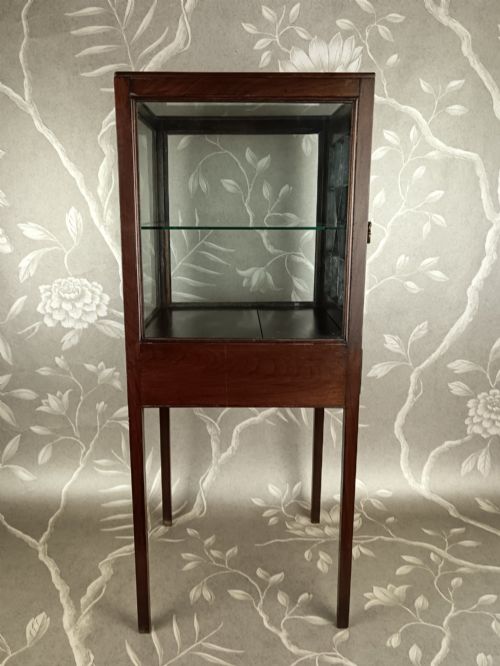
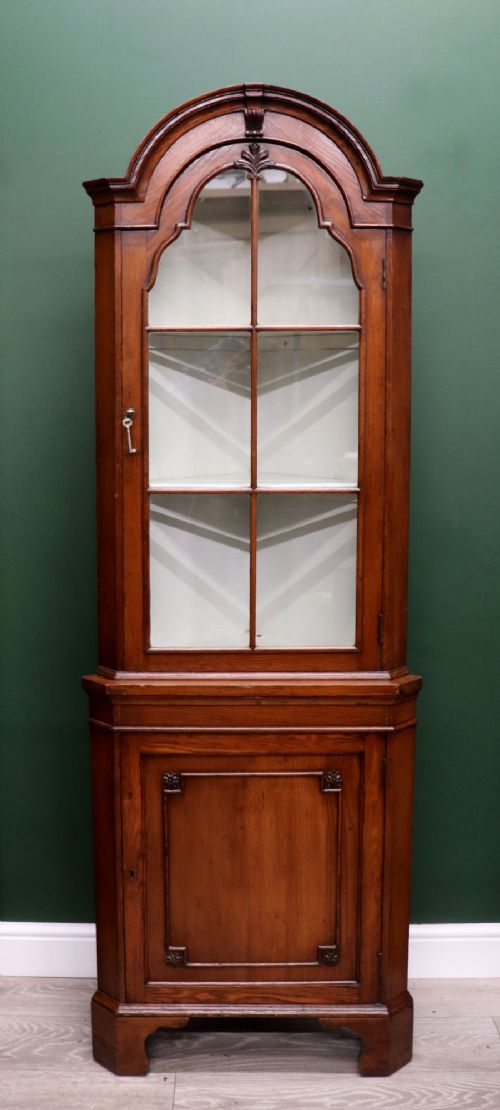
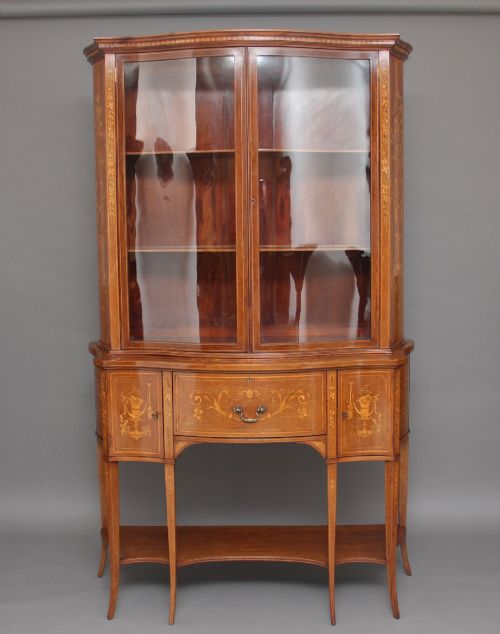
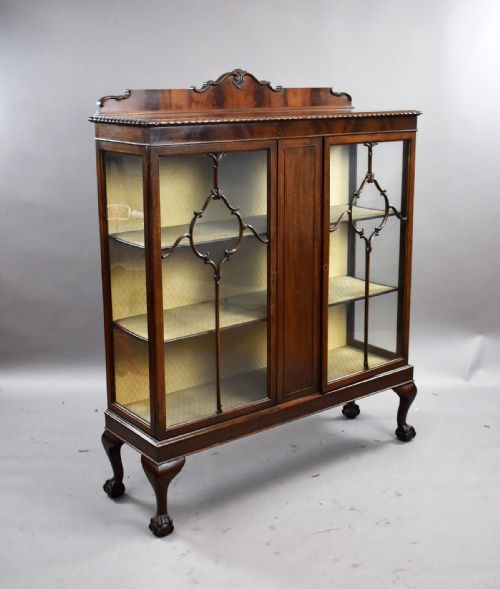
A vintage standing vitrine is an upright display cabinet designed to showcase porcelain, silver and curiosities while keeping them dust-free. These pieces stand independently on the floor rather than hanging on a wall or sitting on a desk.
The pieces on this page span the late nineteenth century through to the interwar decades, taking forms such as flat-fronted cabinets, corner units and tall towers. Edwardian examples dominate the selection, bringing lighter woods and delicate proportions into domestic spaces.
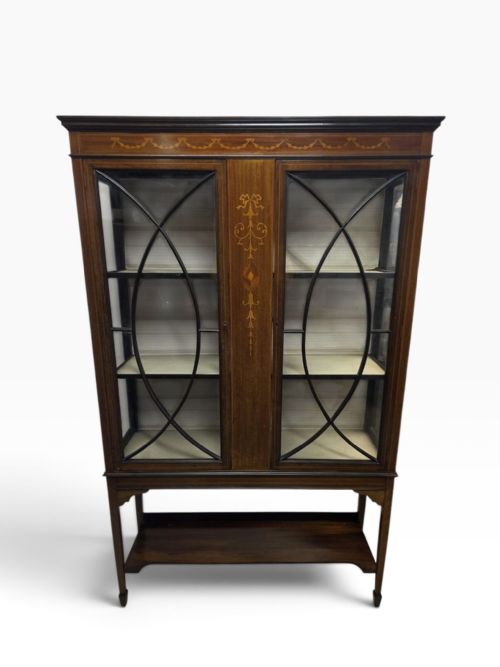
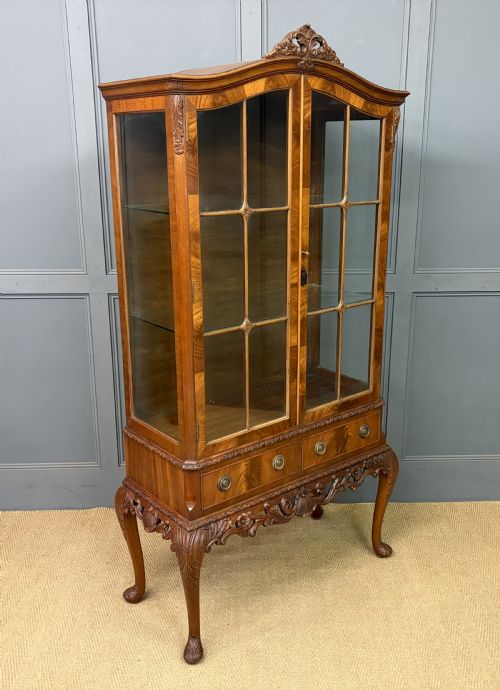
Makers and cabinetmakers drew on historical design languages, producing items in Sheraton Revival, Chippendale Revival and Queen Anne styles alongside clean-lined Art Deco interpretations. Whether glazed on all sides or fitted with solid lower cupboards, each format serves the primary purpose of visible storage.
How they were made
Makers built these cabinets using carcasing timbers such as mahogany, oak and walnut, often applying veneers of figured walnut or satinwood to visible exterior surfaces. Inlaid decoration in contrasting woods and brass mounts added decorative refinement to the timber frames.
Glazing forms the central technical element, utilising large sheets of glass held by slender glazing bars to maximise light penetration. Some specialised pieces incorporate curved or concave glass panes, requiring advanced glass-bending techniques during manufacture.
Cabinets in this collection utilise mahogany, oak, walnut and satinwood, frequently enhanced with inlaid borders and glass panels.
What varies in quality
The calibre of a standing vitrine rests upon the selection of timber veneers and the crispness of any inlaid marquetry. Finer cabinets employ meticulously matched wood grains and subtle stringing, whereas simpler versions rely on plain surfaces.
Structural joinery and the integration of the glazed doors dictate the longevity and daily utility of the piece. Superior examples exhibit tight joints, smoothly operating doors and well-finished interiors lined with fabric or polished wood.
Maple & Co.·Edwards And Roberts·Epstein
The Vintage Standing Vitrine Glossary
- Vitrine
- A glass-fronted cabinet specifically designed for the display of porcelain and small decorative objects. The term derives from the French word for glass.
- Marquetry
- Decorative patterns formed by the insertion of contrasting veneers into a wood surface. Master cabinetmakers used this technique to create elaborate floral or geometric motifs.
- Demi-lune
- Half-moon shape, often applied to the plan of small side cabinets and corner units designed to sit flush against a wall. This profile softens the corners of a room.
- Glazing bar
- A narrow wooden or metal strip holding the panes of glass within a window or cabinet door. Slender bars indicate finer workmanship.
- Canted sides
- Bevelled or angled vertical corners on a cabinet that direct the eye towards the central display area. This architectural detail lightens the visual bulk of heavy timber furniture.
Vintage Standing Vitrine: Frequently Asked Questions
Where should I place a vitrine?
Position your cabinet away from direct sunlight to protect interior fabrics and any displayed contents from fading over time. Placing the piece on a stable, level floor ensures the heavy glass doors hang true and close properly.
Choose a spot with moderate ambient light where the glazed panels can catch and reflect illumination around the room. Corner vitrines work well to utilise neglected angles in dining rooms and drawing rooms.
How do I clean the glass?
Use a soft microfiber cloth and a mild glass cleaner sprayed onto the cloth rather than directly onto the cabinet. This prevents liquid from seeping into fragile wooden frames or old varnishes.
Take care around delicate glazing bars and antique putty which may be brittle. Regular dusting with a dry cloth keeps the surface clear without risking moisture damage.
Can I adjust the internal shelves?
Many Edwardian and later cabinets feature wooden shelf supports that allow for height adjustment depending on the objects displayed. Older or simpler carcases often have fixed wooden shelves integral to the structural rigidity of the case.
Check the interior uprights for peg holes or rack systems before attempting to move shelving. For heavy porcelain collections, ensure wooden or glass shelves rest securely on firm supports.
How do I date these cabinets?
Examine the construction methods, timber choices and stylistic revivals present in the piece to establish an approximate period. Edwardian pieces often feature lighter mahogany with satinwood inlay, while 19th-century examples tend to be heavier in proportion.
Look for maker stamps, retailer labels on the inner drawer linings, or hand-cut screw heads that hint at manufacturing eras. Comparing the decorative vocabulary against known design movements narrows down the decade of origin.