

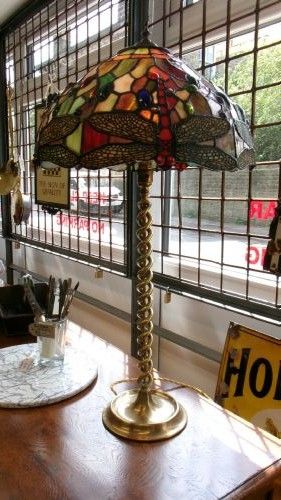


Vintage Stained Glass Light
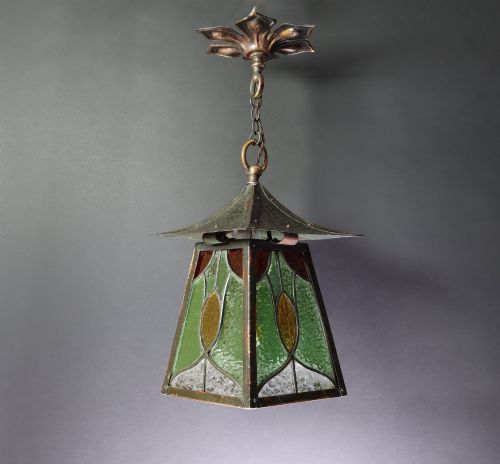
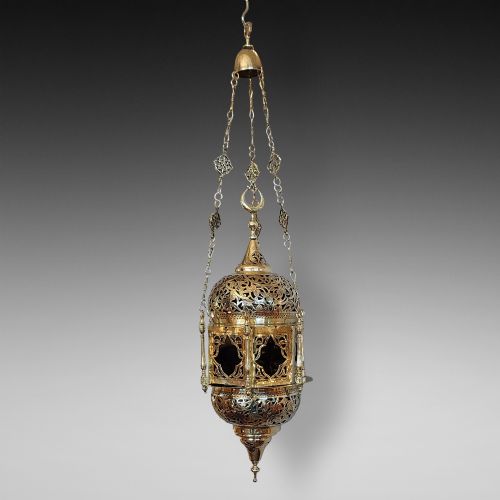
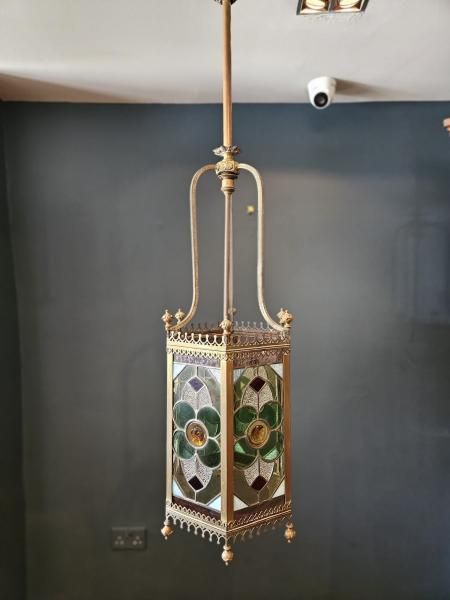
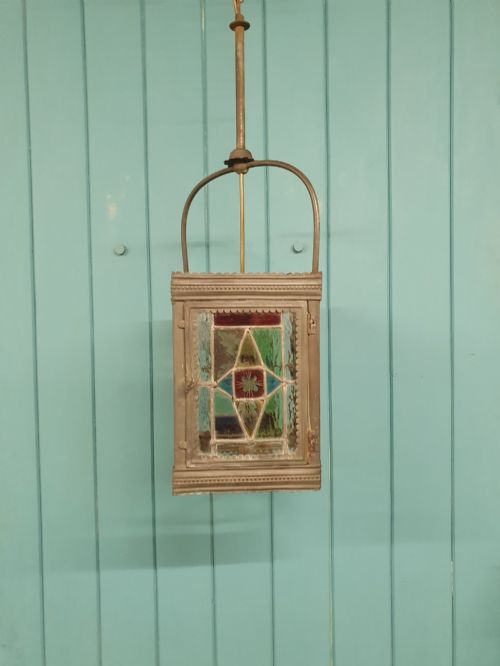
These vintage stained glass light pieces bring rich colour and patterned illumination into a room, making them a striking focal point for any interior.
Vintage Stained Glass Light
When you search for vintage stained glass light items, you encounter hanging lamps, hall lanterns, and pendant lights alongside decorative windows and panels adapted for illumination. These pieces span the Victorian, Edwardian, and 1930s periods, showing distinct influences from Art Nouveau and Arts and Crafts design.
You are most likely to meet hanging lamps with coloured glass shades and leaded porch lanterns on this page. Many examples incorporate intricate hand-painted scenes, including countryside views, birds in flight, and floral motifs alongside traditional amber bullseyes.
How they were made
Maker workshops constructed these objects using lead cames to join individual pieces of coloured glass, copper foil, and stained glass panels together into rigid geometric or pictorial designs. Supporting structures frequently incorporate brass, timber, and pine wood to form secure frames for hanging fixtures and windows.
Artisans applied hand-painted details directly onto the glass surfaces, depicting figures, winter scenes, and botanical subjects before firing the pigments for permanence. Etched glass techniques also appear, adding texture and varied opacity to complement the vibrant cobalt blue, red, and yellow glass sections.
Vintage Stained Glass Light Retail Price Guide 2026
Typical asking prices for vintage stained glass light among the pieces listed under this phrase on Sellingantiques today, from the lower quarter to the upper quarter. They describe what is for sale here now, not the wider market.
Listings feature items built from lead, brass, pine wood, and timber, spanning the Victorian period up to the 1930s.
What varies in quality
The sophistication of the hand-painted pictorial elements largely separates the standard examples from the exceptional ones. Pieces featuring finely rendered countryside scenes, birds, or specific cultural designs demonstrate greater artistic ambition than simple geometric patterns.
The integration of the lighting hardware with the glass shade or panel also dictates the overall standard. Robust brass twist frames and substantial leaded construction indicate higher grade manufacturing compared to lighter domestic adaptations.
The Vintage Stained Glass Light Glossary
- Came
- A slender channel of lead used to hold pieces of stained glass together in a window or shade. These metal strips form the linear grid of the design.
- Bullseye
- A small, circular centre piece of blown glass with a prominent lump in the middle, often utilised in windows for decorative texture and amber illumination.
- Pendant light
- A hanging light fixture suspended from the ceiling by a cord, chain, or metal rod. This form positions the stained glass shade directly in the room space.
- Art Nouveau
- A stylistic movement characterised by flowing, organic lines and floral motifs. Pieces from this era often display naturalistic plant and bird designs.
- Arts and Crafts
- A design philosophy emphasising traditional craftsmanship and simple materials. Objects from this movement prioritize honest construction and hand-worked components.
Vintage Stained Glass Light: Frequently Asked Questions
How do I hang a vintage stained glass pendant light?
These pendant lamps suspend from ceilings using chains or cords attached to existing electrical points. Professional installation ensures the weight of the leaded glass and brass components is supported safely.
Position the fixture at a height where the coloured glass shade diffuses light effectively across the room without obstructing pathways.
Can I use stained glass windows as hanging lights?
Many items listed as windows or panels can be adapted by specialists to function as ceiling lights or wall installations. This allows decorative glass featuring hand-painted countryside scenes to serve as functional illumination.
Consider the original weight of the timber frame and leaded glass before planning any structural ceiling suspension.
What periods do these lights come from?
The pieces span the late nineteenth century through to the 1930s, encompassing Victorian, Edwardian, and Art Nouveau eras. Each period brings distinct aesthetic choices, from Gothic revival influences to Dutch folk art designs.
Stylistic markers such as brass open twist stems or cobalt blue shades help identify the specific decade of manufacture.
How do I clean a stained glass light shade?
Wipe the glass surfaces gently with a soft, damp cloth to remove dust and maintain transparency. Avoid harsh chemical cleaners that might damage the lead cames or hand-painted details.
Inspect the brass and timber elements periodically to ensure the supporting structure remains secure around the glass panels.