





Bird Stained Glass
Bird stained glass brings natural colour and historic craftsmanship into a room, capturing avian subjects in leaded and painted glass.
Bird Stained Glass
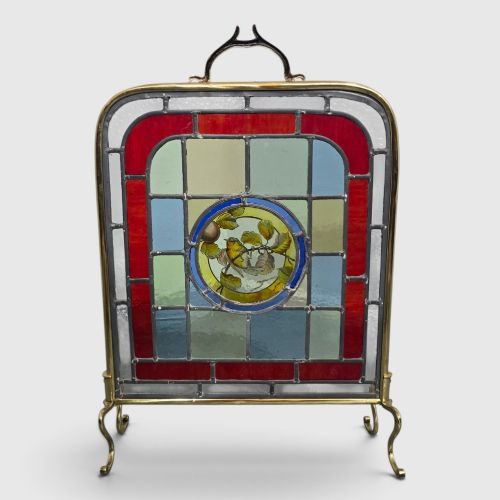
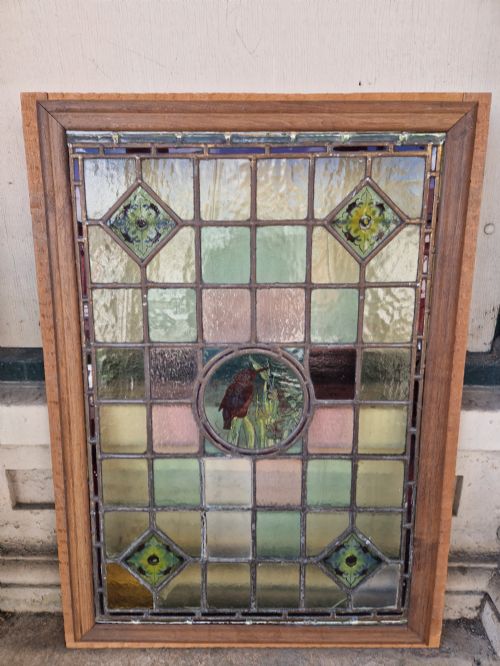
When you search for bird stained glass, you encounter architectural panels, windows, and fire screens that place avian motifs at the centre of decorative schemes. These pieces most frequently emerge from the Victorian era, alongside Edwardian and later Arts and Crafts periods, appearing in domestic doors and windows.
The common form on this page is the architectural panel or window, often featuring a painted bird subject surrounded by leaded glass. Such works demonstrate how makers integrated natural history themes into everyday domestic architecture, creating focal points that interact with natural light.
Materials and construction methods
The construction relies on assembling individual pieces of coloured glass held together by lead cording, sometimes incorporating frosted or opalescent textures and amber bullseyes. Artisans painted avian details directly onto the glass surface before firing, fusing pigment to the material to ensure durability.
Supporting frameworks utilise wood, brass, and pine, particularly in items like fire screens and architectural salvage doors. The combination of lead, glass, and metal creates sturdy structural panels designed to withstand functional placement while diffusing light.
Bird Stained Glass Retail Price Guide 2026
Typical asking prices for bird stained glass among the pieces listed under this phrase on Sellingantiques today, from the lower quarter to the upper quarter. They describe what is for sale here now, not the wider market.
Several pieces capture birds mid-flight, ensuring your glass visitor remains permanently suspended without needing migration.
Distinctions in craftsmanship
Quality rests in the precision of the leadwork and the artistry of the painted bird motif at the centre. Finer examples display meticulous brushwork that captures feather detail and expression, whereas simpler pieces rely on basic geometric arrangements with minimal hand painting.
The choice of glass further separates tiers of work, with opalescent varieties, amber bullseyes, and varied textures offering greater visual depth than uniform plain glass. The integrity of the surrounding wood or brass frame also indicates the overall standard of the object.
Rene Lalique
The Bird Stained Glass Glossary
- Leaded glass
- Individual pieces of glass joined together by strips of lead solder. This technique provides the structural grid for pictorial and geometric designs.
- Opalescent glass
- Glass that has a milky, pearlescent appearance with varied colour diffusion. It adds tonal complexity to background areas of a panel.
- Bullseye
- A small, circular knob of glass formed at the centre of a spun glass disc. These appear as decorative accents within window designs.
- Architectural salvage
- Building elements rescued from older structures for reuse or display. This category includes doors and windows bearing historic glass panels.
- Fire screen
- A decorative shield placed in front of a fireplace when not in use. Examples here incorporate brass frames and glass panels.
Bird Stained Glass: Frequently Asked Questions
How were bird stained glass windows used?
These panels served as functional architectural elements in Victorian and Edwardian homes, fitted into doors, transoms, and interior partitions to provide privacy while allowing light to pass through.
They also appeared in portable items like brass fire screens, bringing decorative motifs into domestic living spaces away from exterior windows.
How do I identify a Victorian panel?
Victorian examples frequently pair hand-painted avian subjects at the centre with traditional lead cording and pine frames. The painting style often reflects naturalistic depictions of birds accompanied by foliage.
Evidence shows these pieces integrated directly into doors and large windows during the nineteenth century.
What materials make up these pieces?
The primary components are coloured glass, lead cording, and pigment used for the painted bird details. Supporting structures involve pine wood, brass, and architectural framing.
Variations include opalescent glass, frosted glass, and amber bullseyes that add texture to the background.
How should I display a stained glass panel?
Panels work best when hung where natural light can pass through the glass, highlighting the painted details and colour variations. Wall mounting with backlighting provides an alternative for pieces removed from architectural settings.
Freestanding objects like fire screens find placement near hearths or as decorative room accents.