




Vintage Stacking Shelf
These vintage stacking shelf items are sectional bookcases offering modular storage with distinct historical character for your home.
Vintage Stacking Shelf
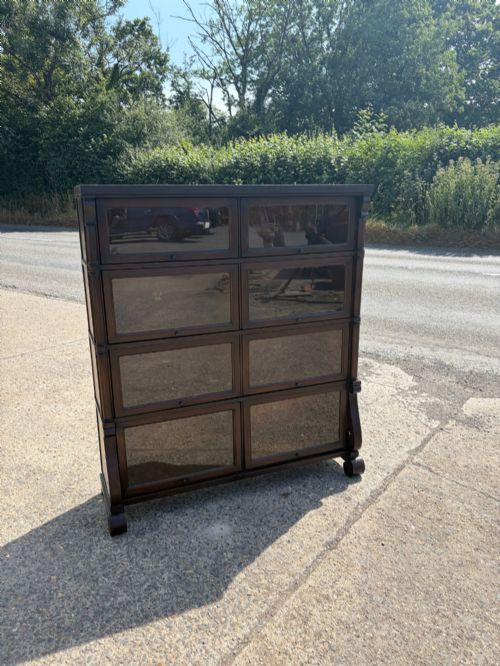
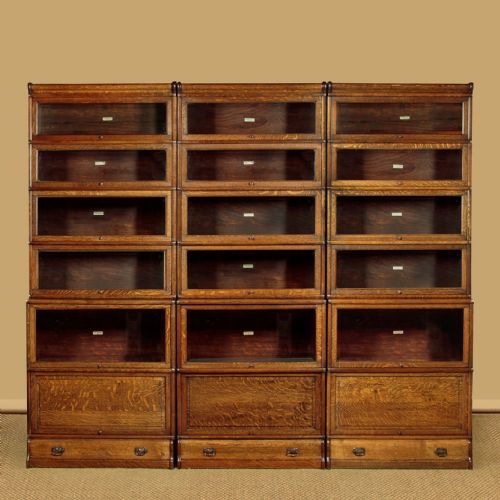
When you search for a vintage stacking shelf, you are looking at sectional barrister bookcases and modular storage units designed to hold books and papers in vertically expandable tiers. These clever modular designs allow individual sections to stack securely one upon another, providing adaptable storage that grew alongside a library.
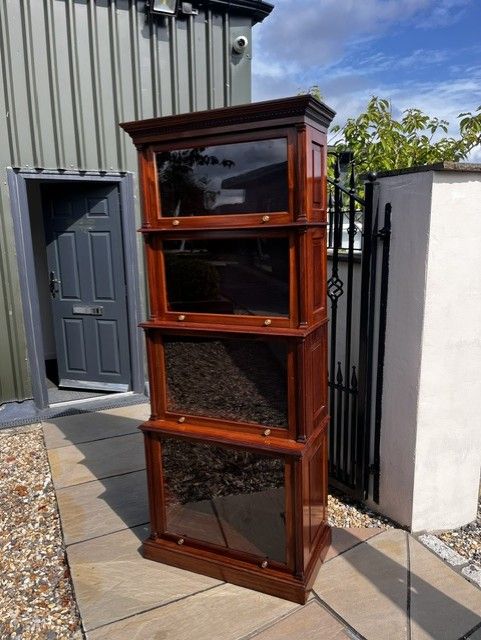
The versions you are most likely to meet on this page are oak and solid mahogany bookcases originating from the Edwardian era through to the Art Deco period. They frequently appear as multi-section glazed cases, sometimes associated with makers like Heal's, Lebus, or Globe Wernicke, reflecting early twentieth-century office and domestic organisation.
How they were made
Makers utilised solid oak and solid mahogany for the main frames and structural sections, ensuring durability across the modular tiers. Glass panels were fitted into wooden doors to protect the contents while keeping titles visible.
Brass hardware was commonly integrated to connect or secure the stacking sections and operate the opening mechanisms. These construction choices provided both structural stability and ease of reconfiguration for the user.
Listings feature oak and solid mahogany materials alongside glass and brass elements across the Edwardian, Art Deco, and 1920 periods.
What varies in quality
The refinement of the timber selection distinguishes standard utilitarian office furniture from finer domestic examples. Superior pieces display carefully chosen wood grains and solid construction throughout all sections.
The integrity of the original glass and operational hardware influences the overall standard of a piece. Original maker markings and intact sectional mechanisms further separate the best examples from altered items.
Heal s·Lebus·Globe Wernicke
The Vintage Stacking Shelf Glossary
- Sectional bookcase
- A piece of furniture built in horizontal tiers that stack vertically without permanent fixings. This modular design allows the entire unit to be easily taken apart or expanded.
- Barrister bookcase
- A specific type of sectional bookcase originally designed for lawyers to transport and house their libraries. The glass doors typically lift and slide inward above the books.
- Glazed
- Fitted with glass panels. This term describes doors or sides that allow visibility into the interior compartments while protecting the contents from dust.
- Edwardian
- Relating to the reign of King Edward VII, spanning the early twentieth century. Furniture from this period often retains traditional forms while incorporating lighter proportions.
Vintage Stacking Shelf: Frequently Asked Questions
What is a stacking bookcase?
A stacking bookcase is a modular storage unit built from multiple separate wooden tiers that rest one on top of another. This design allows sections to be added or removed individually.
The horizontal divisions mean the furniture can be transported in parts and reassembled easily in different rooms.
How do the glass doors work?
The glass doors on these sectional bookcases typically lift upwards and slide into the recess above the shelf. This mechanism keeps the door out of the way while you select a book.
Such an action relies on internal metal scissor links or similar hardware to keep the door moving smoothly.
Are these cases fixed together?
The individual sections generally rest securely on one another using gravity and locating pins rather than permanent glue or screws. This modularity was intended for practical office and library use.
You can separate the tiers simply by lifting them apart when moving the furniture to a new location.
What woods were commonly used?
Makers relied heavily on solid oak and solid mahogany for these sectional units. These hardwoods provided the necessary strength to support stacked weight without sagging.
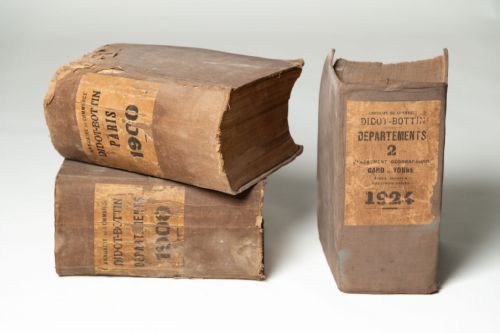
Occasional variations include decorative books or related paper goods associated with the same historical periods.