

Lawyers Sectional Bookcase
These lawyers sectional bookcase designs offer modular storage through stacking tiers, combining practical book protection with early twentieth century craftsmanship.
Lawyers Sectional Bookcase
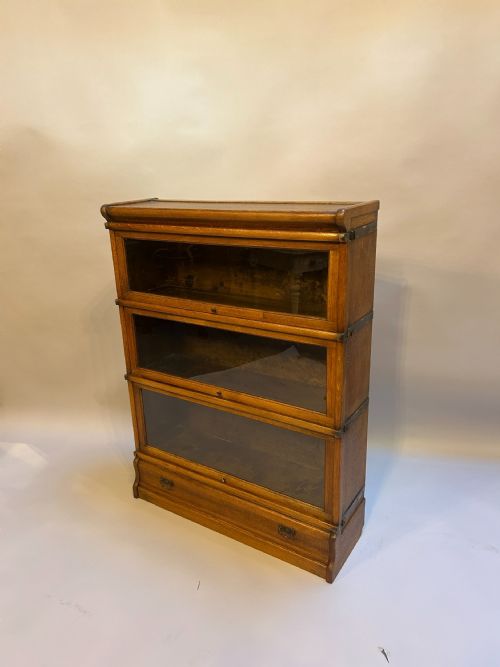
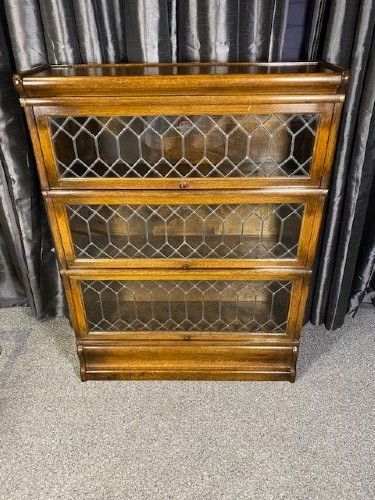
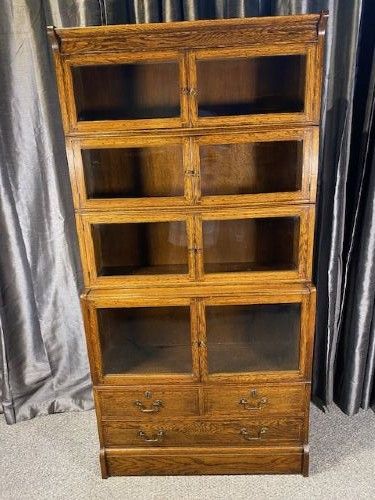
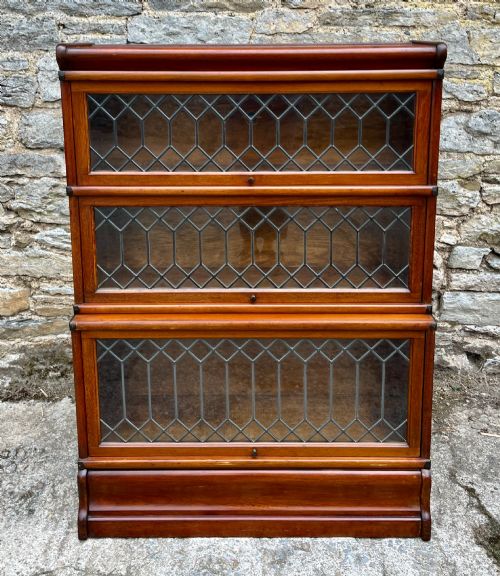
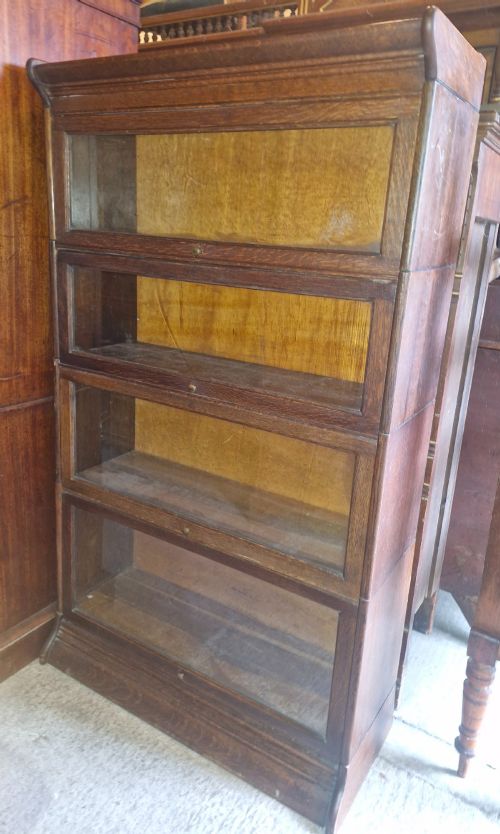
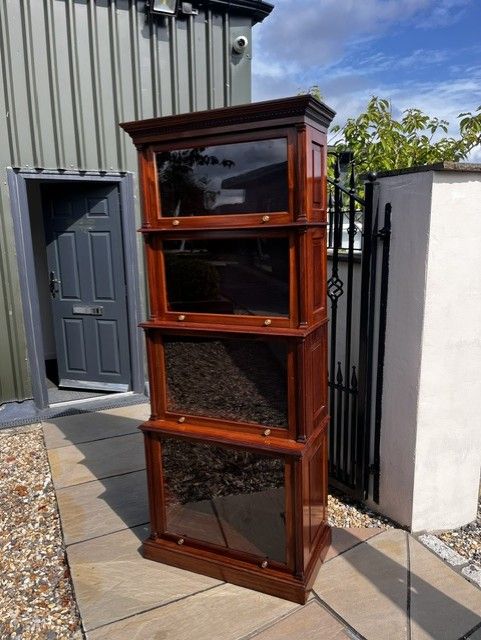
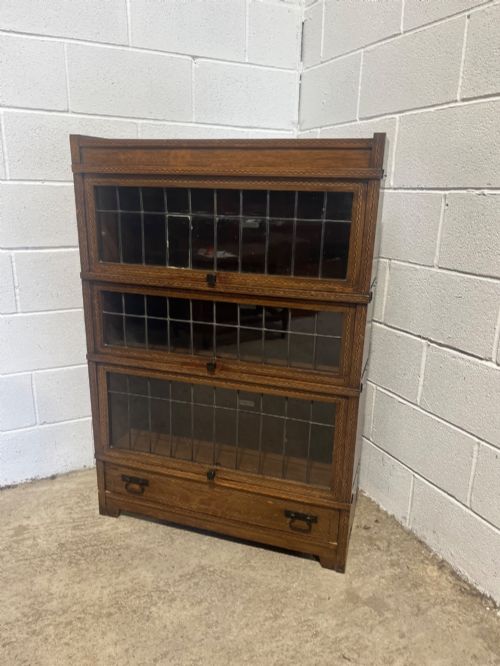
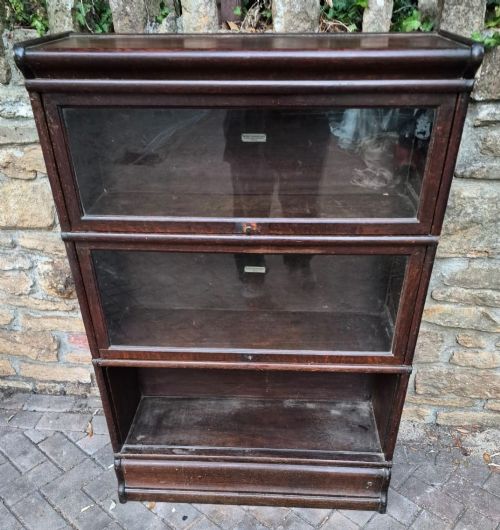
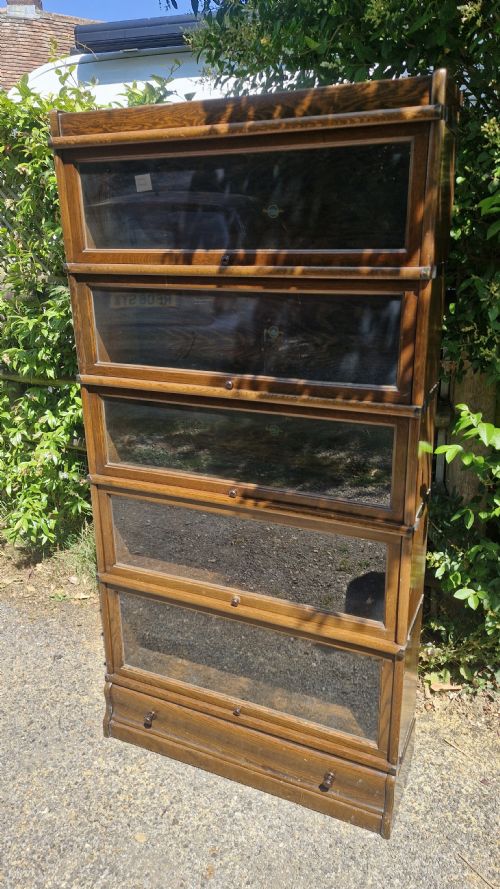
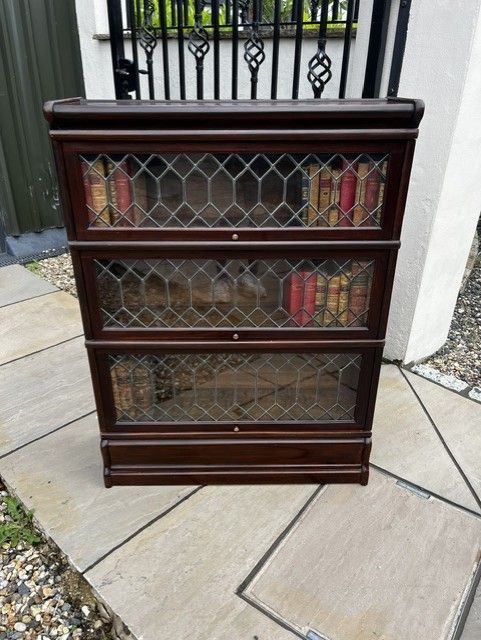
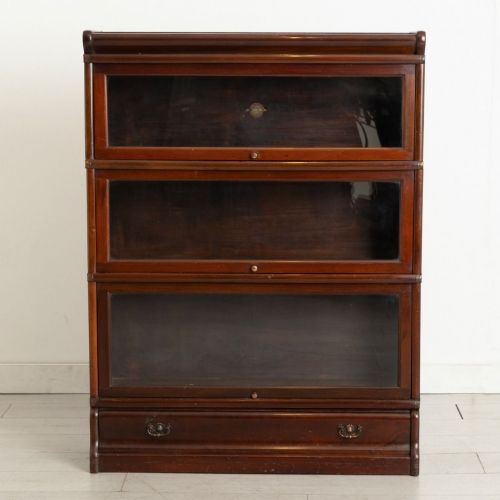
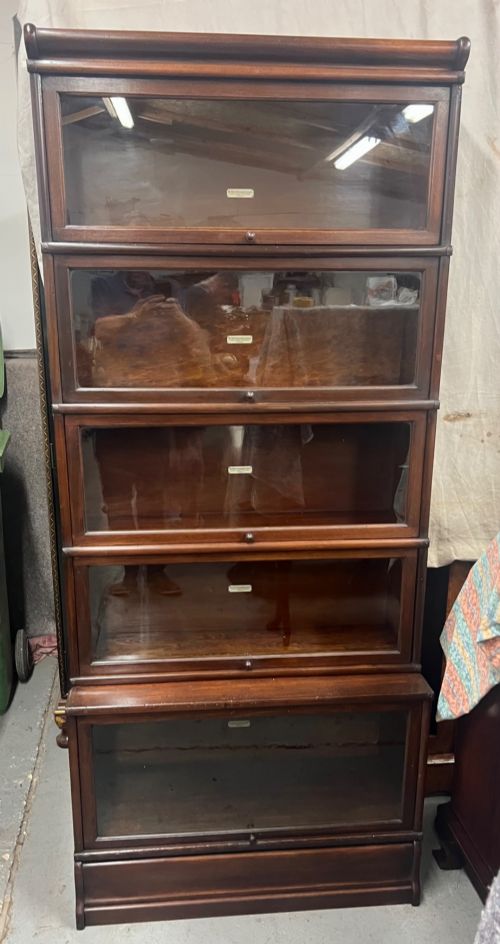
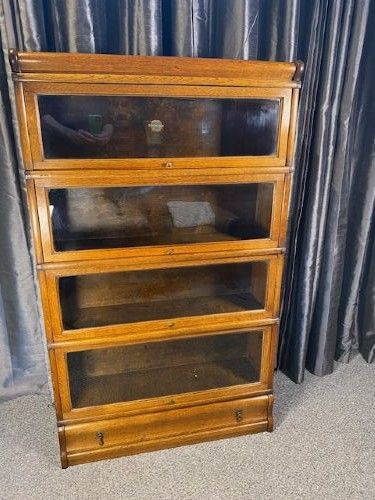
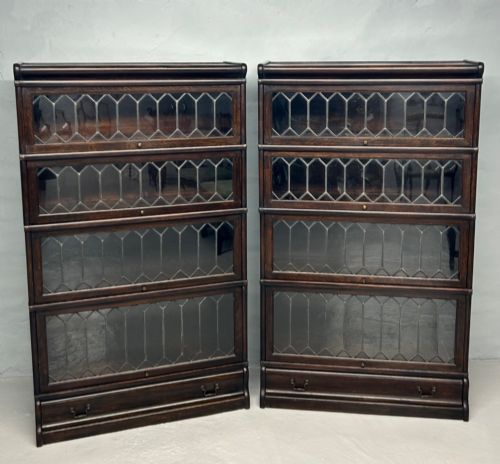
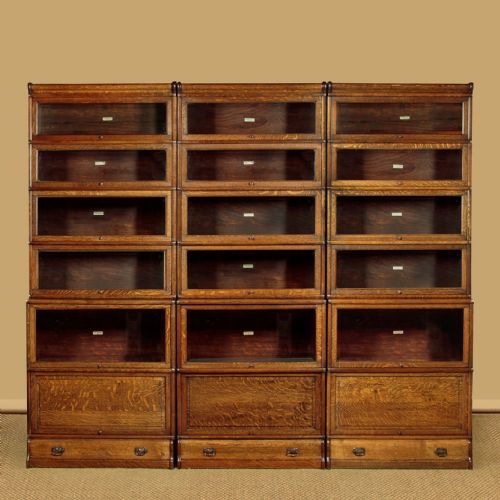
A lawyers sectional bookcase comprises individual stacking tiers with glass doors that lift and slide inside the cabinet above the books. These modular office and library cabinets appear in oak and mahogany, often featuring three or four distinct sections beneath a plinth and atop a base drawer.
Most examples date from the Edwardian period through to the nineteen thirties, reflecting early twentieth century commercial and domestic requirements. The configuration allows owners to add shelves as libraries grow, creating tall vertical stacks or paired matching cabinets.
Materials and construction methods
Cabinetmakers built these modular units primarily using solid oak or mahogany, frequently incorporating brass hardware for lifting mechanisms and handles. Glass panels protect the contents, sometimes held together in leaded light configurations within Edwardian Arts and Crafts designs.
Each tier functions as an independent box with tongue and groove joints, designed to interlock securely when stacked together. Metal pins and internal side arms guide the upward motion of the glazed doors, ensuring smooth operation across multiple sections.
Some barristers supposedly used the top tier to hide a decanter behind the law reports.
Distinctions in quality and execution
Superior examples demonstrate meticulous timber selection, displaying consistent grain patterns across matching stacking tiers and cornices. Makers such as Globe Wernicke achieved smoother door gliding actions through precise engineering of brass scissor hinges and metal slide tracks.
The presence of solid mahogany or golden oak rather than secondary veneers elevates a piece, as does intact original leaded glass and functioning base drawers. Poorer examples show mismatched timber tones between sections or replacement hardware that disrupts the mechanical symmetry.
Globe Wernicke·Warwick·Minty Library Specialists of Oxford
The Lawyers Sectional Bookcase Glossary
- Section
- An individual tier of a stacking bookcase containing its own glass door and shelf. Each section rests independently upon the one below it.
- Cornice
- The moulded top piece that caps the uppermost tier of the bookcase. It provides a finished architectural crown to the stacked cabinet.
- Plinth
- The solid base moulding or drawer unit upon which the entire stack rests. It elevates the bottom tier away from floor level.
- Leaded glass
- Small panes of glass joined together by narrow strips of lead within the door frame. This technique appears on decorative Edwardian Arts and Crafts variants.
- Stacking
- The modular method of construction where separate cabinets sit vertically on top of one another. This allows the bookcase to be easily dismantled for transport.
Lawyers Sectional Bookcase: Frequently Asked Questions
How do the doors open?
Each glass door lifts upwards on internal metal arms and slides into the horizontal space directly above the books. This mechanism allows the door to disappear entirely inside the tier.
Once pushed fully home, the door stays out of the way while books are retrieved or replaced from the shelf.
Can I separate the sections?
The tiers lift apart individually once the top cornice and locking side bands are removed. Each section is a self contained box rather than part of a single fixed carcase.
This modular construction makes relocation straightforward, even when dealing with tall multi tier stacks.
What periods do they date from?
The listings span the Edwardian era and the early twentieth century, specifically between nineteen hundred and nineteen thirty. Most examples reflect office and library manufacturing standards of this thirty year window.
Arts and Crafts influences appear in earlier Edwardian pieces, while later variants show simpler planes.
Are all sections the same height?
Tier heights vary within a single stack to accommodate different book sizes, from small octavos to large folios. Lower sections often provide deeper clearance for heavy reference volumes.
Buyers should check individual tier measurements when planning storage for oversized volumes.