



Vintage Sporting Dog Art
Vintage sporting dog art captures working hounds, terriers and gun dogs through centuries of traditional portraiture and field sports.
Vintage Sporting Dog Art
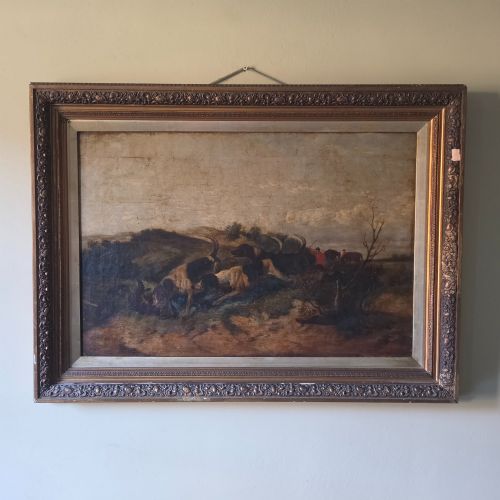
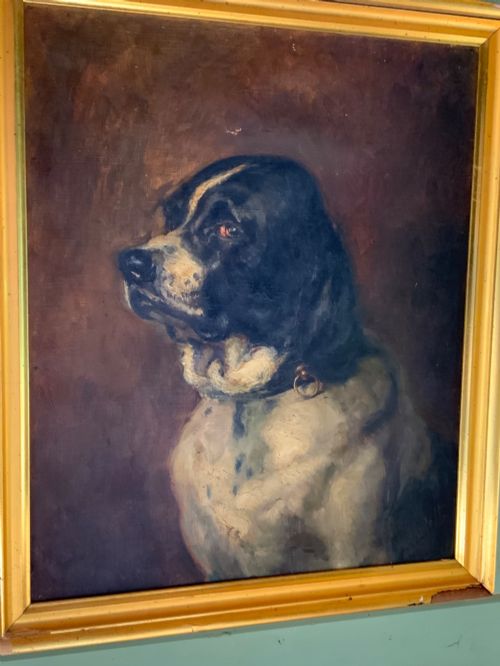
Vintage sporting dog art centres on traditional depictions of hounds, terriers, pointers and spaniels engaged in field pursuits or rendered as individual animal portraits. These works emerge primarily from nineteenth century traditions, extending through the Edwardian era and into mid twentieth century interpretations.
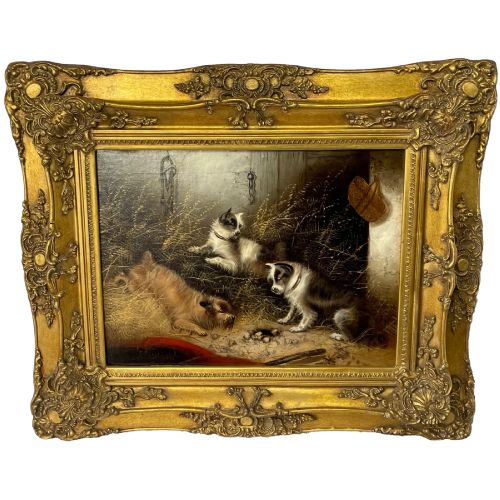
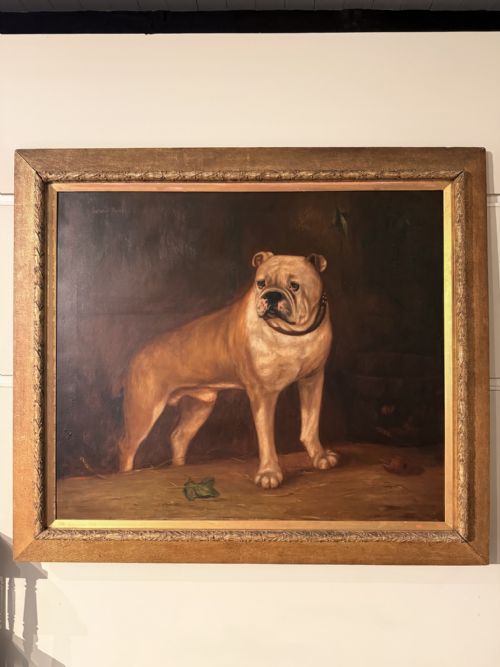
Buyers encounter oil paintings on canvas and board alongside watercolours, pastels, lithographs and etchings. Subjects range from solitary terriers guarding barn rats to large packs of foxhounds and working gun dogs positioned within detailed landscape settings.
Materials and methods
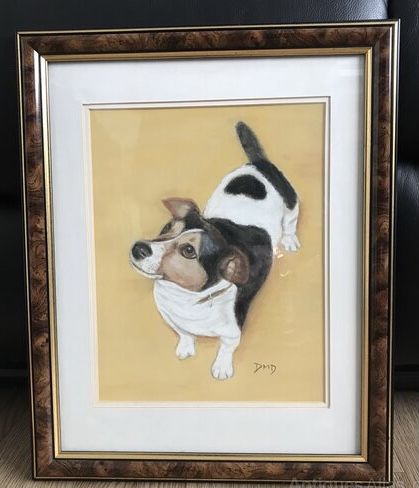
Artists relied upon oil paint applied to canvas, wood panels or board to build rich textures and deep tones for animal coats and rural backdrops. Watercolours and pastels offered a lighter touch on paper, frequently protected under glass within period frames.
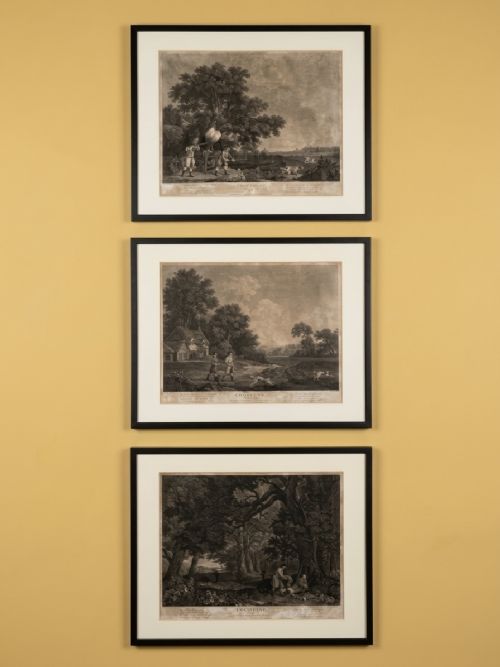
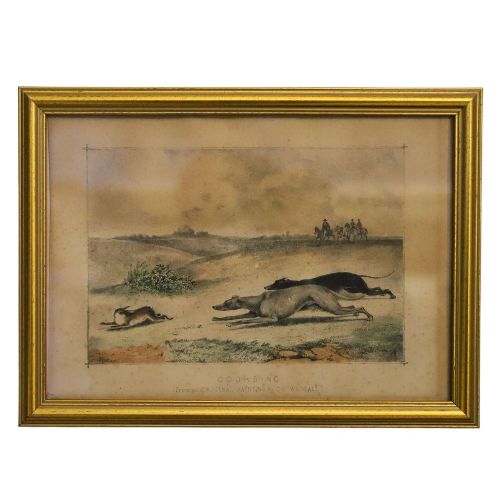
Printmakers utilised engraving and etching techniques on paper to produce multiple impressions of celebrated dogs and coursing scenes from original compositions. Gilt frames commonly enclose these works, reflecting the formal presentation standards of country houses.
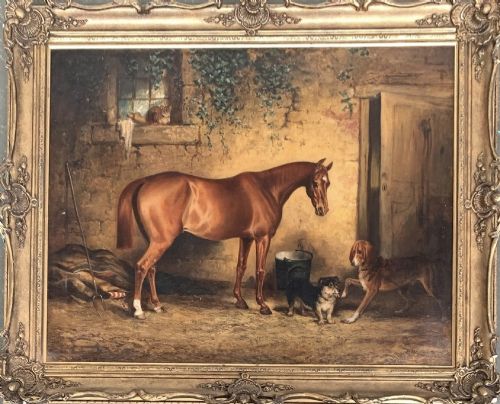
Watch for vigilant terriers caught mid-task guarding trapped rats in rustic barns.
Distinguishing quality
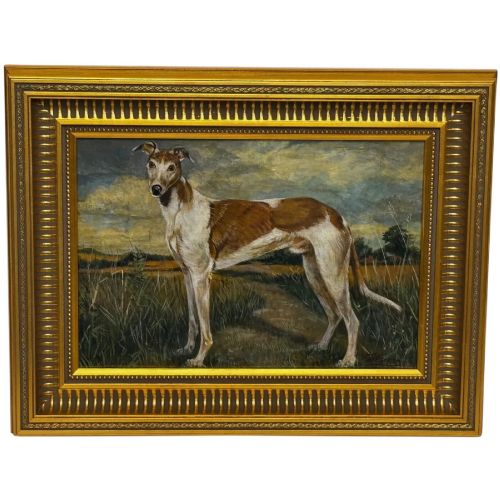
Quality rests upon the anatomical precision of the animal, the painter's handling of light across fur, and the naturalism of the surrounding landscape. Master hands capture individual canine personality and movement with structural authority rather than generic outlines.
The integration of the subject within a credible environment elevates a piece above standard decorative illustration. Provenance and clear artist attribution further separate exceptional works from anonymous school productions.
Henry Barraud·John Emms·John Frederick Herring Senior·Arthur Wardle·Henri Schouten
The Vintage Sporting Dog Art Glossary
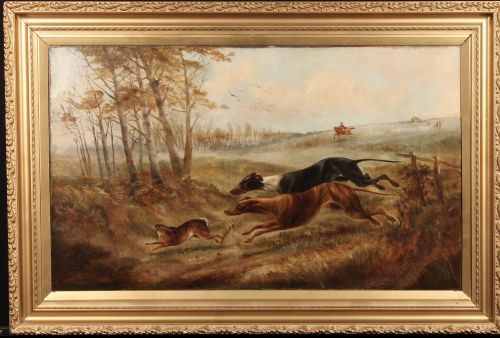
- Hare coursing
- The competitive sport of hunting hares with greyhounds or lurchers by speed and sight. These dynamic outdoor scenes frequently form the narrative core of nineteenth century sporting works.
- Etching
- A printmaking method where lines are bitten into a metal plate with acid before being inked and pressed onto paper. This technique allows for fine, expressive detail in animal hair and landscape backgrounds.
- Gun dog
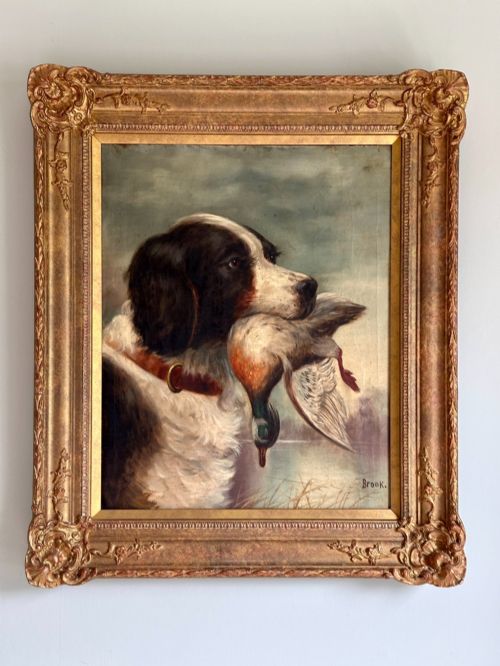
- A type of hunting dog developed to find, flush or retrieve game for shooters. Terriers, pointers, setters and spaniels appear frequently in this role.
- Lithograph
- A planographic printing process using stone or metal plates to produce multiple image impressions. Artists used this method to share popular sporting subjects widely.
Vintage Sporting Dog Art: Frequently Asked Questions
What breeds appear most often?
Terriers, pointers, spaniels and various hound types dominate the painted and printed subjects across this selection. Artists frequently recorded the specific working dogs owned by local gentry or notable country estates.
Foxhounds and lurchers also feature prominently, reflecting their central role in traditional British field sports and rural life.
How should I hang these works?
These pieces suit traditional wall placements in studies, libraries or living rooms where timber furniture and rural aesthetics prevail. Adequate wall space allows the darker tones of nineteenth century oils to register properly against the room.
Keep watercolours and works on paper away from direct sunlight to prevent fading of the pigments and delicate paper supports.
How do I date an oil painting?
Examination of the canvas support, stretcher frames, and the composition style helps establish a reliable period for the artwork. Victorian and Edwardian works often display specific framing styles and pigment characteristics typical of their decade.
Artist signatures, inscriptions on the reverse, and recorded exhibition histories provide the most secure dating evidence.
Are framed prints original?
Period engravings and lithographs are original impressions pulled from plates or stones during the era indicated, rather than modern photographic reproductions. These prints were published to record famous animals and sporting events for contemporary collectors.
Checking the paper texture and impression quality confirms the period origin of the printed sheet.