
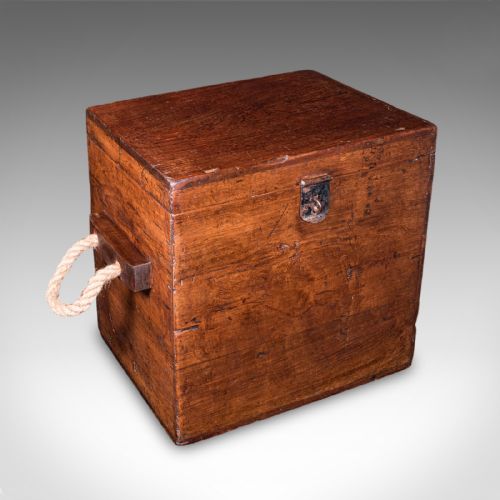
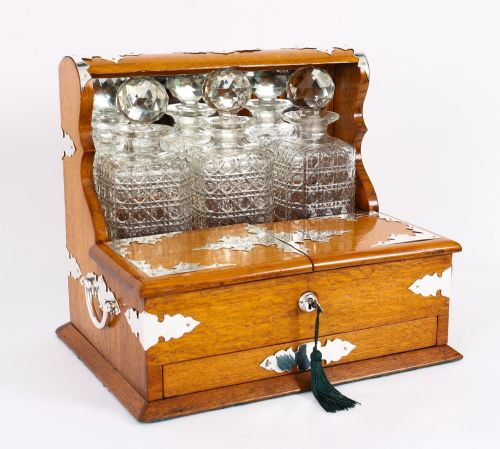

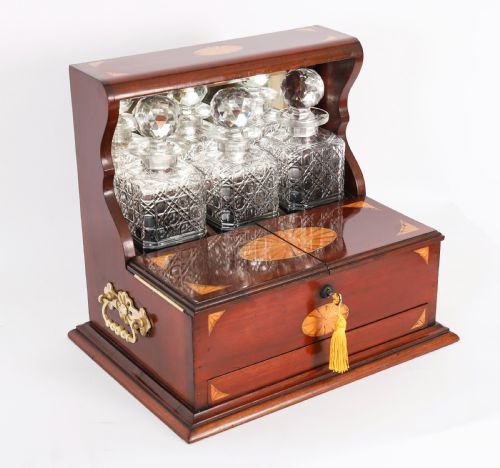


Vintage Spirit Decanter Chest
A vintage spirit decanter chest is a fitted wooden box designed to hold and lock away crystal bottles and drinking glasses for safe keeping.
Vintage Spirit Decanter Chest
A vintage spirit decanter chest brings together portable hospitality and secure storage, emerging in forms from simple brass-bound boxes to elaborate tantalus and games compendiums. You encounter pieces spanning the late eighteenth century through to the Edwardian period and the nineteen-thirties.
The most common examples on this page are Victorian and Edwardian oak or mahogany decanter boxes and tantalus sets fitted with cut glass bottles. These designs often integrate folding playing card surfaces or compartments for chips alongside the spirit bottles.
How they were made
Cabinet makers utilised dense hardwoods such as mahogany, oak, walnut, and satinwood, frequently employing brass banding to reinforce corners and protect the wood during travel or daily use. Marquetry stringing and fine inlays decorate the exterior surfaces of select boxes.
Interiors rely on precision carpentry to create fitted wooden partitions that cradle cut crystal decanters and drinking glasses securely in place. Metal locking mechanisms, often paired with drop-down fronts or lifting lids, secure the contents.
The listings span multiple decades from the eighteenth century to nineteen-thirty, using oak, mahogany, satinwood, and cut glass.
What varies in quality
The distinction between standard examples and top-tier pieces rests on the complexity of the internal mechanisms and the integration of games equipment. Compendiums that combine a locking tantalus with compartments for cards and games represent a higher standard of manufacture.
Material selection and decorative finishing separate simpler utility boxes from luxury creations. Fine satinwood inlay, extensive brass binding, and heavy cut crystal bottles elevate the standing of a piece.
The Vintage Spirit Decanter Chest Glossary
- Tantalus
- A locking drink stand that holds decanters securely by their necks, preventing the removal of the bottles until the frame is unlocked with a key. This mechanism keeps expensive spirits secure from unauthorized access.
- Cellarette
- A lockable cabinet or box designed specifically to hold wine and spirit bottles safely within a dining room or library. These containers often featured lead linings in earlier periods for cooling bottles with ice.
- Compendium
- A multi-purpose box that combines a spirit service with games equipment such as playing cards, dominoes, and chips. These sets were popular for entertaining guests in the nineteenth and early twentieth centuries.
- Marquetry
- The art of applying decorative pieces of veneer to a structure to form intricate patterns and pictures. Makers used contrasting timbers to create geometric lines and floral motifs on box lids.
- Campaign set
- A portable collection of bottles and glassware fitted into a sturdy wooden chest for travel. These sets were designed for officers on the move during the eighteenth and nineteenth centuries.
Vintage Spirit Decanter Chest: Frequently Asked Questions
What is a tantalus?
A tantalus is a locking barware frame that secures decanters by their stoppers or necks. The locking mechanism prevents guests or servants from pouring drinks without the key.
Named after the mythological figure who was kept just out of reach of food and water, the frame frustrates access while displaying the crystal bottles clearly.
How were decanter chests used?
Decanter chests were kept in drawing rooms, dining rooms, and studies to offer drinks to visitors. They kept expensive spirits locked away while remaining ready for evening hospitality.
Many examples also served as entertainment centres by including built-in compartments for playing cards and games alongside the bottles.
How do I date a decanter chest?
Dating relies on combining the timber, the style of hardware, and the construction methods. Eighteenth and early nineteenth-century pieces often use solid mahogany with minimal brass, while Victorian and Edwardian examples frequently feature oak, extensive brass binding, and complex locking mechanisms.
Later pieces from the nineteen-thirties adopt simpler lines reflecting the transition away from ornate revival styles.
Are all decanter chests lockable?
Most traditional spirit chests and tantalus frames incorporate a functional lock and key to protect valuable liquor. The lock is usually mounted on the front of the box or integrated into the top retaining bar of a tantalus.
Some portable campaign sets and simpler boxes also relied on these locks for security during transport.