

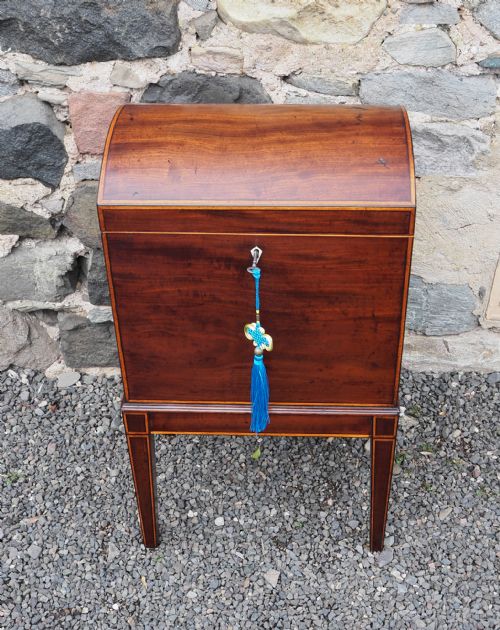


Georgian Decanter Box
A georgian decanter box safely houses your finest spirits in handsome timber, built for serious entertaining and lasting elegance.
Georgian Decanter Box
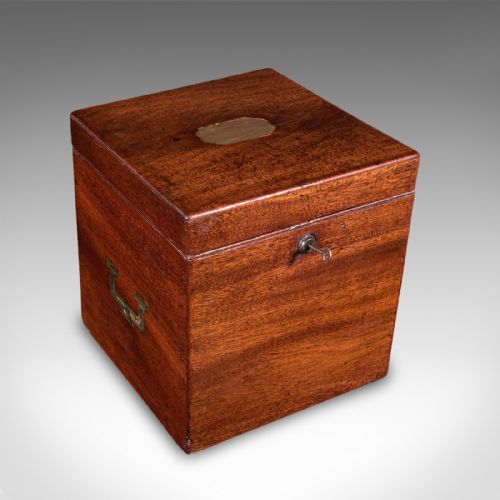
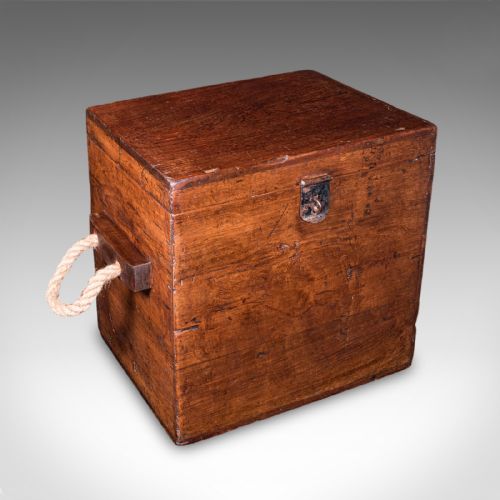
A georgian decanter box serves as a secure portable cellar for precious glassware and spirits, designed to safeguard bottles during travel or social gatherings. The pieces gathered under this phrase include cellarettes, wine coolers, bottle carriers, and complete decanter sets from the eighteenth and nineteenth centuries.
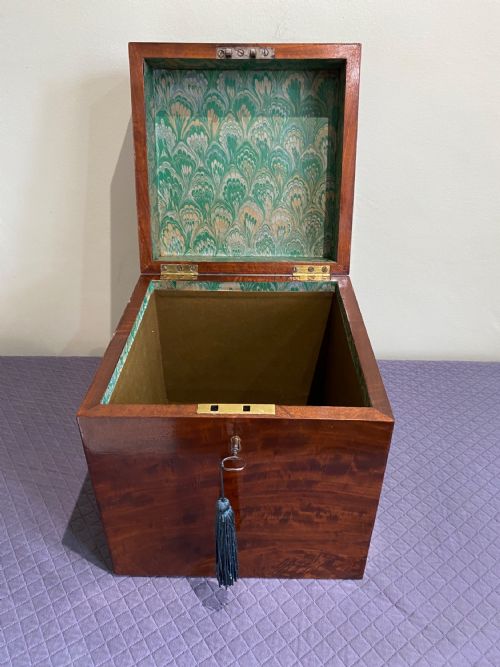
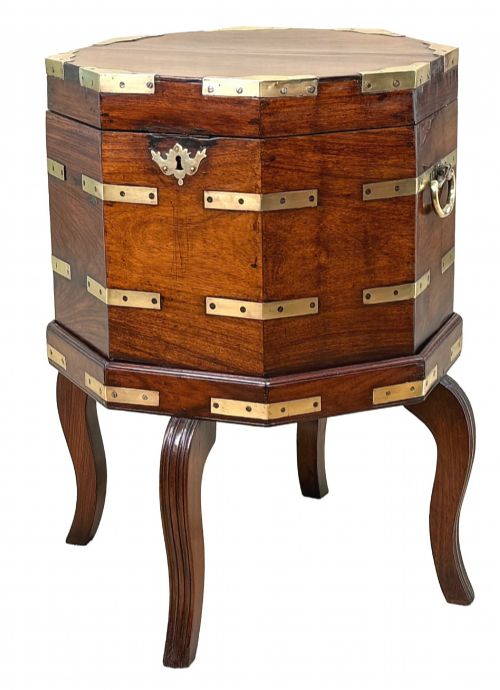
Mahogany predominates among these items, frequently paired with brass hardware, boxwood inlay, and baize linings to protect the contents. Visitors will encounter forms ranging from simple two-bottle carriers to large officer campaign sets and elaborate Anglo-Indian padouk cellarettes.
The aesthetic vocabulary spans standard Georgian designs, George III craftsmanship, Regency refinement, and Georgian Sheraton styles. Irish tantalus forms and flame mahogany variations also appear within the selection, offering diverse expressions of period luxury.
Materials and construction methods
Cabinetmakers utilised dense timbers like mahogany and padouk, often selecting figured flame mahogany for the exterior surfaces to display rich grain patterns. Boxwood inlay adds delicate contrasting detail to the woodwork, while baize lines the internal partitions.
Robust brass fittings such as carrying handles, corner brackets, and secure lock plates provide both functional reinforcement and visual contrast against the dark timber. Glass decanters complete with gold decoration accompany many of the carriers and sets.
Officers on campaign clearly refused to sacrifice fine dining, carting entire decorative glass decanter sets across continents inside stout wooden boxes.
Judging quality in period boxes
Superior examples demonstrate meticulous timber selection, where the grain of the mahogany matches seamlessly across joints and lid panels. The refinement of the boxwood inlay and the weight of the brass mountings distinguish finer workshop output from standard utility pieces.
Completeness dictates much of the standing within this category, as boxes retaining their original fitted glass decanters, stoppers, and internal partitions command greater admiration. The integrity of the original locking mechanisms and hinges further separates accomplished cabinet work from later alterations.
The Georgian Decanter Box Glossary
- Cellarette
- A lockable container designed to hold bottles of wine or spirits near the dining table. They frequently double as wine coolers in period interiors.
- Tantalus
- A locking drink cabinet that displays decanters securely while preventing access without a key. The metal bar locks the stoppers firmly in place.
- Padouk
- A heavy tropical hardwood prized for its reddish-brown colour and durability. It appears frequently in Anglo-Indian colonial furniture production.
- Baize
- A coarse woollen material resembling felt, utilised to line the interior compartments of boxes. It cushions delicate glass decanters against impact.
- Flame mahogany
- Timber cut from the fork of the mahogany tree to produce a distinctive flickering flame pattern. Cabinetmakers reserved this veneer for principal display surfaces.
Georgian Decanter Box: Frequently Asked Questions
What fits inside a georgian decanter box?
These boxes typically house two to four glass decanters alongside spaces for glasses or stoppers. The internal wooden dividers keep the vessels stable during transport.
Larger campaign sets accommodate glassware and spirits simultaneously, serving as portable bars for officers and travellers.
How do I tell George III from Regency boxes?
George III pieces often display restrained classical proportions, straight lines, and subtle boxwood stringing. Mahogany dominates this earlier phase of design.
Regency examples introduce bolder brass mountings, heavier lion paw feet, and more dramatic use of figured timber grains reflecting changing tastes.
Were these boxes meant for travel?
Many examples incorporate robust brass carrying handles specifically for movement between rooms or on journeys. Campaign sets were built to withstand the rigours of military travel.
Other larger cellarettes remained stationary in the dining room, functioning as heavy furniture pieces rather than portable carriers.
How should I clean the interior baize?
Gentle surface brushing removes dust from the woollen lining without disturbing the original fibres. Avoid liquid cleaners that might warp the underlying timber.
Professional textile conservation is recommended for delicate or fragile linings showing advanced wear.