


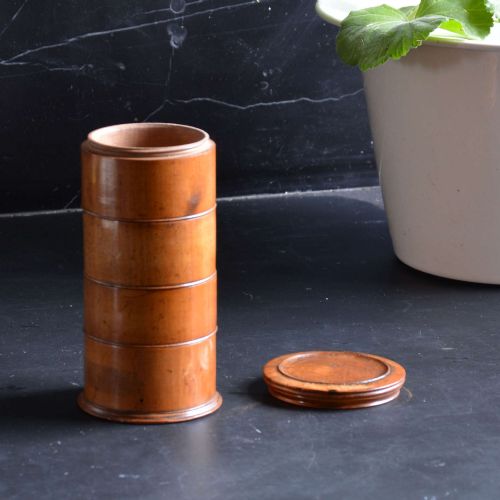


Vintage Spice Grinder
These vintage spice grinder pieces are solid treen towers and metal mortars designed to reduce whole seeds to powder, prized for both practical utility and kitchen display.
Vintage Spice Grinder
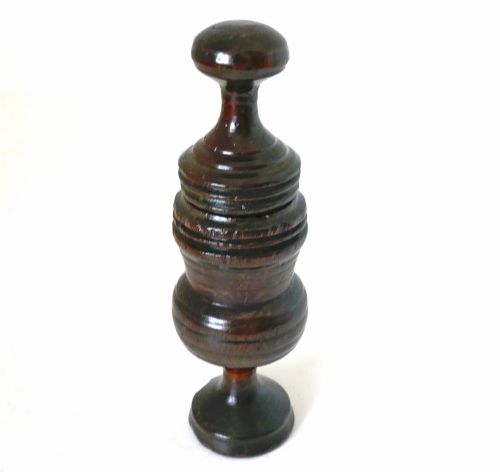
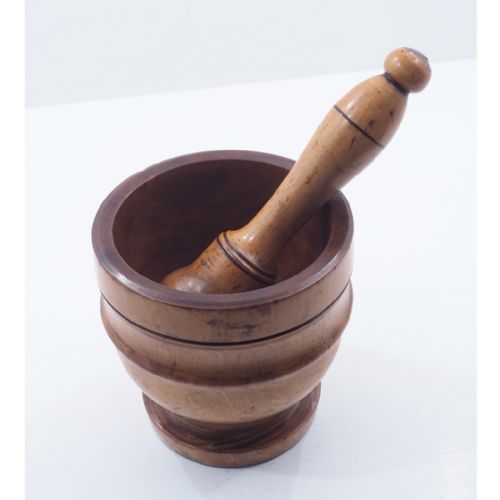
A vintage spice grinder encompasses turned wooden spice towers alongside various bronze, brass, and ceramic mortars and pestles. These objects emerge from periods ranging from the seventeenth century through to the Edwardian era and the nineteen-thirties.
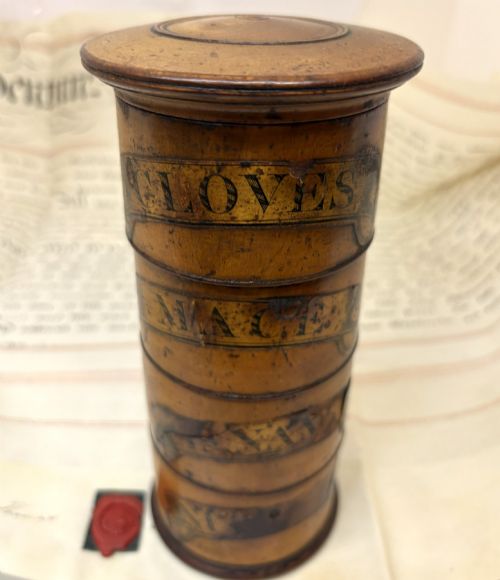
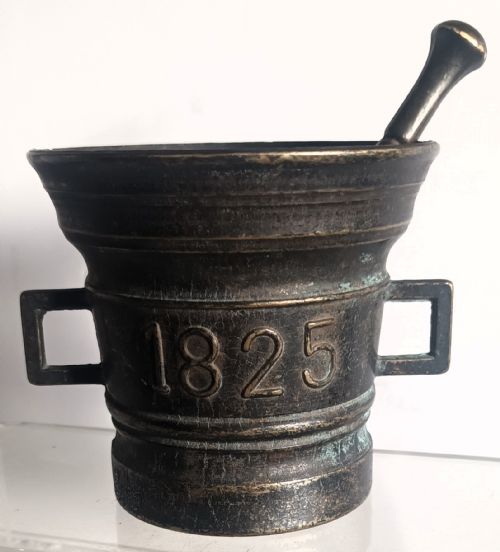
Wooden examples frequently take the form of multi-tiered treen containers fashioned from boxwood, sycamore, or olive wood. Metal variants typically consist of heavy cast bronze or bell metal vessels paired with matching pestles.
The pieces present various regional styles, including traditional treen, rustic European designs, and Victorian apothecary equipment. Buyers most commonly encounter brass and bronze kitchenalia alongside turned wooden spice containers from the Georgian and Victorian periods.
Materials and construction
Makers utilised dense timbers such as boxwood, sycamore, beech, and lignum vitae for turned wooden pieces, shaping them on a lathe into multi-part vessels. Metal versions relied on bronze, brass, and bell metal, cast in moulds to create thick-walled bowls capable of withstanding heavy impact.
Woodturners constructed multi-tiered spice towers with threaded sections or fitted joints to hold different compartments. Metalworkers finished cast vessels through grinding and polishing, sometimes adding decorative bands or moulded handles to the exterior.
Turned wooden spice towers often feature hidden middle tiers, proving that Georgian cooks loved secret compartments just as much as cabinetmakers did.
Distinctions in quality
Quality rests upon the crispness of the turning in wooden pieces and the weight and casting definition in metal examples. Early treen towers display precise symmetry and tight-fitting joins across multiple sections.
Metal mortars demonstrate quality through wall thickness, stable bases, and well-proportioned pestles that match the vessel's scale. Superior examples retain clear casting marks and original surface patination developed through age and use.
The Vintage Spice Grinder Glossary
- Treen
- Small handmade wooden objects for domestic use. This term covers everything from turned spice towers to utilitarian kitchen containers.
- Mortar and pestle
- A heavy bowl and a club-shaped tool used for crushing and grinding substances. Metal and ceramic versions served kitchens and apothecaries alike.
- Spice tower
- A multi-part turned wooden container designed to hold several ground spices in stacked compartments. These objects date predominantly from the Georgian period.
- Bell metal
- An alloy of copper and tin traditionally used for casting bells, adapted for heavy kitchen and apothecary mortars.
- Apothecary
- A practitioner who prepared and sold medicines. Equipment associated with these shops includes heavy bronze and brass mortars.
Vintage Spice Grinder: Frequently Asked Questions
How do I use a vintage spice grinder?
Wooden spice towers unscrew to reveal compartments for storing previously ground aromatics or seeds. Metal mortars receive whole seeds directly into the bowl for manual crushing with the heavy pestle.
Care should be taken with older materials. Modern dampness can warp antique wood and discolour unprotected brass or bronze surfaces.
Are these bronze mortars English or continental?
Many surviving bronze and brass mortars originate from English workshops, while others trace back to Dutch or broader European foundries. Foundry marks, rim profiles, and stylistic details help indicate regional origin.
Trade and migration distributed these heavy metal implements widely across borders during the seventeenth and eighteenth centuries.
What is treen?
Treen describes small domestic wooden wares made by turners and woodworkers over several centuries. Sycamore, boxwood, and beech served as common mediums for these functional items.
Collectors prize early treen for its tactile quality and the visible tool marks left by the lathe.
How do I date a brass mortar?
Dating relies on wall thickness, rim shape, decorative moulding, and the specific alloy composition used in the casting process. Earlier seventeenth-century examples often display simpler, heavier forms than later Victorian adaptations.
Comparing known apothecary collections provides a reliable benchmark for stylistic changes over time.