



Turned Wood Mortar
A turned wood mortar is a heavy kitchen or apothecary vessel shaped on a lathe, prized for its dense grain and tactile domestic history.
Turned Wood Mortar
When you search for a turned wood mortar, you are looking at functional vessels formed on a lathe for crushing spices, herbs, or medicinal ingredients. Most examples met on this page belong to the nineteenth century, though earlier seventeenth-century and mid-eighteenth-century pieces appear regularly.
These items primarily function as kitchenware, treen, or apothecary gear. Forms range from small spice grinders and snuff mortars to substantial chemists' mortars paired with their original pestles.
How they were made
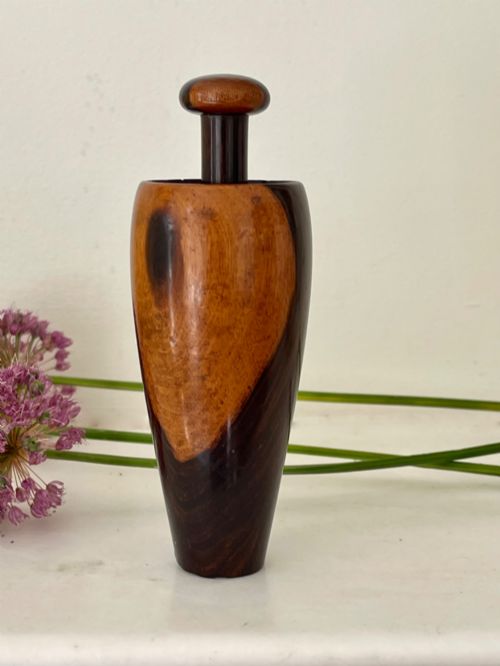
Turned wood mortars take shape on a lathe from dense timbers selected for strength and weight. Lignum vitae and fruitwood provide the heavy, close-grained structure needed to withstand constant pounding without splitting.
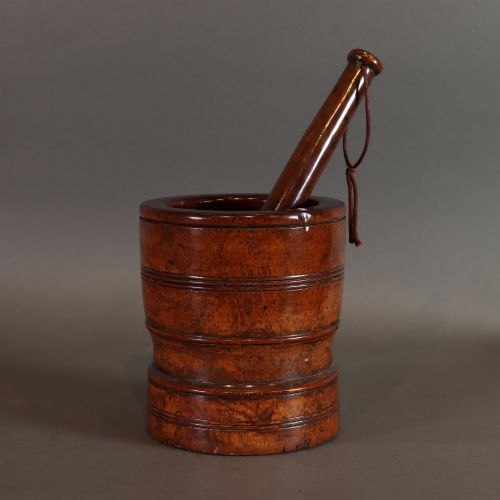
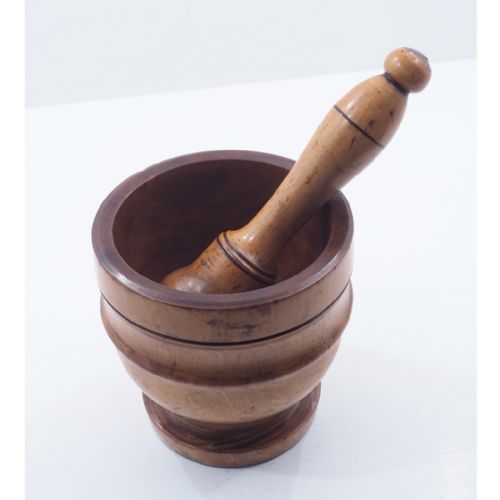
Makers also utilise walnut and olive wood, shaping the exterior with simple decorative rings and ridges while hollowing the interior into a deep, smooth bowl.
What varies in quality
Quality rests primarily on the choice of timber and the crispness of the lathe turning. Denser woods like lignum vitae command attention for their sheer weight and oily sheen.
The survival of a matching pestle elevates an example considerably, as these companion pieces frequently separated over centuries of use.
The Turned Wood Mortar Glossary
- Treen
- Small handmade wooden domestic objects. The term encompasses everything from bowls and spoons to mortars used in the kitchen.
- Lignum Vitae
- A remarkably heavy and dense tropical hardwood. Its natural resins make it exceptionally resistant to splitting under impact.
- Fruitwood
- Timber sourced from fruit-bearing trees such as apple or pear. It offers a fine, even grain favoured by early turners.
- Apothocary
- A practitioner who prepared and sold medicines. Their wooden mortars were essential tools for grinding roots, barks, and dried herbs.
Turned Wood Mortar: Frequently Asked Questions
Can I still use these mortars for cooking?
Many sturdy nineteenth-century and twentieth-century examples remain robust enough for grinding dry spices and salt. Earlier seventeenth-century pieces are better preserved for display.
Check the interior bowl for stability and historic splitting before attempting any culinary tasks.
How do I date a turned wood mortar?
Dating relies on tool marks left by the lathe, timber selection, and overall proportions. Seventeenth-century examples often display thicker walls and dense lignum vitae.
Later nineteenth-century versions tend towards lighter fruitwoods and more refined, thinner turning profiles.
Why do some mortars have matching pestles?
The pestle shared the same lathe work and timber as the mortar, ensuring equal weight and durability during grinding. Finding both pieces together is uncommon due to centuries of domestic displacement.
Complete sets provide a clearer picture of how the vessel functioned in a historical kitchen or apothecary.