
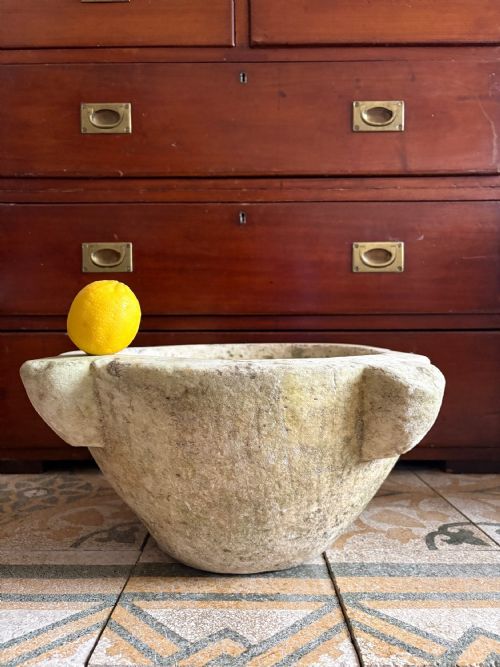


Large Mortar
A large antique mortar is a heavy kitchen or apothecary vessel for grinding materials, prized for its sheer presence and tactile utility.
Large Mortar
When you search for a large antique mortar, you encounter substantial utilitarian vessels spanning the 18th century to the Edwardian period. The forms range from kitchenware and rustic vessels to apothecary equipment and industrial pieces.
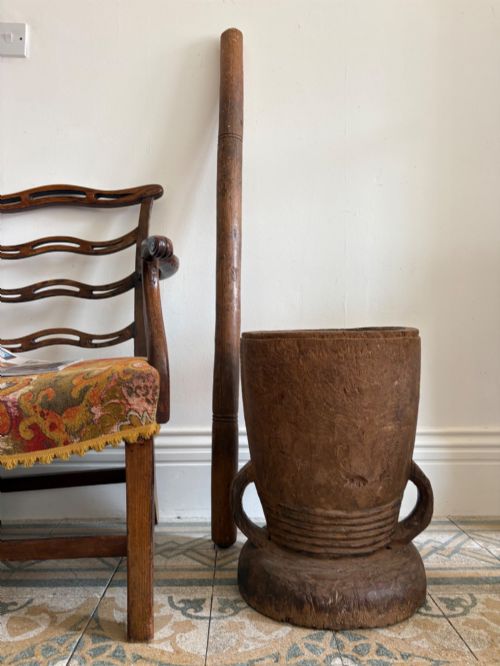
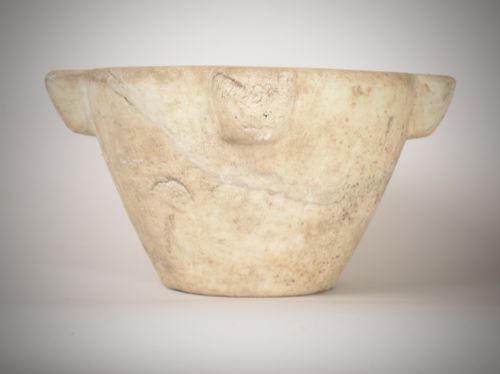
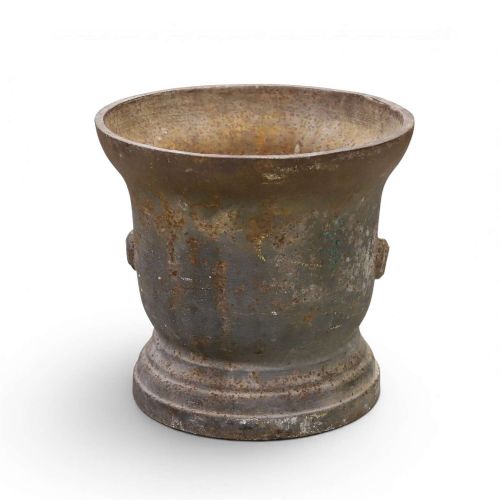
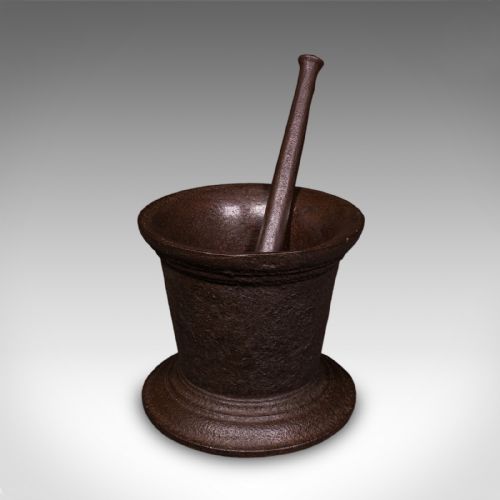
Marble examples dominate the range, often Italian or French, alongside cast iron, bronze, bell metal, ceramic, and hardwoods such as beech, elm, and tree trunk.
Stylistic origins stretch from Georgian England and French chateaux to African tribal work and Chinese country pieces, offering considerable variety in regional form.
How they were made
Stone and marble pieces relied on heavy manual chisel work to hollow out solid blocks, resulting in thick walls designed to absorb heavy impacts. Metal versions in bronze, bell metal, and cast iron utilised foundry casting, sometimes incorporating decorative motifs directly into the mould.
Wooden items, including treen pestles and tree trunk grain mortars, were shaped from green or seasoned hardwoods using traditional turning and hand-carving techniques.
Combination sets frequently paired stone or metal vessels with matching wooden or iron pestles designed for specific grinding tasks.
One recorded dye maker's first stage mortar tips the scales at an astonishing one hundred and forty pounds.
What varies in quality
The density and selection of the raw material dictate the structural integrity of the piece, with dense marbles and heavy cast metals representing the upper tier of production. Finer items show confident tool marks, precise symmetry, and clean casting without structural casting flaws.
Proportion and scale separate ordinary kitchen utensils from monumental dye maker or apothecary vessels, where sheer weight and capacity elevate the object's presence.
The Large Mortar Glossary
- Bell metal
- An alloy of copper and tin traditionally used for casting bells, offering a resonant tone and high durability. It appears frequently in early metalware mortars.
- Apothecary
- A historical term relating to the preparation and dispensing of medicines. Such vessels were built to withstand rigorous pulverising of botanical and chemical ingredients.
- Treen
- Small handmade wooden household objects. These include turned pestles and smaller wooden mortars intended for domestic use.
- Fleur-de-lis
- A stylised lily iris motif frequently cast into early bronze and metalware vessels as a decorative or heraldic mark.
- Chateau
- A large French country house or estate. Cast iron mortars originating from these kitchens often display utilitarian robustness combined with refined regional styling.
Large Mortar: Frequently Asked Questions
What were large antique mortars used for?
These vessels served primarily to grind, crush, and mix dry or wet ingredients in kitchens, apothecaries, and industrial dye works. Their heavy construction prevented shifting while workers used pestles to reduce materials into powders or pastes.
In domestic settings, they prepared herbs and spices, while larger industrial versions handled heavy commercial workloads such as pigments and grains.
Can I still use an antique mortar for cooking?
Many stone, ceramic, and metal mortars remain structurally sound for culinary grinding tasks. However, you should verify the material history, as industrial or dye-maker vessels may retain residues from non-food substances.
Wooden and cast iron variants require specific care to avoid absorbing moisture or developing rust during food preparation.
How do I distinguish bronze from cast iron?
Bronze exhibits a warmer, golden-brown metallic tone and does not rust like iron, though it develops a natural dark patina over centuries. Cast iron is heavier, magnetic, duller in colour, and prone to surface oxidation.
Casting seams and textures also differ, with bronze pieces often showing sharper detail from finer mould work.