



Wooden Pestle and Mortar
A wooden pestle and mortar is a practical kitchen tool with centuries of domestic and apothecary history, bringing rustic texture to a modern interior.
Wooden Pestle and Mortar
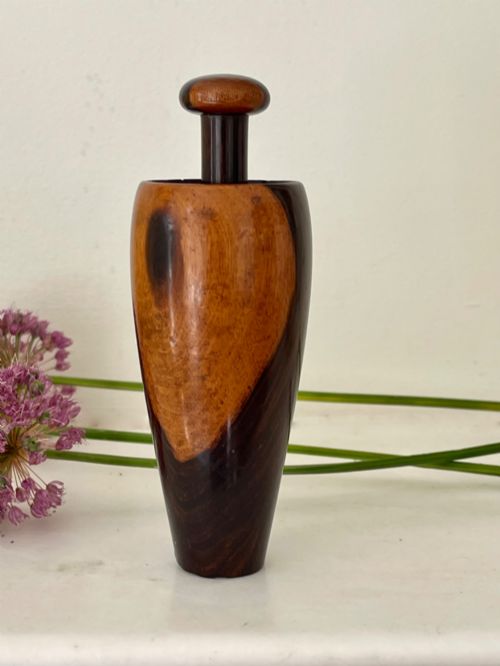
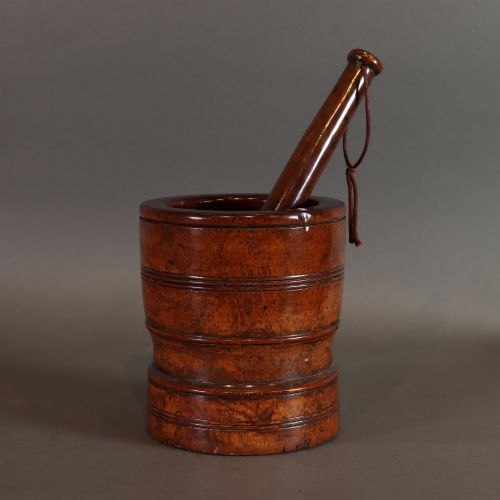
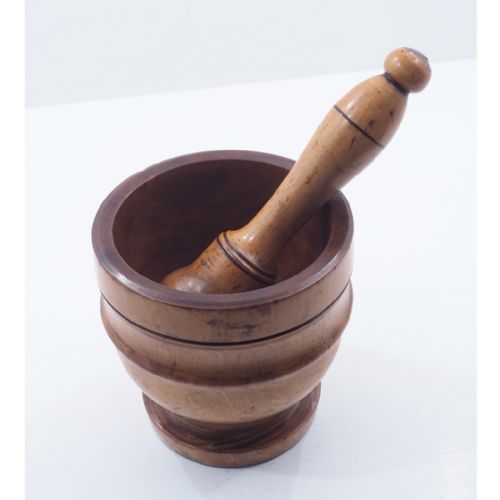
A wooden pestle and mortar combines a heavy grinding bowl with a matching hand-held crusher, shaped from dense timber or tree trunks for kitchen and apothecary use. When you search for a wooden pestle and mortar, you find forms ranging from small snuff containers to heavy floor-standing vessels.
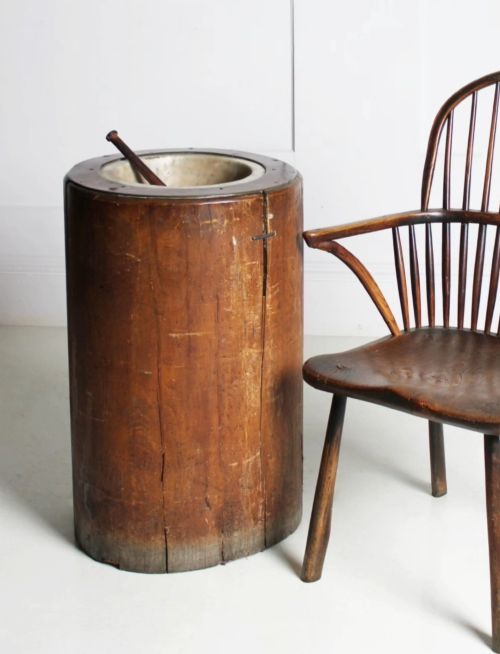
The pieces on this page span several centuries, including seventeenth-century country primitives, eighteenth-century oak designs with wrought iron mounts, and Victorian treen examples. Smaller domestic kitchenware sits alongside larger grain mortars and chemists' equipment.
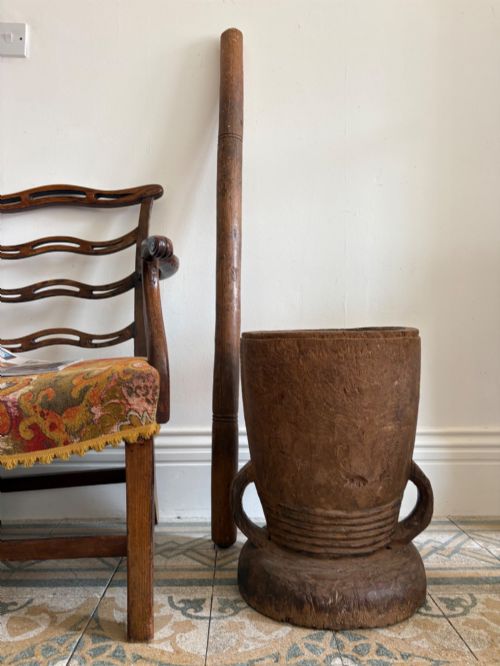
Origins vary from English workshops to African tribal makers and rustic European settings. Hardwoods dominate the selection, offering the sheer weight required for crushing herbs, spices, and roots.
How they were made
Craftsmen shaped these vessels from solid blocks of timber, utilising dense hardwoods such as lignum vitae, fruitwood, walnut, and olive wood. Tree trunks were hand-carved to form the deep bowls, ensuring the wood could withstand repeated impact from the pestle.
Certain pieces incorporate metal reinforcement, notably wrought iron mountings fitted to seventeenth and eighteenth-century English apothecary designs to prevent splitting under heavy pressure. Surfaces display the tool marks of early turning and carving techniques.
Listings feature woods ranging from dense lignum vitae and fruitwood to oak, walnut, and olive wood.
What varies in quality
Quality rests in the density and choice of timber, with exceptionally heavy woods like lignum vitae and well-figured fruitwoods commanding greater interest. The integrity of the vessel wall and the balanced weight of the matching pestle dictate the functional merit of the piece.
Patina and surface depth distinguish items that have seen genuine domestic or apothecary service from more uniform later productions. The crispness of early hand-carved tool marks and the survival of original mounts separate basic utilitarian objects from finer examples of historic treen.
The Wooden Pestle and Mortar Glossary
- Lignum vitae
- An extremely dense and heavy dark hardwood used for high-impact items. It resists splitting and was frequently turned for seventeenth-century mortars.
- Apothecary
- A practitioner who prepared and sold medicines and drugs. Their shops utilised robust mortars for crushing roots, barks, and minerals.
- Primitive
- Unrefined or rustic in manufacture, often hand-carved with basic tools. African tribal grain mortars and early country pieces often fall into this descriptive grouping.
Wooden Pestle and Mortar: Frequently Asked Questions
What were wooden pestles and mortars used for?
These vessels served to crush, grind, and mix dry ingredients, herbs, spices, and medical compounds before the advent of modern machinery. Apothecaries and domestic cooks relied on them daily to reduce roots and resins into fine powders.
Larger floor-standing versions and African grain mortars handled bulk agricultural produce, while smaller treen examples sat on tables for snuff or kitchen spices.
How can I tell the age of a wooden mortar?
Age is judged by the tool marks left from lathe-turning or hand-carving, the type of timber used, and the overall wear patterns on the interior base. Seventeenth and eighteenth-century examples often display deep patination, adze marks, or iron reinforcements.
Later nineteenth and twentieth-century versions tend to have cleaner, more mechanised turning lines and utilise woods like walnut or olive wood.
Are these mortars still usable today?
Many historic wooden mortars retain their structural integrity and can still handle light culinary tasks like crushing dry spices and herbs. However, very old or dry timbers may crack under heavy pressure or absorb strong oils.
Buyers often choose to display them as decorative sculptures or use them for dry storage rather than heavy kitchen work.