


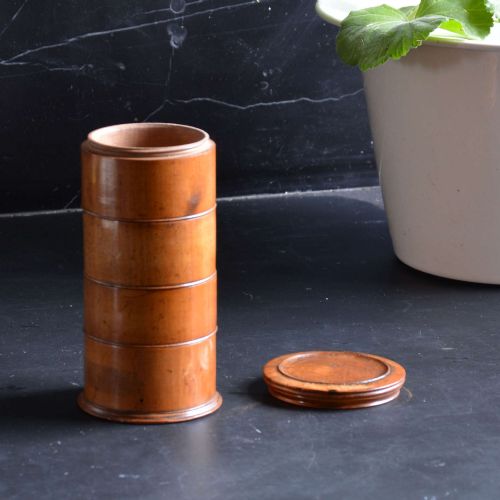


Antique Spice Grinder
An antique spice grinder brings tactile weight and domestic history to a modern kitchen, offering the solid utility of bronze, brass, and turned wood.
Antique Spice Grinder
An antique spice grinder encompasses utilitarian kitchenalia and treen containers, focusing heavily on mortar and pestle sets alongside multi-tiered wooden spice towers. These objects span from the seventeenth century through the Edwardian period, reflecting centuries of culinary and apothecary preparation.
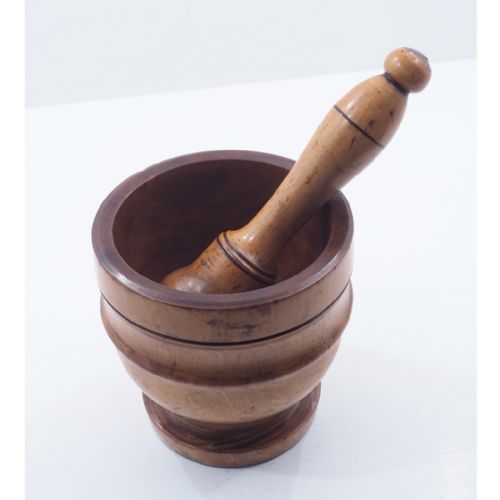
Wooden examples frequently utilise sycamore, boxwood, fruitwood, and beech, often shaped through traditional turning techniques into compact vessels. Metal variants lean towards heavy cast bronze, bell metal, and brass, offering substantial heft for grinding hard resins and seeds.
The buyer meets a diverse range of origins and styles, from English and continental treen to Indo-Persian metalwork and Dutch bronze castings. Domestic pieces mingle with apothecary equipment, showing how overlapping designs served both the kitchen and the chemist's shop.
Materials and construction
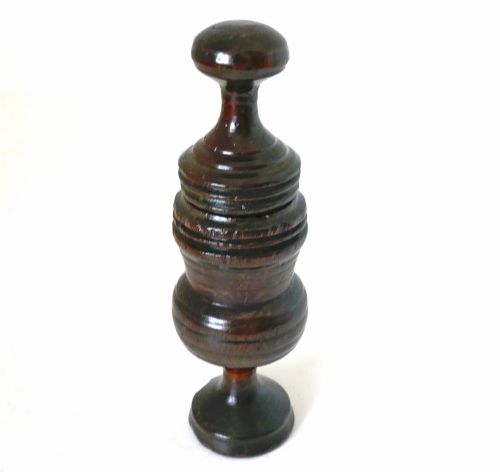
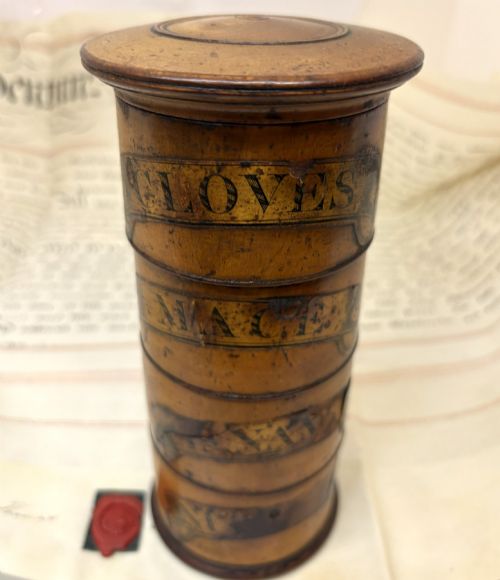
Makers shaped wooden pieces from native hardwoods like sycamore and fruitwood on a lathe, producing ring-turned profiles and sectional spice towers. These turned objects rely on tight friction fits and threaded joints to enclose compartments securely.
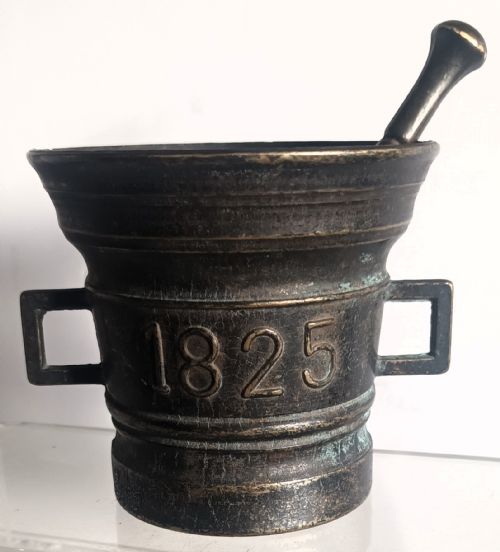
Metal vessels emerged from foundry moulds, utilising bronze, bell metal, and brass poured to create thick walls capable of absorbing heavy impacts. Artisans then finished these metal surfaces with turned lathe marks or cast decorative motifs such as the Tudor rose.
Ceramic bodies appear alongside turned beech in later Edwardian examples, introducing glazed surfaces to apothecary sets. Each material dictated the workshop method, pairing woodturning with metal casting to achieve durable daily tools.
Listings feature turned wood pieces in sycamore, fruitwood, and boxwood alongside heavy bronze and brass metalware.
Factors of quality and distinction
Quality rests in the crispness of the turning on wooden pieces, where clean ring details and tight sectional alignment reveal the turner's skill. Earlier treen displays sharper tool marks and better-preserved threads within multi-part spice towers.
In metalware, quality is visible in the density of the casting and the balance between the mortar and its matching pestle. Smooth interior wear from honest usage contrasts with crude modern casting, while crisp exterior decorative relief separates standard foundry work from finer commissions.
The Antique Spice Grinder Glossary
- Treen
- Small handmade wooden domestic objects. Items in this category range from turned containers to kitchen utensils fashioned by rural craftsmen.
- Mortar and pestle
- A heavy bowl paired with a club-shaped tool used for crushing substances. Metal and stone variants were standard for both kitchen and apothecary use.
- Bell metal
- An alloy of copper and tin utilised for heavy casting. This material provides the resonant tone and structural strength seen in early mortars.
- Spice tower
- A multi-compartment turned wooden container designed to hold different aromatics. Sections screw or stack together vertically.
- Apothecary
- A practitioner who prepared and sold medicines. Their equipment frequently crossed over into domestic spice preparation.
Antique Spice Grinder: Frequently Asked Questions
How do I date a wooden spice grinder?
Dating relies on timber choice, tool marks left by the lathe, and overall form. Earlier pieces often display irregular hand-turned profiles in sycamore or fruitwood.
Later Victorian and Edwardian examples show more uniform machine finishing and different wood selections such as beech or boxwood.
Were these used for food or medicine?
Both functions overlap significantly in these listings. Many heavy bronze mortars served chemists and doctors for compounding remedies.
Lighter turned wood containers and smaller mortars were built for domestic kitchens to grind cooking spices.
How should I clean an antique metal mortar?
Maintenance requires keeping the original surface undisturbed by harsh abrasives. Gentle dusting and occasional dry wiping preserve the historic patina.
Aggressive polishing removes the aged oxidation that collectors look for on bronze and brass.
What is a spice tower?
A spice tower is a multi-part treen vessel made of stacked wooden sections. Each tier unscrews to hold a different variety of aromatic powder or seed.
These compact containers were popular in domestic settings for saving space on the tabletop.
Is the pestle original to the mortar?
Matching the pestle to the mortar involves checking for consistent wear patterns, metal composition, and proportional scale. Genuine sets share the same alloy mix and historical age.
Replacement pestles often show different degrees of surface oxidation or mismatched tool marks.