


Vintage Silver Trinket Jar
These vintage silver trinket jars combine precious metal with glass and enamel to hold dressing table essentials with elegance.
Vintage Silver Trinket Jar
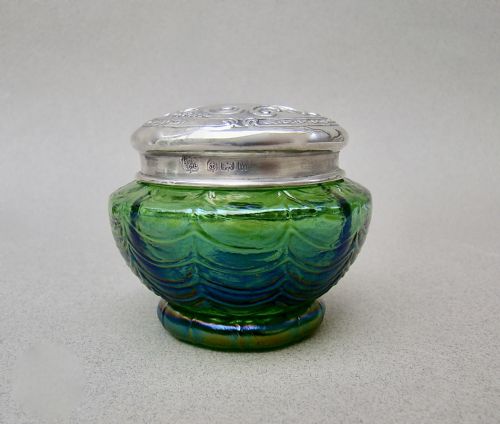
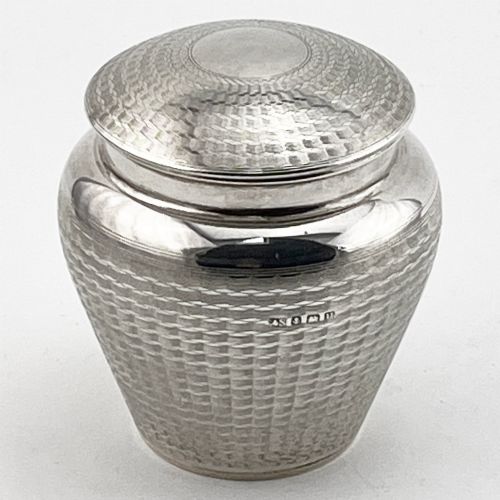
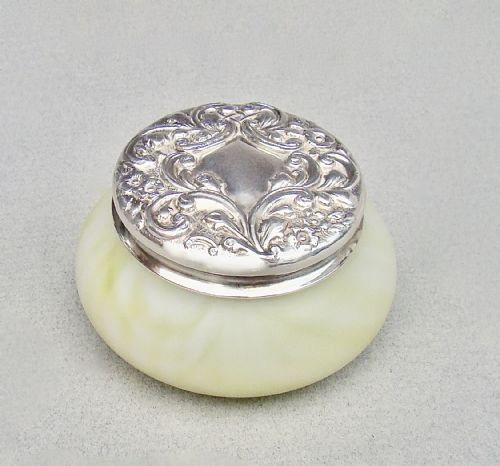
A vintage silver trinket jar serves to hold small personal items on dressing tables and desks, combining a precious metal lid with a glass or crystal vessel. These containers appear in various forms including vanity jars, tea caddies, and lidded bowls across the selection.
The objects span multiple decades from the early twentieth century through the mid-century period, with strong representation from the Edwardian era and the nineteen-twenties and thirties. Makers utilise diverse aesthetic movements such as Art Deco, Art Nouveau, and Neoclassical Revival to shape the metal mounts and glass bodies.
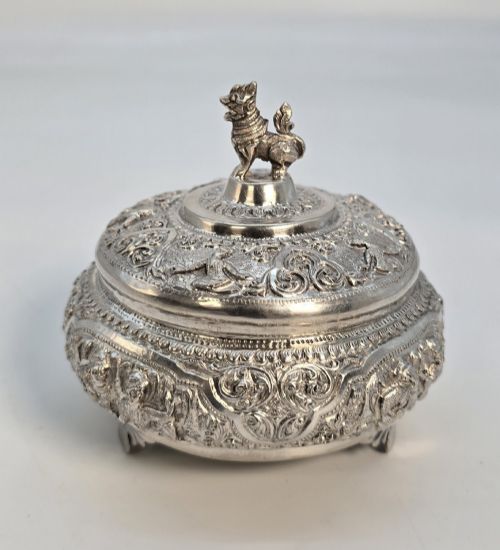
Buyers encounter British sterling silver and silver plate alongside continental and Indian silver work. The vessels beneath the metal covers feature cut glass, cut crystal, satin glass, and coloured glass bases.
How they were made
Silversmiths formed the lids and mounts using stamping, piercing, and repoussé techniques, often incorporating hallmarks to record the assay office, year, and maker. Glass blowers and cutters produced heavy crystal and coloured glass bodies, sometimes adding overlaid or cased layers.
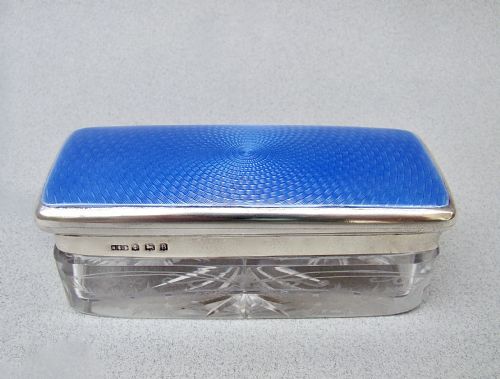
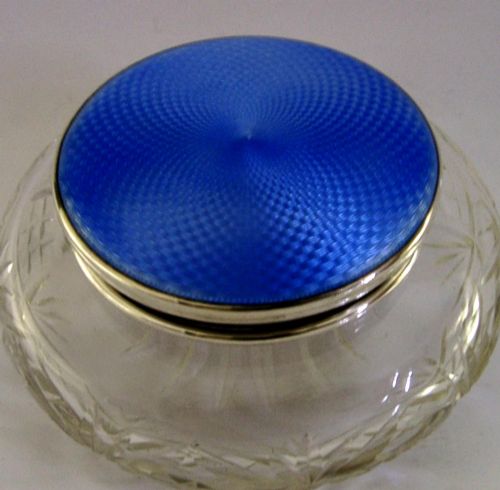
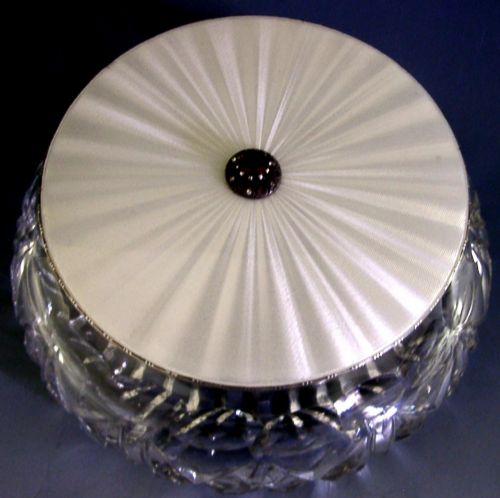
Enamelling techniques such as guilloche added vibrant colour to the silver surfaces through translucent engine-turned patterns beneath coloured glass enamels. Artisans also integrated organic materials like tortoiseshell into the hinged or lift-off silver covers.
Heart-shaped crystal boxes ensured that dressing table storage doubled as a permanent display of romantic sentiment.
What varies in quality
The weight and clarity of the glass vessel dictate foundational quality, where deep hand-cut facets and heavy crystal elevate a piece far above simple pressed glass. Crispness in the silver stamping and the precision of engine-turned guilloche enamel separate standard utility items from finer workshop production.
Condition of the delicate enamel work and the snugness of the lid fit influence overall merit. Pieces retaining intact coloured enamels without chips or hairline fractures command greater appreciation.
A J Pepper & Co·Henry Clifford Davis·A Bromet & Co·Posen
The Vintage Silver Trinket Jar Glossary
- Guilloche enamel
- A decorative technique involving precise mechanical engraving beneath translucent enamel layers. This method creates repeating geometric patterns that catch the light through coloured glass.
- Sterling silver
- An alloy consisting of pure silver and other metals, standardised for strength. British pieces carry hallmark stamps to verify this metallic composition.
- Tea caddy
- A small lidded container originally designed to store loose tea leaves. Many examples function equally well as decorative trinket jars on dressing tables.
- Overlay
- A manufacturing method where a layer of coloured glass covers a clear crystal core. Artisans cut through the outer layer to expose contrasting patterns beneath.
Vintage Silver Trinket Jar: Frequently Asked Questions
What were vintage silver trinket jars used for?
These vessels held small personal effects on dressing tables, including hairpins, rings, rouge, and other vanity accessories.
Their presence added a refined decorative element to nineteenth and twentieth-century bedrooms while keeping small valuables secure beneath heavy lids.
How do I date a silver trinket jar?
British pieces feature stamped hallmarks that include a date letter indicating the exact year of assay. Additional dating clues come from the overall style, such as geometric Art Deco motifs or flowing Edwardian lines.
Comparing the manufacturing techniques and glass styles helps narrow down the decade of production when hallmarks are absent or worn.
Are enamel lids fragile?
Guilloche and coloured enamel surfaces require careful handling to prevent chipping or cracking. The glass bodies beneath also demand gentle treatment during cleaning.
Placing these jars on stable surfaces away from high-traffic areas protects both the glass bases and the decorative metal tops from accidental impact.
What is the difference between crystal and glass?
Cut crystal contains mineral content that increases its weight, brilliance, and refractive index compared to standard glass. This heavier material allows for deeper, sharper facet cutting on vanity jars.
Pieces made from cut crystal offer a resonant ring when tapped lightly and display distinct prismatic colour dispersion under direct light.