

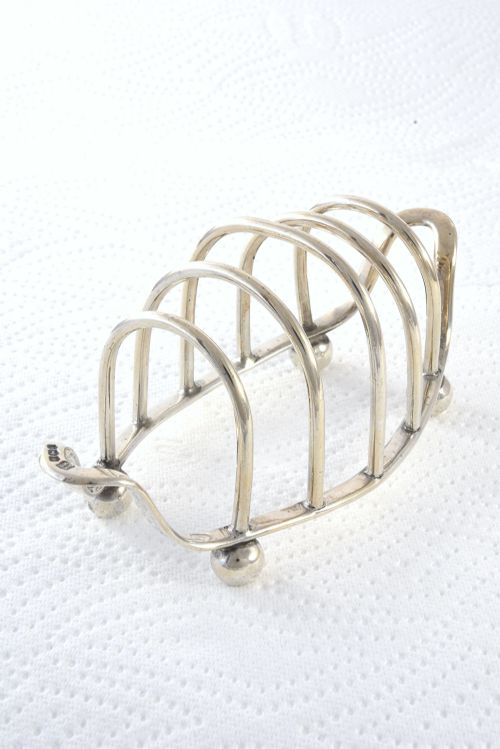


Vintage Silver Toast Holder
These vintage silver toast holders keep crisp breakfast toast separated at the table, offering a clever architectural frame that holds slices upright without sogginess.
Vintage Silver Toast Holder
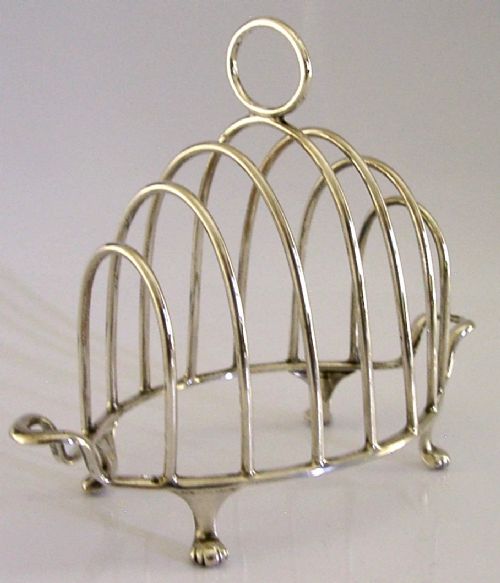
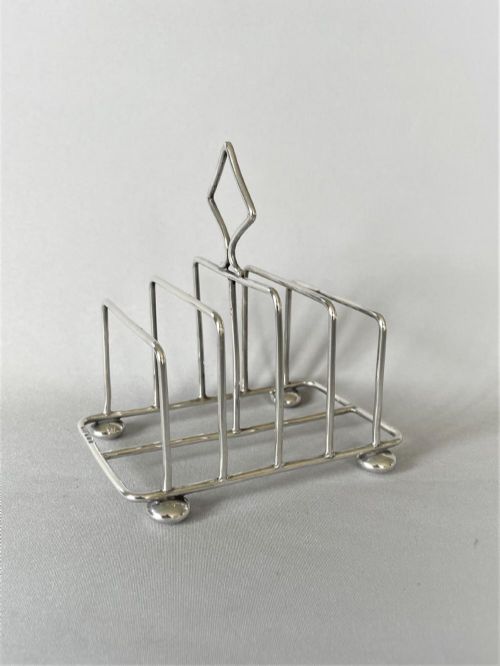
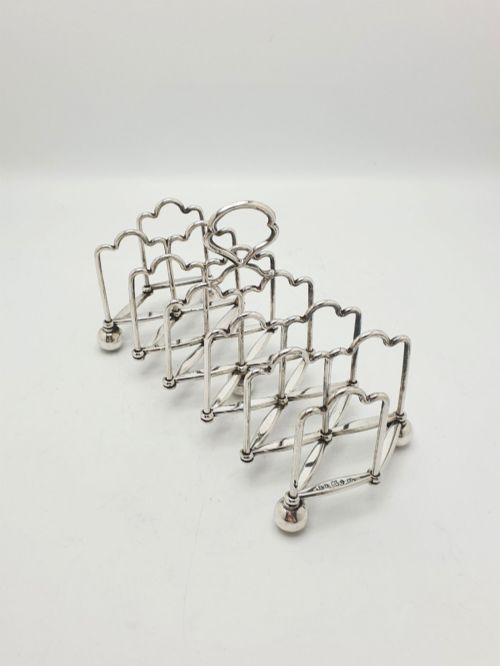
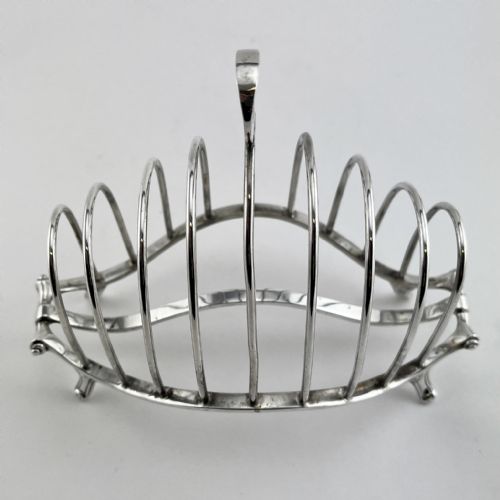
A vintage silver toast holder is a specialised piece of tableware designed to keep hot toast crisp by preventing the slices from touching and trapping steam. These practical frames appear in various forms on this page, including extendable designs, wishbone shapes, trefoil configurations, and multi-slice versions ranging from four to six divisions.
The pieces available here span several distinct periods, including Georgian, Victorian, Edwardian, and Art Deco eras, alongside mid-twentieth-century examples. Originating mostly as utilitarian breakfast table accessories, they reflect the shifting domestic tastes and dining habits of the nineteenth and twentieth centuries.
Makers utilise different configurations such as expanding racks or stationary arched dividers soldered to a rectangular base, often supported by small ball or bracket feet. Collectors encounter both solid sterling silver and silver-plated base metals among the selections on offer.
How they were made
Makers constructed these pieces using sterling silver or through electroplating techniques applied to base metal and nickel silver. Silversmiths formed the individual arched bars by hand or wire-drawing, attaching them securely to a pierced or solid metal base.
Workshops utilised soldering and riveting to join the looped dividers to the base plate, ensuring stability when holding heavy crusts of bread. Sheffield and London silversmiths frequently stamped their work with hallmarks denoting the metal standard, assay office, and date letter.
Some Victorian breakfast tables featured extending toast racks that stretched out like accordions when the family appetite demanded extra slices.
What varies in quality
The thickness of the silver plating and the structural integrity of the soldered joints distinguish standard utility items from finer workshop productions. Thicker silver layers resist wear from daily cleaning and polishing, whereas thin plate reveals the base metal underneath over time.
Design complexity and maker reputation separate ordinary items from exceptional examples, such as those featuring extending mechanisms or attributed to notable designers and firms. The weight of the sterling silver and the crispness of the wirework or casting also indicate the level of craftsmanship involved.
Elkington·Mappin and Webb·Roberts and Belk·Christopher Dresser·Hukin and Heath
The Vintage Silver Toast Holder Glossary
- Silver plate
- A thin layer of silver bonded to a base metal such as copper, nickel, or brass. This technique allowed manufacturers to produce domestic tableware at a lower cost than solid sterling silver.
- Sterling silver
- An alloy consisting of 92.5 percent silver and 7.5 percent other metals, usually copper. This standard composition provides the durability required for functional items like tableware.
- Electroplated nickel silver
- A base metal alloy of copper, nickel, and zinc coated with a layer of pure silver using an electrolytic process. It became a common substitute for solid silver during the nineteenth century.
- Hallmark
- A series of official marks stamped onto precious metal items to guarantee the purity of the metal, the maker, and the year of assay. These marks provide reliable evidence for dating antique pieces.
- Trefoil
- A decorative three-lobed shape resembling a clover leaf. In toast holders, this term describes the looped profile of the wire dividers.
Vintage Silver Toast Holder: Frequently Asked Questions
What is a vintage silver toast holder?
A vintage silver toast holder is a table accessory featuring vertical metal loops designed to hold slices of toast upright. This arrangement allows air to circulate around the hot bread so the crusts remain crisp.
Such pieces date from the Georgian, Victorian, Edwardian, and later twentieth-century periods. They serve as functional tableware items and decorative objects for the breakfast table.
How do I clean a silver toast holder?
Cleaning requires a soft cloth and a specialised silver polish formulated to remove tarnish without scratching the metal surface. Users should gently wipe sterling silver or silver plate and rinse away residue with warm water.
Harsh abrasive cleaners or scouring pads must be avoided, particularly on silver-plated items where excessive rubbing can wear through the thin silver layer to the base metal underneath.
How can I tell sterling silver from silver plate?
Examining the metal for official hallmarks provides the most reliable method for identifying sterling silver. Sterling pieces usually display stamps indicating the silver standard, such as a lion passant for British silver.
Silver-plated items often feature maker-specific marks or abbreviations like EPNS, which stands for electroplated nickel silver. These plated items lack the standard silver assay marks found on solid precious metal.
How were these holders used historically?
Victorian and Edwardian households placed these racks on the breakfast table to serve freshly made toast directly from the kitchen. The upright divisions prevented the warm slices from softening against one another.
In addition to domestic dining rooms, similar table accessories appeared in hotels and boarding houses. They formed part of an elaborate tablescape dedicated to the morning meal.