



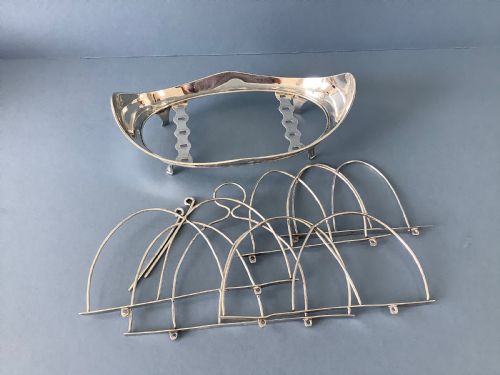
Silver Breakfast Accessories
Silver breakfast accessories bring morning routines together with polished toast racks and egg cups spanning the Georgian, Victorian, and Edwardian periods.
Silver Breakfast Accessories
The pieces listed here range from early Georgian examples dating to eighteen hundred through to mid twentieth century items from nineteen thirty. Styles evolve from classical Georgian lines through ornate Victorian designs to clean Edwardian and Art Deco forms.
Object types on this page focus heavily on toast racks, alongside specific forms such as silver duck egg cups. Origin points include English manufacture with specific hallmarked pieces originating from centres like Sheffield and London.
Materials and construction methods
Makers utilised solid sterling silver alongside silver plate and electroplated nickel silver to construct these morning table items. Sterling pieces carry official hallmarks indicating the assay office, city, and year of production.
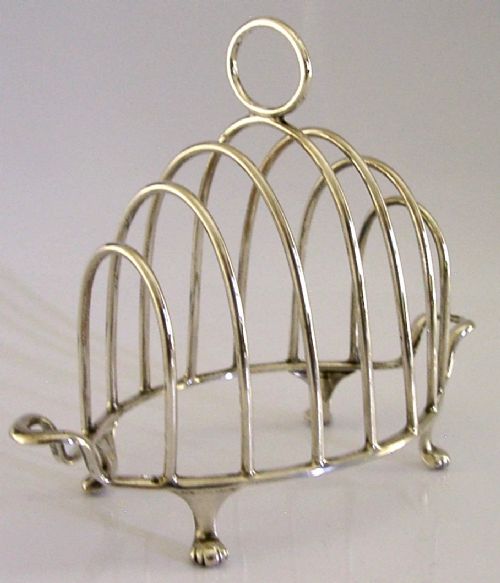
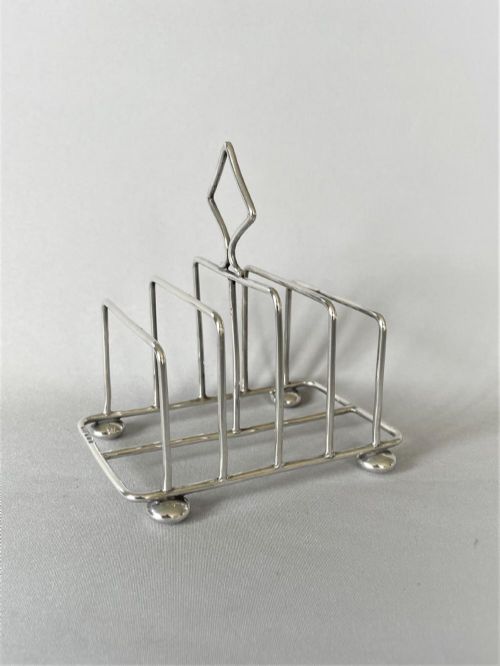
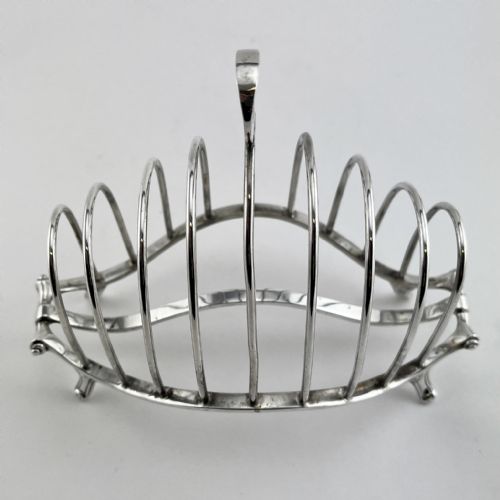
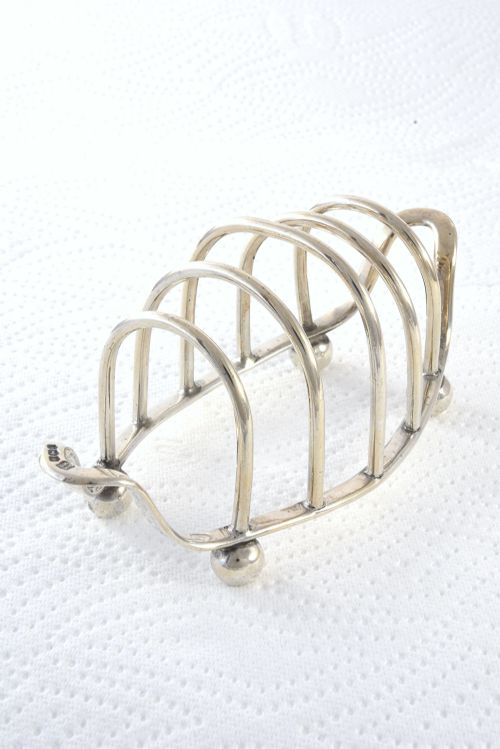
Structural designs involve welded or soldered wirework loops for toast racks, shaped to keep crisp toast separated. Egg cups incorporate shaped sterling metal or silver plate formed into small pedestal vessels.
Distinctions in quality and execution
Quality rests upon the weight of the silver and the precision of the wirework construction. Substantial gauge metal prevents distortion in daily use, whereas lighter plated alternatives rely on a base metal core.
Design distinction separates standard utilitarian pieces from unusual novelty forms such as wishbone toast racks or matched pairs. Maker attribution to established firms also elevates the standing of an individual piece.
Mappin and Webb·Roberts and Belk·Elkington
The Silver Breakfast Accessories Glossary
- Toast rack
- A small table accessory fitted with vertical metal loops designed to hold slices of toast upright and prevent them from becoming soggy. These items form the largest category within silver breakfast accessories.
- Hallmark
- An official stamp applied to precious metal items to guarantee the standard of silver purity. British pieces commonly show symbols for the maker, assay office, and date.
- Electroplated nickel silver
- A base metal alloy of copper, nickel, and zinc coated with a thin layer of silver through an electrical process. This material provided an accessible alternative to solid sterling silver.
- Sterling silver
- An alloy consisting of ninety-two point five percent silver and seven point five percent other metals, usually copper. This standard represents the primary material for high quality antique tableware.
Silver Breakfast Accessories: Frequently Asked Questions
What are silver breakfast accessories?
Silver breakfast accessories are table items used during the morning meal, primarily consisting of toast racks and egg cups.
They appear in materials ranging from solid sterling silver to silver plate across multiple historical eras.
How were toast racks used?
Toast racks were placed on the dining table to hold freshly made toast upright.
Keeping the slices separated allowed air to circulate so the toast remained crisp rather than trapping steam.
How do I date an antique silver toast rack?
Dating relies on reading the hallmarks stamped into the metal, which indicate the assay office and year letter.
Stylistic markers such as Georgian proportions or Art Deco geometry also help determine the period of origin.
Are silver plated items durable?
Silver plated pieces utilise a base metal core covered by a layer of pure silver.
When treated with care during cleaning, plated items withstand regular table use while offering an accessible alternative to solid silver.