



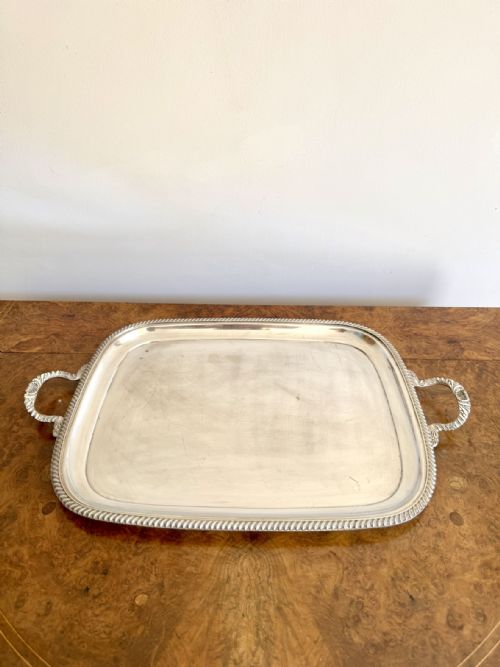
Vintage Silver Tea Tray
A vintage silver tea tray brings weight and shine to a room, offering a functional centrepiece for drinks and hospitality.
Vintage Silver Tea Tray
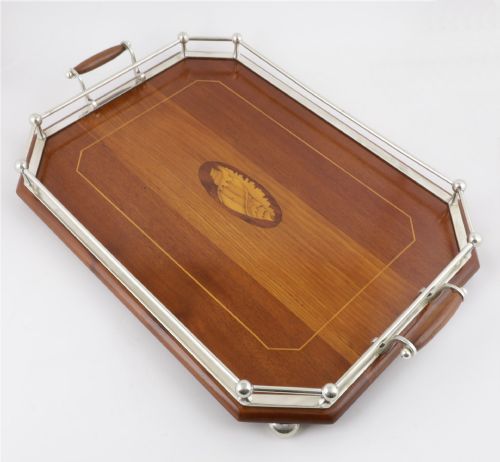
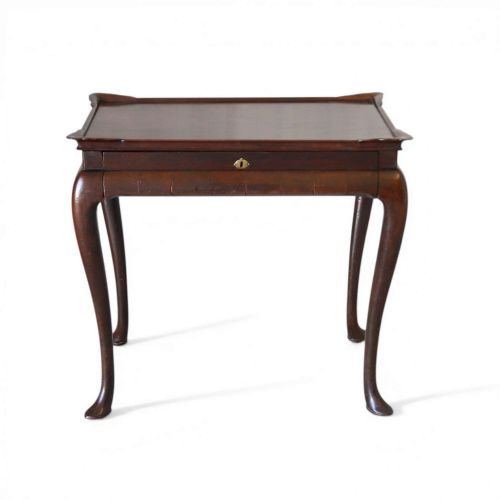
When you search for a vintage silver tea tray, you encounter serving pieces spanning from the Victorian era through the Edwardian period and into the mid-century. The selection on this page relies heavily on silver plate, EPNS, and electroplated nickel silver, alongside occasional mahogany and oak tray tables.
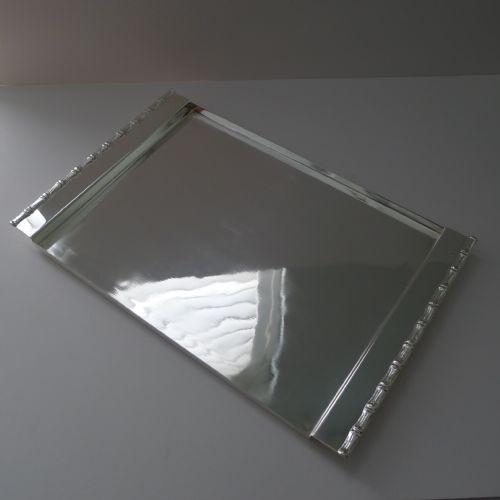
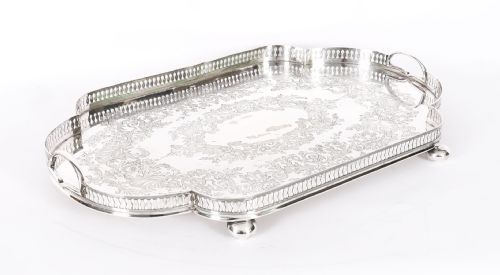
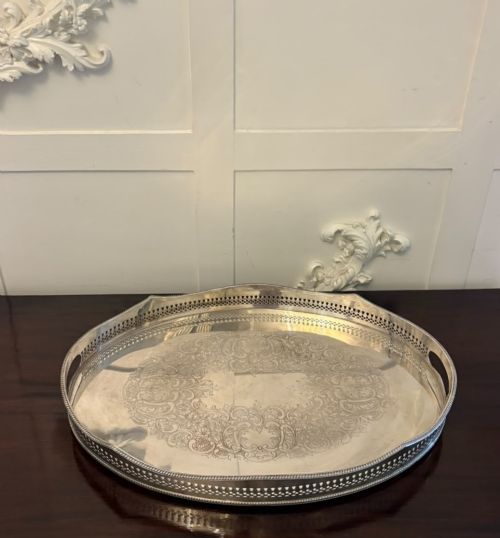
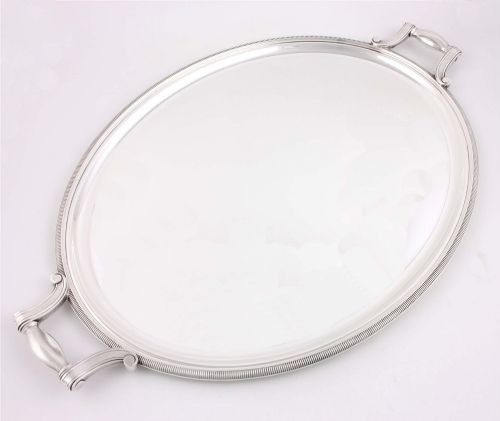
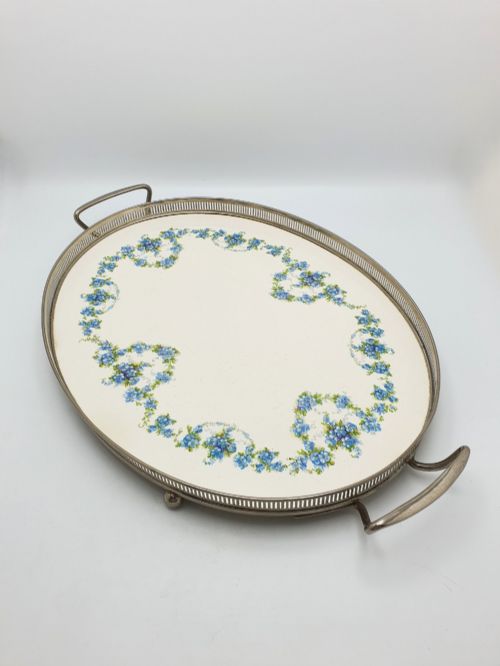
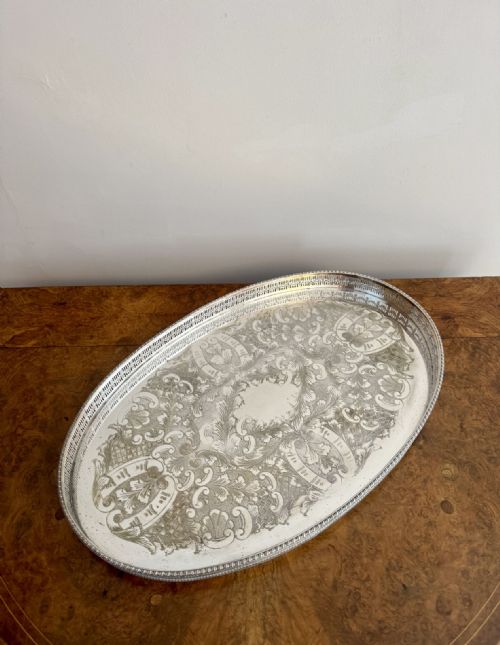
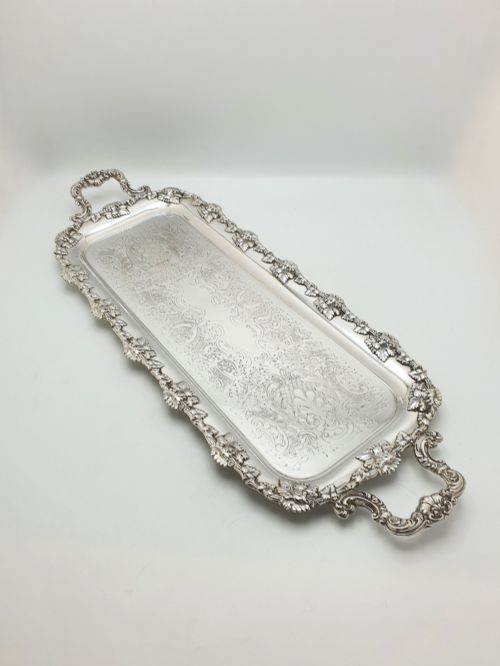
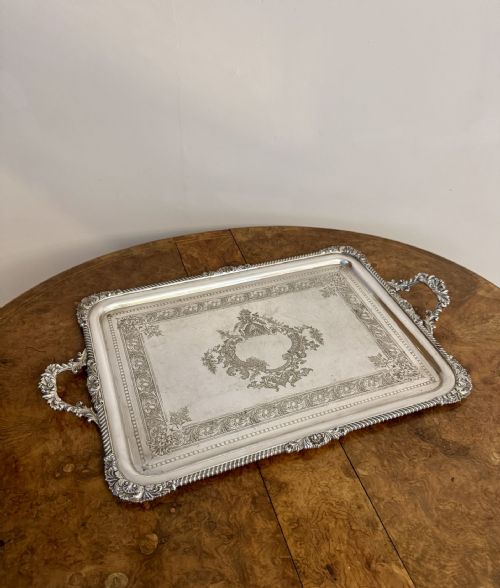
Most examples function as oval, rectangular, or circular serving platters equipped with handles, engraved borders, or pierced galleries. Makers utilise styles ranging from classic Georgian revival and French classic to clean Art Deco and modernist lines.
Beyond traditional afternoon tea service, these items frequently serve as cocktail or decanter trays on side tables and occasional tables. The forms include flat presentation platters as well as raised gallery designs intended to secure glassware.
How they were made
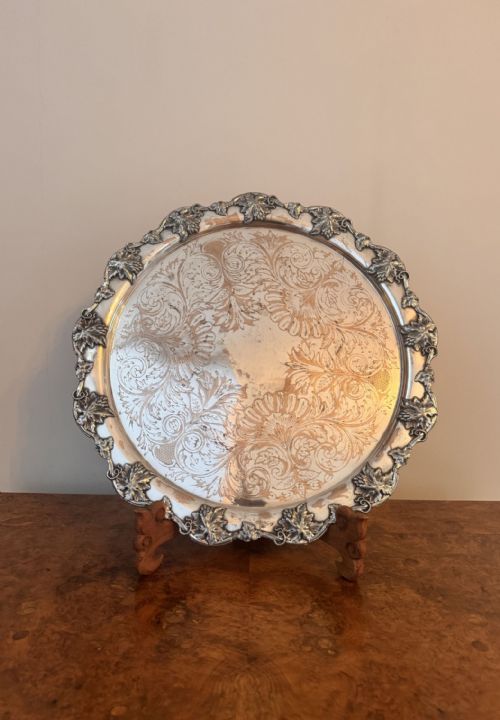
The underlying structure typically consists of a base metal or nickel silver coated with a layer of silver via electroplating, creating the durable finish known as EPNS. Many Edwardian and Victorian pieces incorporate detailed hand engraving, embossed scrolls, or cast grapevine borders soldered to the rim.
Listings feature silver plate, nickel silver, and mahogany across Edwardian, Victorian, and Art Deco periods.
What varies in quality
Quality rests upon the crispness of the engraved decoration and the weight of the metal blank beneath the plating. Substantial gauge silver plate resists bending and maintains a deep, even lustre across the flat surface of the tray.
The finesse of the handles and the integrity of soldered joints dictate overall durability. Pierced galleries formed with clean, precise cutouts and secure fixing points represent superior manufacturing standards compared to stamped alternatives.
James Deakin·Mappin & Webb·Christofle·Ralph Lauren·J B Chatterley & Sons
The Vintage Silver Tea Tray Glossary
- EPNS
- Electroplated Nickel Silver. A common base alloy coated with a thin layer of silver.
- Gallery tray
- A serving tray featuring a raised pierced metal or wooden border designed to keep items secure.
- Salver
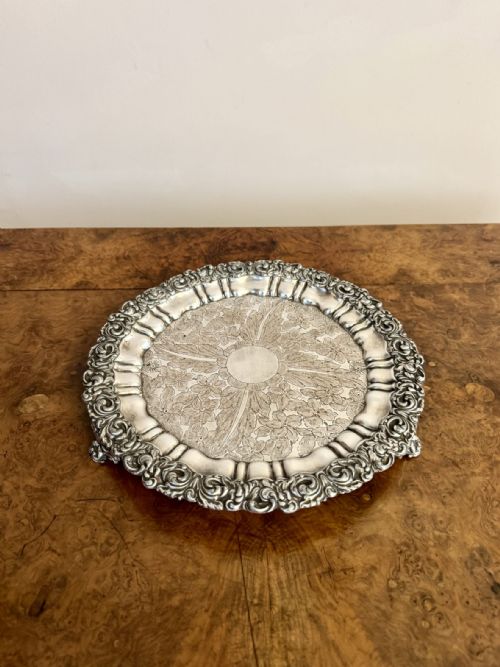
- A flat serving tray, typically circular and raised on small feet.
- Silver table
- A specialised occasional table with a removable tray top, popular in the eighteenth and nineteenth centuries.
- Pierced work
- Metal perforated with decorative cutouts to form openwork patterns along the rim.
Vintage Silver Tea Tray: Frequently Asked Questions
How do I clean a silver plated tea tray?
Use a soft cloth and a specialised silver polish formulated for plated items to remove tarnish without scrubbing away the thin metallic layer. Avoid harsh abrasive pads that scratch the surface and expose the underlying base metal.
Rinse the tray thoroughly in warm water and dry it immediately with a lint-free cloth to prevent water spots and maintain a bright shine.
Can I use a vintage tray for daily serving?
These trays handle regular use for drinks, cocktails, and afternoon tea service just as they did in the past. The robust electroplated construction withstands everyday hospitality when handled with reasonable care.
How do I distinguish Edwardian trays from Victorian ones?
Victorian trays often display heavier ornamentation, monumental proportions, and deep embossed scrolls or grapevine borders. Edwardian pieces lean towards lighter pierced galleries, refined engraving, and neoclassical revival motifs.
What is the difference between a tray and a salver?
Trays generally feature handles and rectangular or oval proportions suited for carrying service items across a room. Salvers are typically round, flat presentation platters raised on small feet rather than fitted with side handles.