


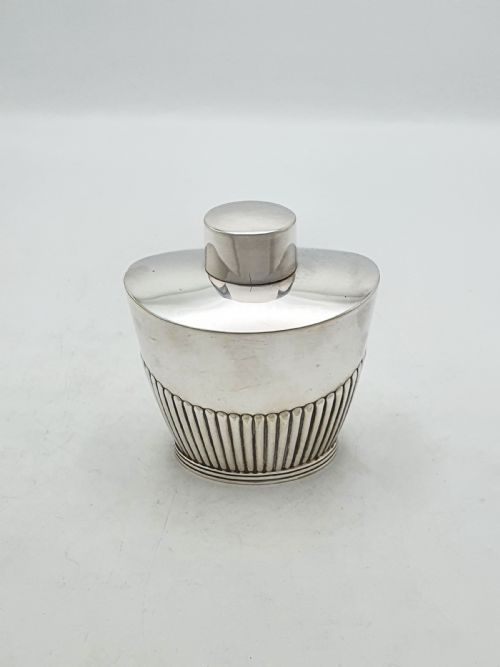


Vintage Silver Tea Jar
A vintage silver tea jar brings domestic ritual into focus, offering a sturdy yet refined vessel for dry leaves.

Vintage Silver Tea Jar
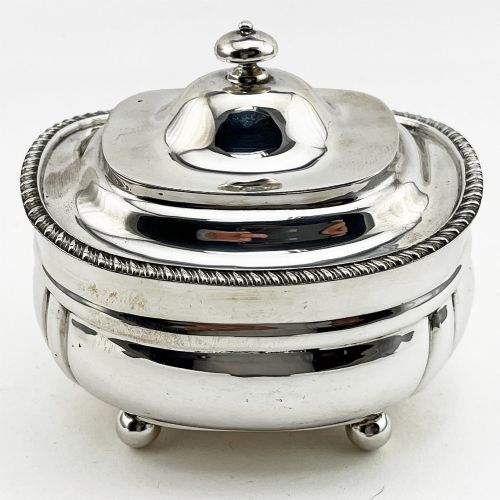
When you search for a vintage silver tea jar, you encounter a specialised vessel designed to store and protect dry tea leaves. These pieces bridge the gap between utilitarian kitchenware and formal dining accessories, often crossing paths with biscuit barrels and canisters in the historical record.
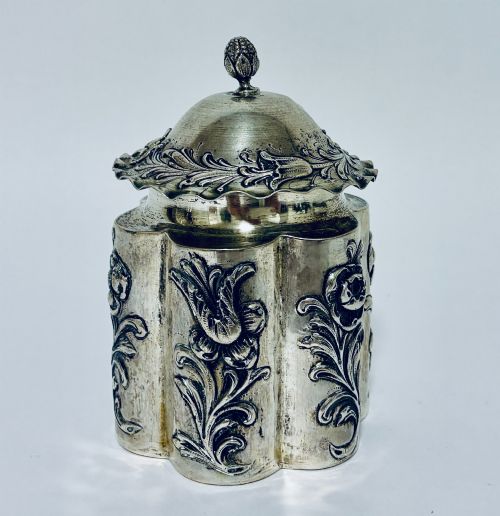
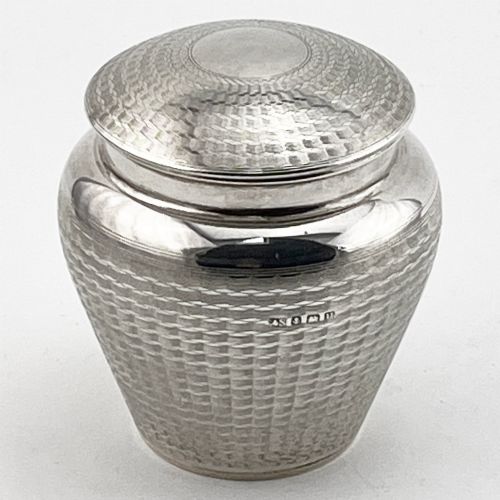
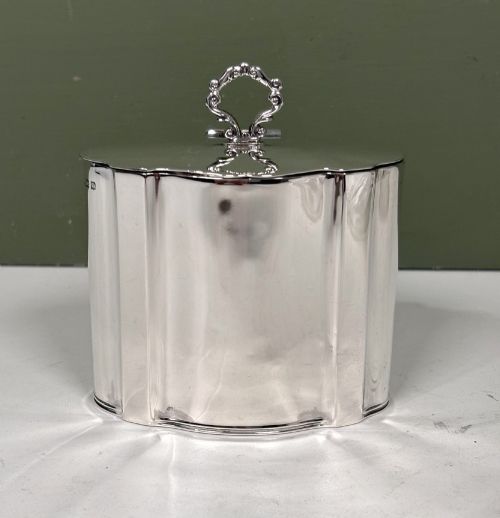
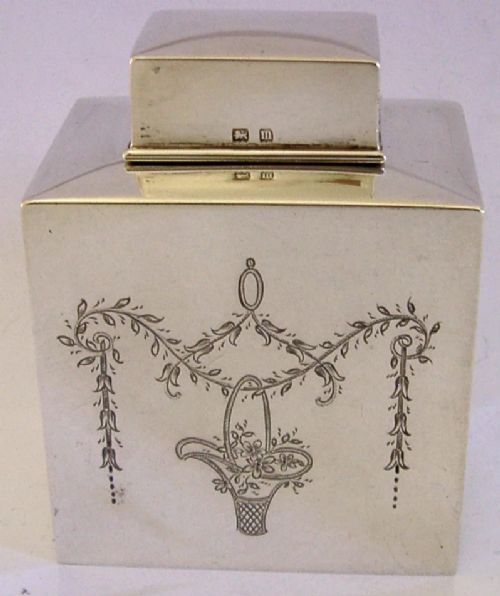
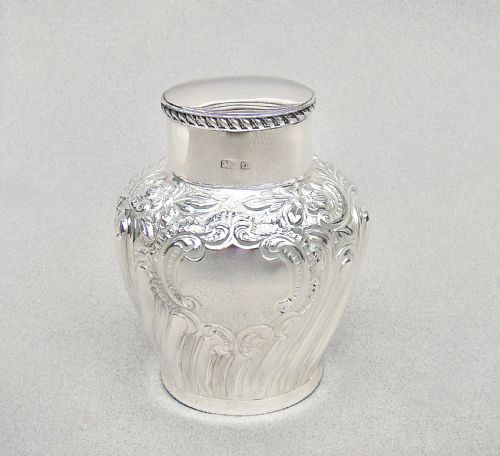
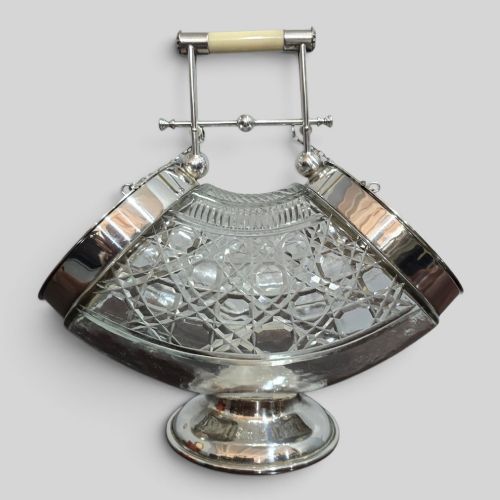
The versions you meet on this page span the Victorian, Edwardian, and George V periods, featuring forms that range from straightforward cylindrical caddies to hinged boxes and cut glass jars with metal mounts.
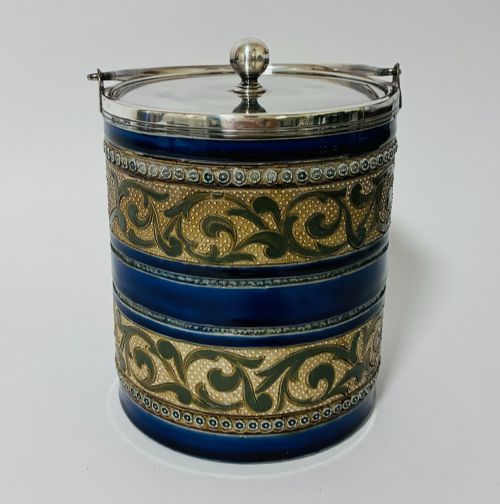
Materials shift between solid sterling silver, silver plate, cut crystal, and ceramic bodies furnished with metal lids and rims. The resulting selection captures how households stored provisions during the late nineteenth and early twentieth centuries.
How they were made
Silversmiths constructed solid pieces using sheet sterling, employing hammering, soldering, and hand-chasing to shape the metal and apply decorative motifs. Plated examples rely on a base metal foundation coated with a layer of silver, often combined with cut glass bodies or ceramic inserts.
Glass sections display hobnail cutting and deep facets achieved through wheel grinding, whilst ceramic bodies utilise earthenware, stoneware, and flow blue finishes shaped by pottery works. Wood elements, such as oak, appear alongside metal hinges and locks to create lidded boxes.
Periods represented span from the nineteenth century through the Edwardian era and into the George V period.
What varies in quality
The calibre of a piece depends heavily on the weight of the metal and the crispness of any engraved or chased decoration. Solid sterling constructions with clear hallmarks demonstrate superior material investment compared to plated counterparts, though the thickness of the silver plating alters long-term durability.
Construction details distinguish standard production from finer output, visible in the snug fit of the lid, the smooth action of hinges, and the clarity of cut glass or the depth of ceramic glaze. Maker marks from established silversmiths also signal distinct standards of design and execution.
Zimmermann·Thomas Hayes·Mappin & Webb·Ernest Druiff & Co·William Hutton·John Grinsell & Sons
The Vintage Silver Tea Jar Glossary
- Sterling silver
- A silver alloy containing 92.5 percent pure silver by weight, traditionally marked with specific assay office symbols.
- Silver plate
- A base metal object coated with a thin layer of silver, common in Victorian and Edwardian domestic wares.
- Biscuit barrel
- A lidded container used for storing biscuits or dry goods at the table, frequently paired with silver mounts and ceramic or glass bodies.
- Hobnail cut
- A decorative glass-cutting pattern featuring sharp, pyramidal facets that catch the light.
- Flow blue
- A cobalt blue transferware printing style where the pigment bleeds slightly into the ceramic glaze during firing.
Vintage Silver Tea Jar: Frequently Asked Questions
What is a tea jar?
A tea jar is a lidded container designed to protect loose tea leaves from light and air.
These pieces keep leaves fresh while sitting as decorative objects on a sideboard or table.
How do I date a silver tea jar?
You date a silver piece by examining the hallmarks stamped into the metal.
These marks reveal the assay office, the year letter, and the silversmith responsible for the work.
Can I use these jars for food?
Many silver and ceramic jars remain suitable for storing dry goods like tea.
Glass and ceramic inserts make cleaning straightforward, though older plated interiors require gentle handling.
What is the difference between a tea caddy and a biscuit barrel?
Tea caddies generally feature smaller, enclosed volumes intended for precious tea leaves.
Biscuit barrels offer larger proportions designed to hold baked goods for entertaining guests.