



Vintage Silver Claret Pitcher
A vintage silver claret pitcher brings Victorian and Edwardian dining tables to life, combining heavy cut glass with polished mounts for serving wine in style.
Vintage Silver Claret Pitcher
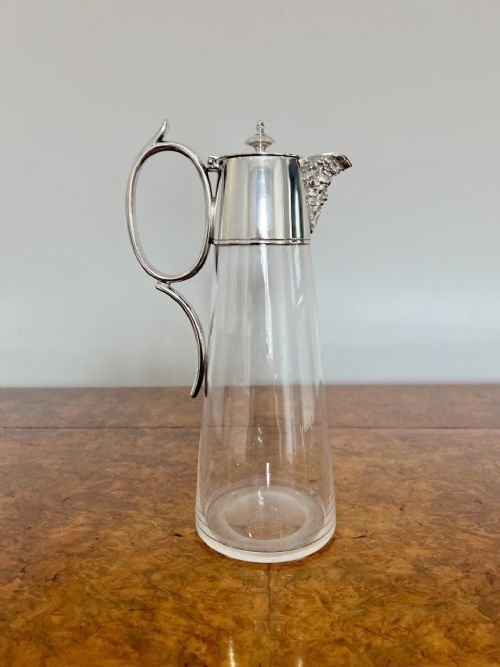
When searching for a vintage silver claret pitcher, buyers encounter vessels designed to serve wine, water, or lemonade at the dining table. These pieces primarily date from the Victorian and Edwardian eras, stretching from the mid-nineteenth century into the early twentieth century.
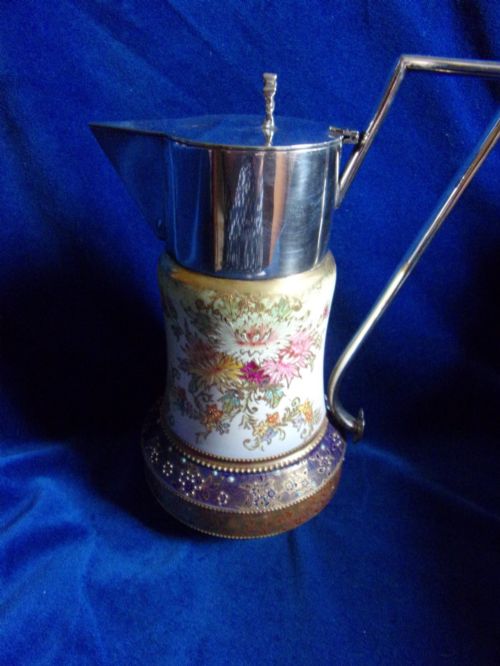
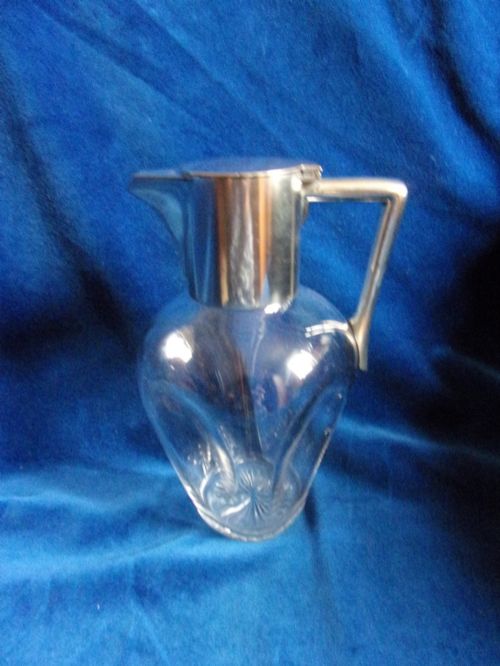
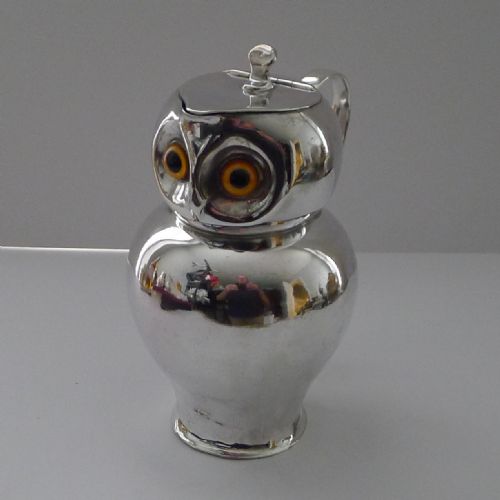
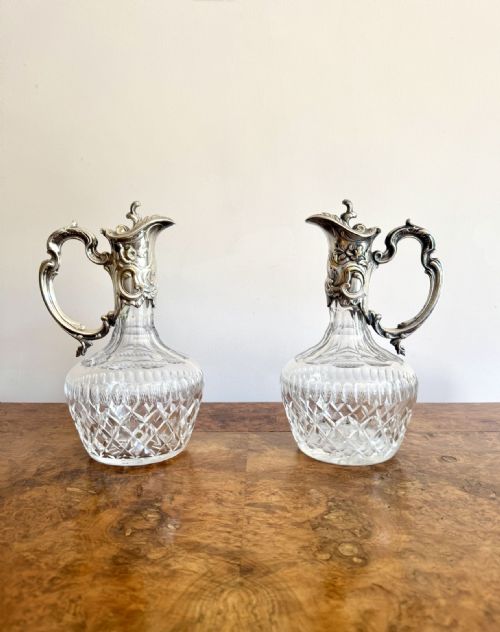
The most common form on this page pairs a clear cut glass or crystal body with silver plated mounts, hinged covers, and scrolling handles. Variations include cranberry glass bodies, novelty animal designs, and styles ranging from restrained George V silver to flowing Art Nouveau pewter.
Many examples function as claret jugs, water jugs, or lemonade pitchers, sometimes incorporating internal ice tubes or specialised spouts. They appear in styles such as Arts and Crafts, Art Deco, and Mid-Century Modern, reflecting the shifting tastes of successive decades.
How they were made
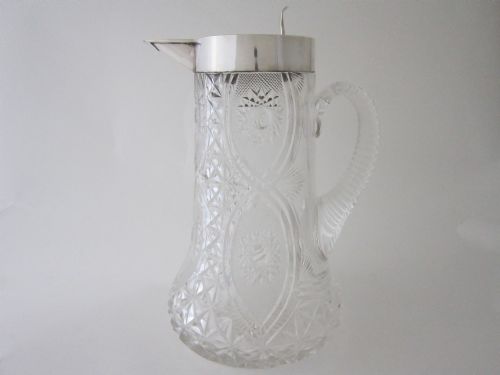
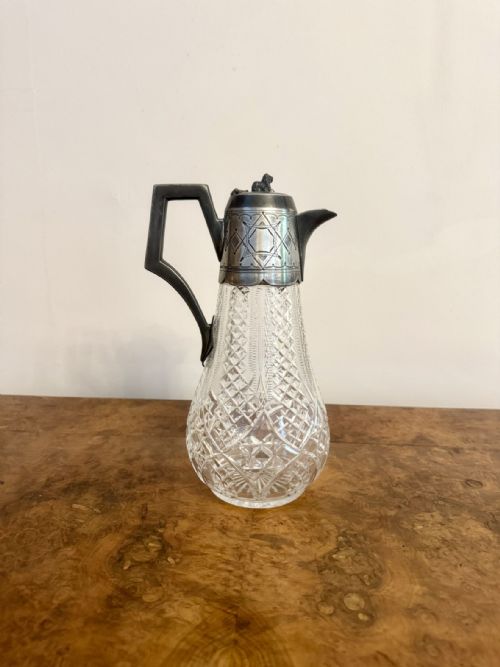
The body of a vintage silver claret pitcher typically consists of blown glass or crystal, shaped by hand and deeply cut with geometric or floral patterns to catch the light. Alternatively, makers utilised cranberry glass or moulded pewter for distinct visual effects.
Listings span from the 1860s through the Mid-Century Modern era, uniting sterling silver, silver plate, cut crystal, and cranberry glass.
What varies in quality
Quality rests in the depth and crispness of the glass cutting, the weight of the metal mount, and the overall balance of the vessel in the hand. Superior pieces display intricate hand-etching on the glass and heavy, substantial silver plating that resists wear.
Design ambition separates standard serving vessels from exceptional examples, particularly those featuring novelty forms, figural spouts, or work by known designers and makers. The precision of the hinged lid mechanism and the clarity of the glass further distinguish finer specimens.
Mappin and Webb·Archibald Knox for Liberty and Co·Elkington and Co·Tiffany·Hukin and Heath·WMF·Valenti
The Vintage Silver Claret Pitcher Glossary
- Claret jug
- A vessel specifically shaped for serving red wine at the table. These pitchers combine glass bodies with hinged metal covers.
- Silver plate
- A layer of silver fused to a base metal, commonly utilised for mounts and handles during the Victorian and Edwardian periods. This technique offered the appearance of solid silver at a lower cost.
- Cranberry glass
- A rich red glass coloured with gold chloride during production, frequently seen in Victorian water jugs and wine decanters. The distinct hue ranges from pale pink to deep ruby.
- Crystal
- A high-clarity glass containing lead oxide, allowing for deep, sharp wheel-cutting. It produces a resonant ring when struck.
- Pewter
- A malleable metal alloy composed largely of tin, used in Arts and Crafts and Art Nouveau jugs. It accepts patination and casting well for organic designs.
Vintage Silver Claret Pitcher: Frequently Asked Questions
What is a claret pitcher used for?
These vessels were created to hold and pour claret, a British term for Bordeaux red wine, at the formal dining table. They allowed hosts to decant wine from bottles before serving.
Over time, similar pitchers also accommodated water, lemonade, or Pimm's, often featuring internal ice tubes to keep drinks cool during meals.
How do I clean my silver pitcher?
Wash the glass body gently in warm soapy water using a soft brush, taking care around the metal mounts. Avoid submerging older plated parts for prolonged periods.
Polish the silver or plated components sparingly with a non-abrasive cloth formulated specifically for precious metals, keeping polish away from the glass surface.
How can I tell Victorian from Edwardian pieces?
Victorian examples tend to feature heavy, ornate cut glass patterns and elaborate, high-relief silver mounts with dense floral or geometric chasing. The overall aesthetic leans toward grand formality.
Edwardian pieces often display slightly lighter proportions, sometimes incorporating simpler mounts, brighter cranberry glass, or early Art Nouveau influences that favour flowing, organic lines.
Can I use these pitchers for everyday dining?
Many of these jugs remain robust enough for regular use at the table, provided they are handled with care and washed by hand rather than in a dishwasher. The thick glass and sturdy mounts were built for daily service.
Owners often display them on sideboards or drinks trolleys when not in use, letting the cut crystal and polished silver catch the room's light.