


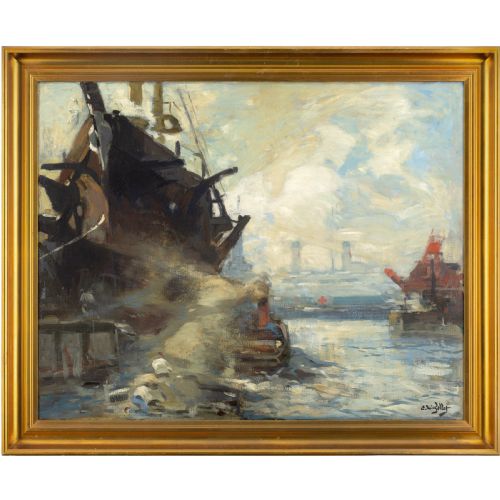
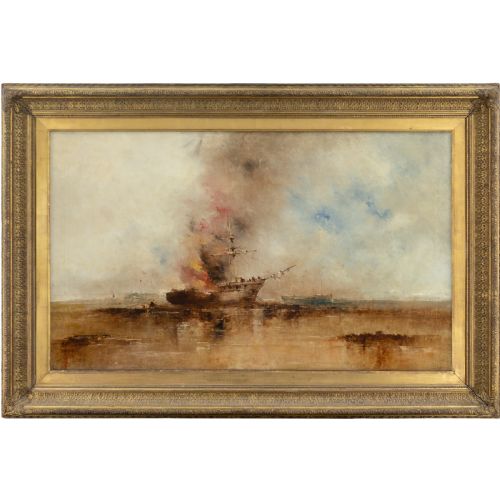
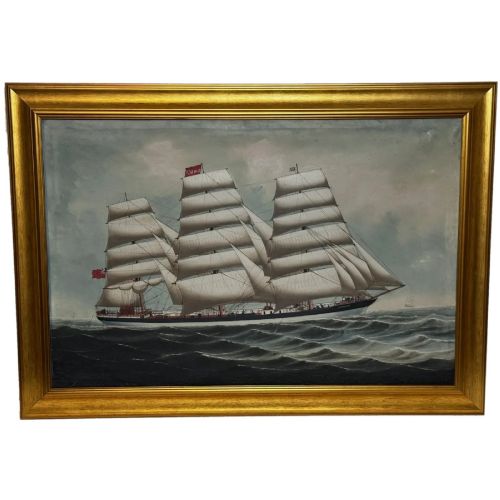
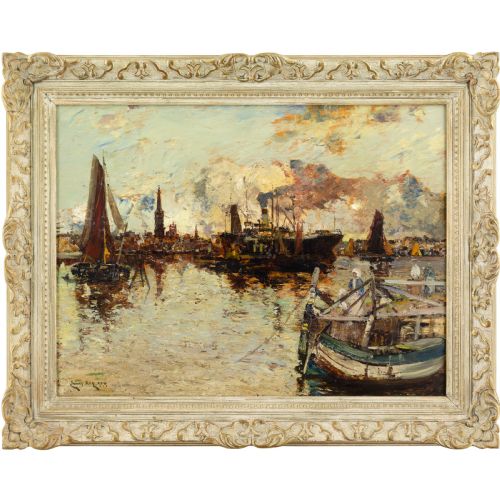

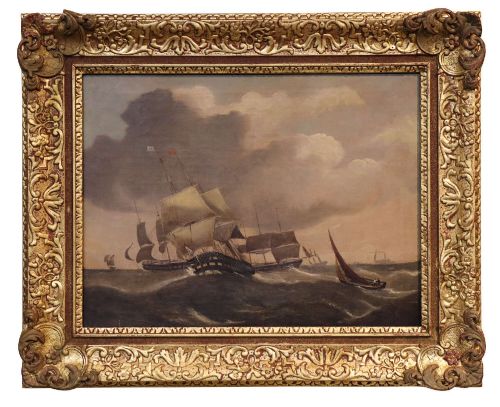
Vintage Shipping Oil Painting
A vintage shipping oil painting captures the drama and movement of maritime history on canvas.
Vintage Shipping Oil Painting
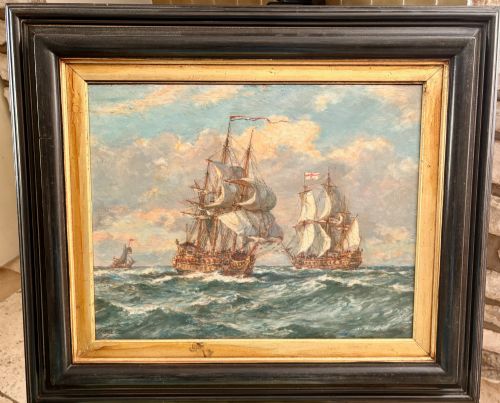
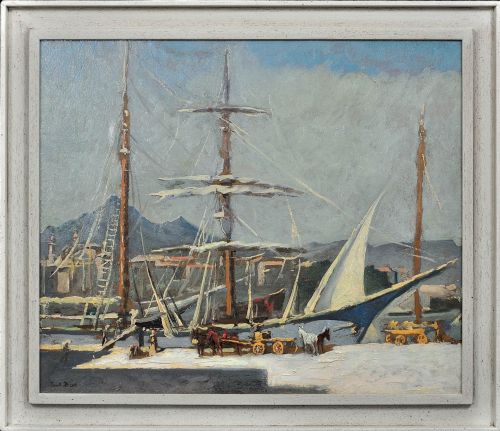
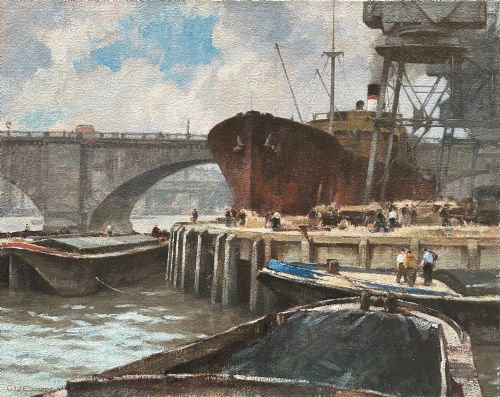
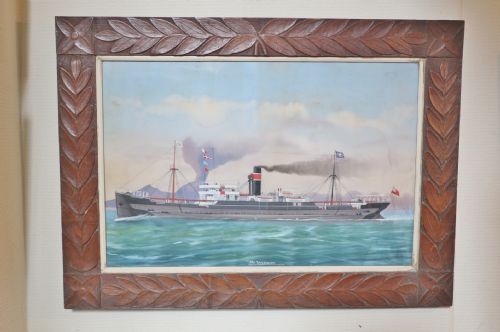
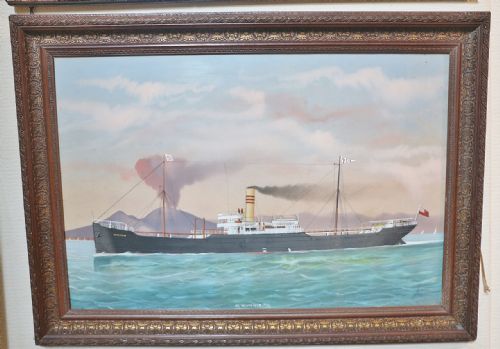
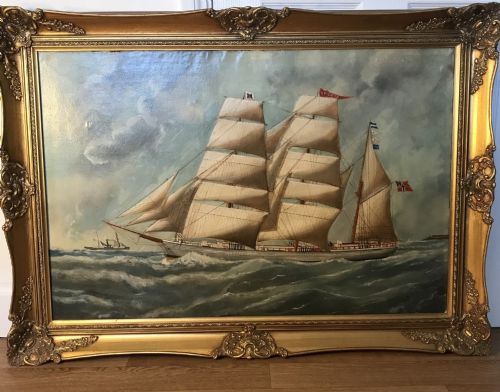
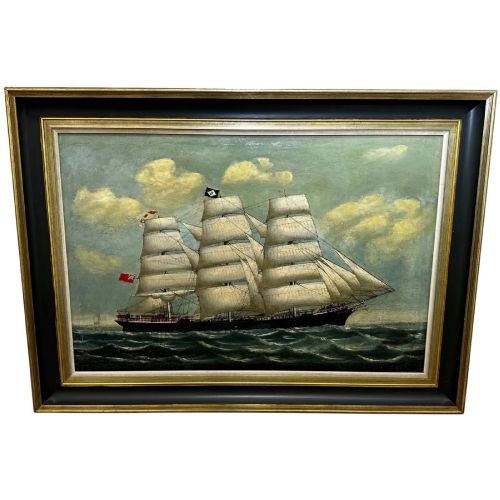
A vintage shipping oil painting depicts vessels ranging from traditional sailing ships and clippers to steamships and naval vessels upon the water. These works span the nineteenth century into the mid-twentieth century, capturing coastal scenes, heavy seas, and harbour views.
The subjects include specific named ships, wartime scenes, fishing boats, and grand naval commissions. Many pieces originate from British and European schools, reflecting the global reach of maritime trade and transport in past eras.
How They Were Made
Artists painted primarily with oil paint on stretched canvas or prepared wooden boards, sometimes utilising card as a support. The medium allowed for rich application of pigment to render turbulent water, atmospheric skies, and detailed rigging.
Many works retain their original gilt or wood frames, which often incorporate gold leaf or glass to protect the painted surface.
Listings feature works executed in oil on canvas and oil on board, spanning the Victorian, Edwardian, and mid-twentieth-century periods.
What Varies in Quality
Quality rests upon the artist's ability to render maritime anatomy accurately, from hull construction to rigging and wave dynamics. Works by documented painters or established maritime specialists show superior handling of light, atmosphere, and scale compared to anonymous school pieces.
The condition of the pigment layer, stability of the support board or canvas, and the presence of a period-appropriate frame influence the overall character of the piece.
Eugène-Louis Gillot·William McAlpine·Reginald Arthur Borstel·James Kay RSW·Bernard Gribble·Paul Bret·Bernard Benedict Hemy·Cyril Walduck Edwards·Lai Fong·Nicholas Condy·Abraham Hulk I·George Shaw·Dion Pears
The Vintage Shipping Oil Painting Glossary
- Canvas
- A heavy woven fabric stretched across a wooden frame to serve as a support for oil paint. It provides a flexible yet durable surface for textured brushwork.
- Gilt
- A thin layer of gold leaf or gold paint applied to wooden frames or decorative elements. It gives a metallic sheen that complements traditional maritime framing.
- Pierhead painting
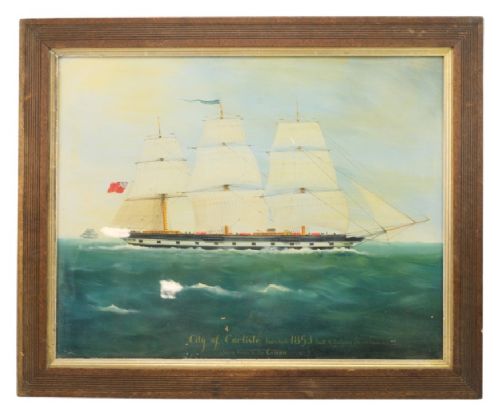
- A genre of ship portraiture usually commissioned by captains or shipowners to record a specific vessel, often executed by local port artists. These works prioritise accurate rendering of the ship and its flags.
- Seascape
- A work of art depicting the sea, coastal views, or marine vessels in motion. It focuses heavily on atmospheric conditions and water movement.
Vintage Shipping Oil Painting: Frequently Asked Questions
What subjects appear in these paintings?
The subjects include sailing barques, schooners, steamships, naval warships, and hospital ships navigating heavy seas or entering harbours. Artists recorded specific vessels engaged in daily commerce, wartime service, and royal transport.
Views range from calm Mediterranean ports to stormy coastal waters off Britain and Europe, reflecting the diverse conditions faced by mariners.
How do I identify the period of a maritime painting?
Dating relies on the vessel type depicted, such as nineteenth-century clippers versus early twentieth-century steamships, as well as costume details in figures. Signature styles and framing choices also offer clues to the era of production.
Many works carry artist signatures, exhibition labels, or inscriptions on the reverse that record dates and locations.
How should I care for an oil painting on canvas?
Display the artwork away from direct sunlight and sources of heat to protect the oil paint and canvas from cracking or fading. Keep the environment at a stable temperature and humidity level.
Dust the surface gently with a soft, dry brush and avoid using liquid cleaners or touching the pigment directly.
What is a pierhead painting?
A pierhead painting is a specific type of ship portrait produced at or near a port, often commissioned by the vessel's master or owner. These works emphasise accurate details of the ship's rigging, flag state, and hull.
They serve as historical records of merchant and naval vessels operating during the nineteenth and early twentieth centuries.