


Vintage Sewing Work Table
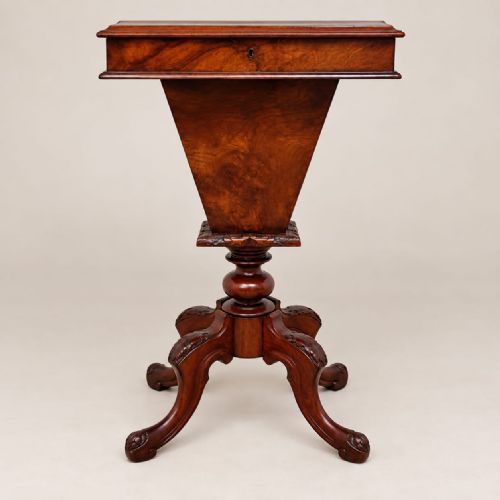
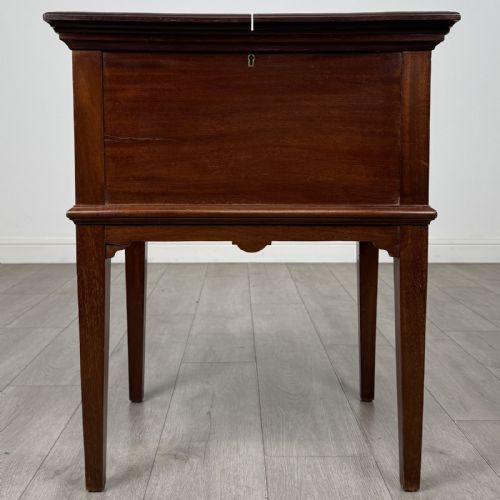
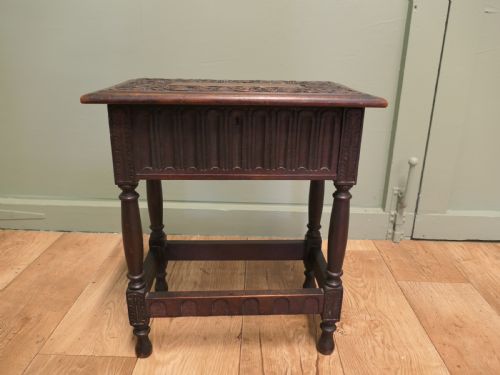
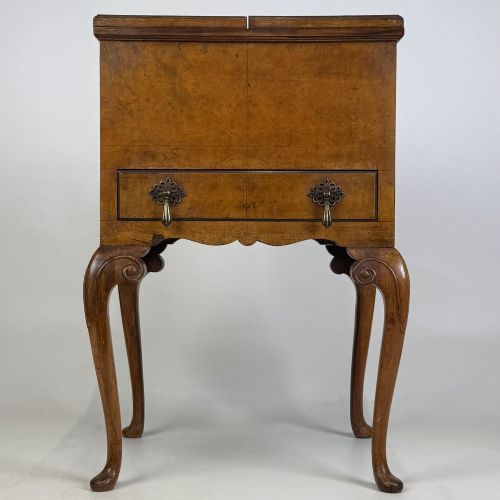
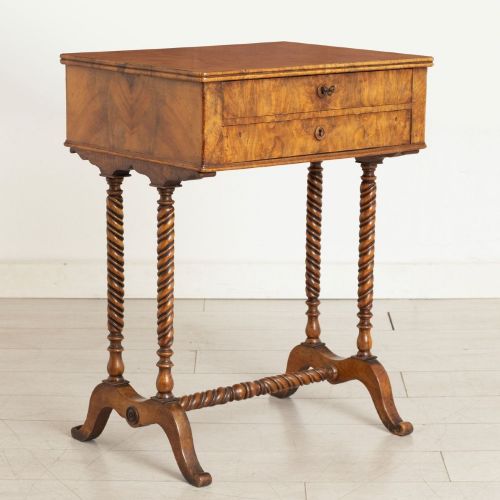
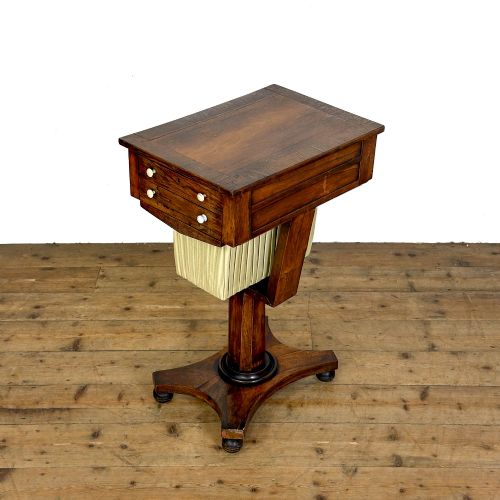
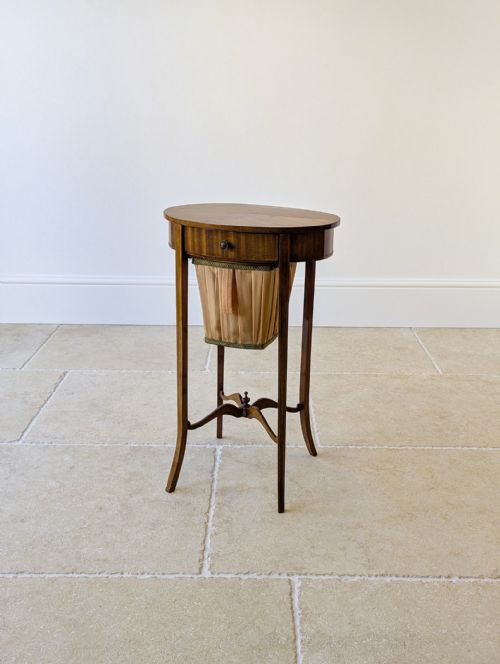
A vintage sewing work table brings together fitted storage and elegant surfaces, serving as a functional piece for needlecraft that doubles as an occasional table.
Vintage Sewing Work Table
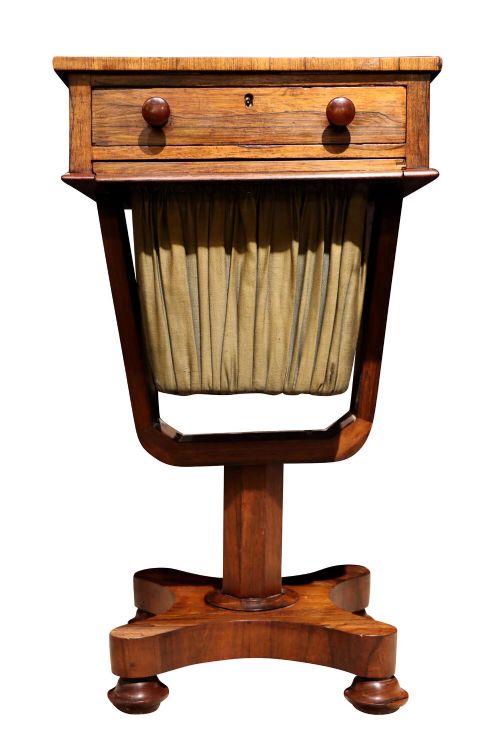
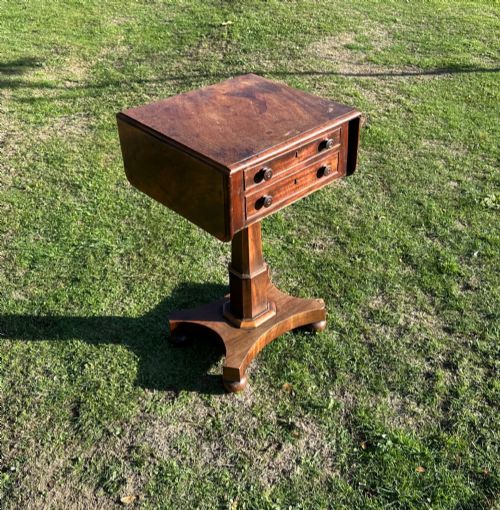
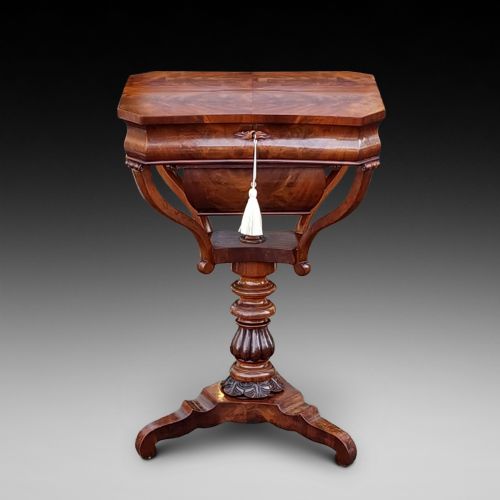
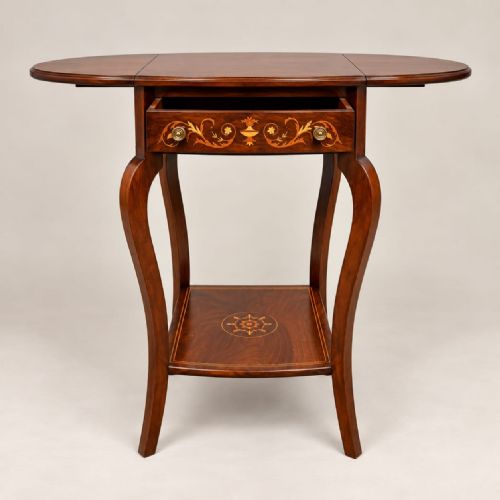
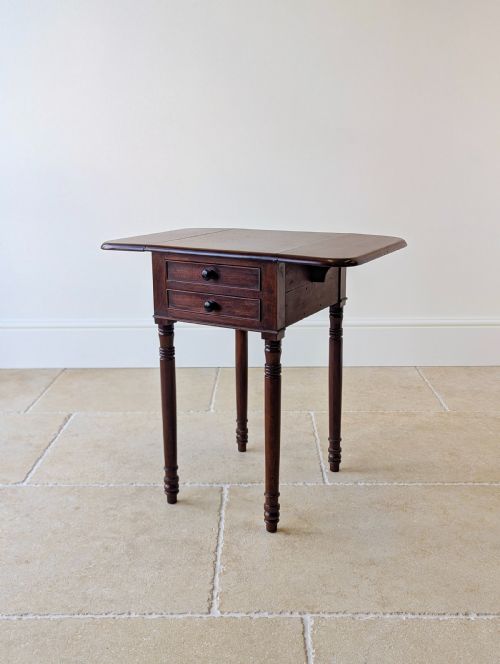
The form spans several distinct periods including Regency, William IV and Georgian eras, alongside later Edwardian and Art Deco variations. Many incorporate drop leaves, fitted interiors or silk baskets, doubling as side tables or occasional tables when closed.
Makers and designers of these tables often utilised classic styles such as Sheraton, Sheraton Revival or Federal to shape the silhouettes. The primary function remains domestic and needlework-focused, though many survive as versatile dressing or games tables.
Materials and construction
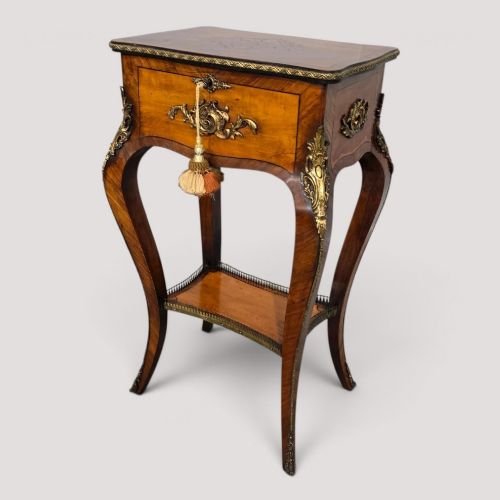
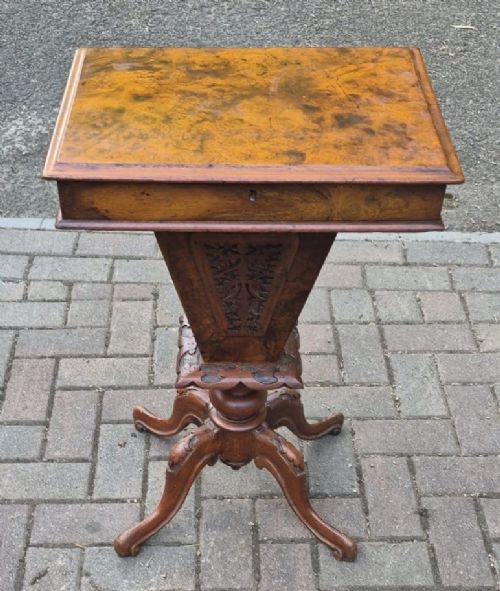
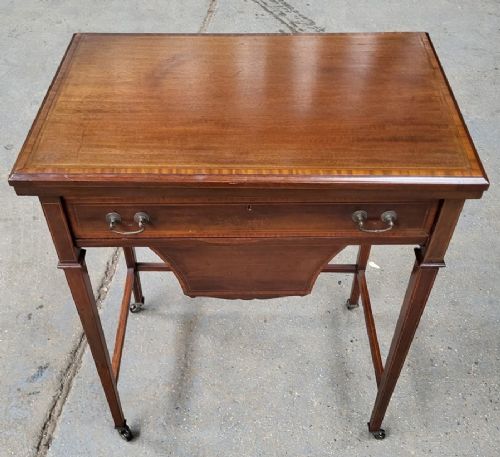
Cabinet makers constructed these tables from dense hardwoods like mahogany, rosewood and walnut, frequently selecting burr walnut, satinwood or flame mahogany veneers for decorative surfaces. Cross-banding, boxwood stringing and marquetry inlay provide surface detail on refined Edwardian and Victorian pieces.
Structural elements often include drop leaves supported by gatelegs, lyre-ended pedestals or slender tapered legs. Interiors feature compartmentalised trays for sewing implements, sometimes paired with silk gathering bags or work boxes suspended beneath the lift-up lid.
Vintage Sewing Work Table Retail Price Guide 2026
Typical asking prices for vintage sewing work table among the pieces listed under this phrase on Sellingantiques today, from the lower quarter to the upper quarter. They describe what is for sale here now, not the wider market.
Listings span multiple historical periods, with Edwardian and Victorian pieces most numerous alongside Georgian, Regency and Art Deco examples.
Distinctions in quality
Quality rests upon the selection of timber veneers, the precision of the marquetry or inlay work, and the structural integrity of the internal compartments. Tables featuring figured timbers like flame mahogany or burr walnut alongside detailed brass mounts stand apart from simpler utilitarian pieces.
The sophistication of the mechanism governing the drop leaves, lift-up top and fitted interior also defines the tier of the piece. Fine examples maintain smooth operation in their drawers and baskets, with intact original silk linings and balanced proportions.
Waring & Gillow
The Vintage Sewing Work Table Glossary
- Drop leaf
- A table top with hinged flaps on one or two sides that fold down to save space or lift up to extend the surface area.
- Marquetry
- Decorative patterns formed by inserting pieces of contrasting wood veneer into a prepared surface.
- Pembroke table
- A small occasional table with hinged leaves on the sides and usually one or two small drawers.
- Silk basket
- A fabric pouch suspended beneath a work table to hold sewing wools and textiles.
- Stringing
- Thin inlay lines of contrasting wood used to edge and outline table tops and drawer fronts.
Vintage Sewing Work Table: Frequently Asked Questions
What is a vintage sewing work table?
A vintage sewing work table is a small piece of domestic furniture designed to store needlework supplies while functioning as an occasional side table. They typically feature a lift-up lid or drawers hiding internal compartments.
Many examples include a fabric bag or basket suspended underneath for wools and fabrics. They appear across various periods from the Georgian era through to the Edwardian and Art Deco periods.
How do I identify an Edwardian sewing table?
Edwardian sewing tables often display lighter timbers such as satin walnut, satinwood and inlaid mahogany. They frequently incorporate delicate boxwood stringing and cross-banded details.
These pieces tend to have slender proportions and sometimes feature octagonal tops or hanging silk baskets. They date from the early twentieth century and reflect a lighter aesthetic than earlier Victorian designs.
Were these tables used only for sewing?
While primarily built for needlework, many of these tables served multiple domestic purposes. Some incorporated boards or surfaces adapted for playing games.
Others functioned as ladies' dressing tables or simple side tables in drawing rooms. The fitted interiors made them adaptable for letters, writing materials and small personal items.
What timbers were used for these tables?
Cabinet makers utilised a range of dense hardwoods depending on the period of manufacture. Mahogany and rosewood dominate nineteenth-century examples, whilst walnut and burr walnut appear frequently in Victorian and Edwardian pieces.
Finer versions make use of decorative veneers like satinwood and flame mahogany. Details often include boxwood inlay and brass mounts.