




Brown Walnut Work Box
A brown walnut work box is a practical domestic chest designed for needlework and small treasures, combining rich timber grain with compartmented storage.
Brown Walnut Work Box
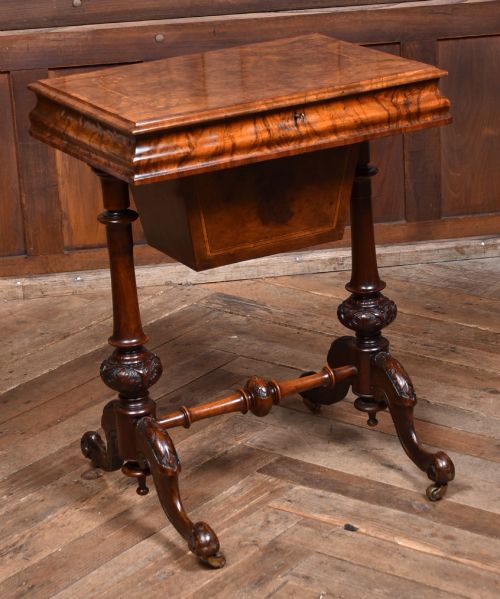
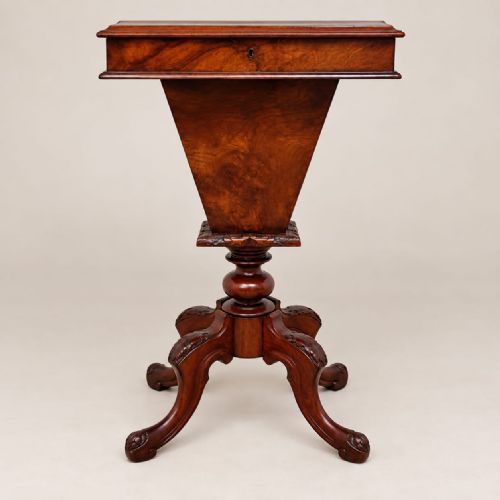
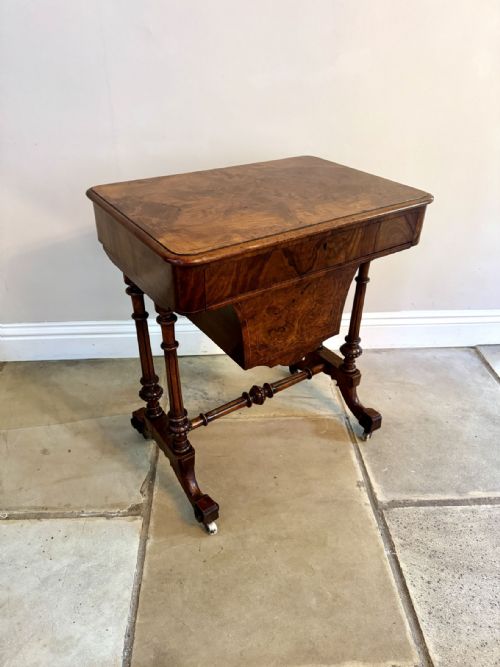
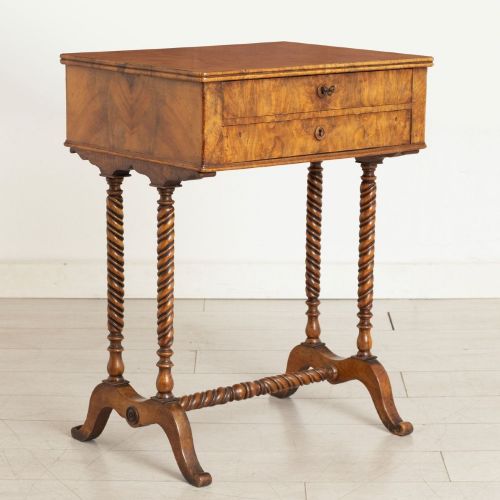
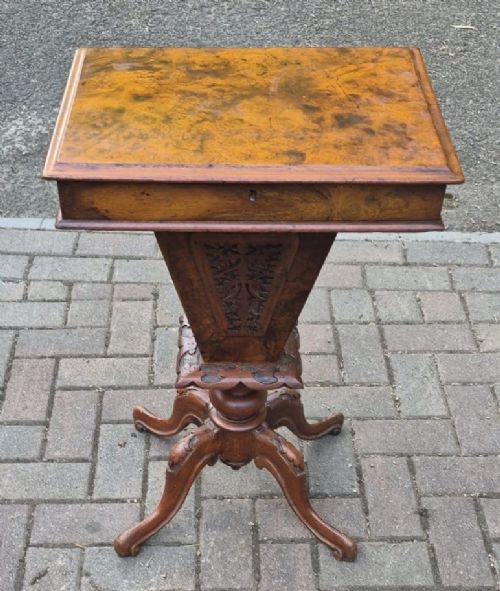
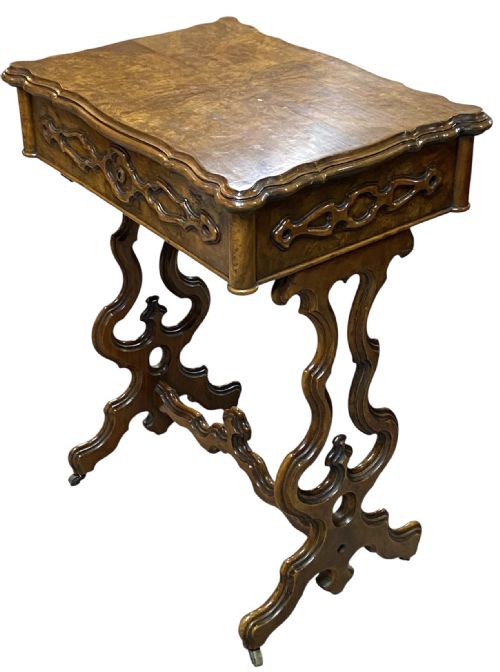
A brown walnut work box serves as a tidy receptacle for sewing gear, threads, and personal trinkets, appearing in various formats from portable tabletop chests to substantial freestanding tables on turned supports. When searching for a brown walnut work box, buyers encounter both small lidded containers and larger furniture pieces intended for the parlour or boudoir.
The pieces on this page span several centuries, with the majority originating in the Victorian era alongside examples from the Edwardian period, Regency era, and eighteenth century. These objects function equally well today as decorative storage items or functional side tables in a living space.
What varies in quality
The standard of a brown walnut work box depends largely on the selection of the timber veneer and the precision of the decorative inlay. Superior examples display symmetrical burr walnut figures and tightly executed boxwood or marquetry details that remain flush with the surrounding wood.
Construction methods also distinguish finer pieces, particularly the joinery of the internal trays and the stability of the turned or carved supports on freestanding tables. Original hardware, functional locks with keys, and well-preserved interior fabric linings elevate the overall standard of the piece.
Brown Walnut Work Box Retail Price Guide 2026
Typical asking prices for brown walnut work box among the pieces listed under this phrase on Sellingantiques today, from the lower quarter to the upper quarter. They describe what is for sale here now, not the wider market.
Listings feature walnut, burr walnut, and figured walnut combined with boxwood inlay, marquetry, and brass hardware.
Waring & Gillow
The Brown Walnut Work Box Glossary
- Burr walnut
- A veneer taken from the wart-like growths on walnut trees, prized for its swirling, highly figured grain patterns. It provides a decorative surface on the lids and panels of nineteenth-century boxes.
- Tunbridge ware
- A type of decorative woodwork characterised by tiny mosaic tiles formed from naturally coloured woods to create pictorial or geometric designs. These geometric patterns often decorate Victorian work boxes.
- Marquetry
- The art of applying pieces of veneer to a structure to form decorative patterns and pictures. Craftsmen use contrasting woods like boxwood to achieve intricate floral or scroll motifs.
- Trumpet table
- A freestanding sewing table featuring an octagonal or flared body set upon a slender pillar and splayed legs. This form became particularly popular during the Victorian period for domestic needlework.
- Parquetry
- A geometric mosaic of wood pieces used for surface decoration, commonly seen on gaming and work box lids. It creates a repeating pattern of triangles, squares, or diamonds.
Brown Walnut Work Box: Frequently Asked Questions
What is a brown walnut work box used for?
These boxes were originally manufactured to store sewing equipment, threads, needles, and small personal valuables used in daily household tasks.
Today, they serve as decorative storage chests for desktop items or jewellery, while larger freestanding versions function as side tables.
How do I identify a Victorian work box?
Victorian examples typically feature rich burr walnut veneers, often enhanced with boxwood stringing, marquetry, or Tunbridge ware detailing.
Many incorporate fitted internal compartments lined with fabric alongside brass locks and turned wooden supports.
Are these boxes portable?
Smaller variations are designed as tabletop chests or caskets complete with working locks and keys for easy transport.
Larger versions are built as freestanding sewing or occasional tables which remain stationary in a room.
How do I care for walnut furniture?
Keep wooden boxes away from direct sunlight and strong heat sources to prevent the walnut veneer from drying out or cracking.
Dust regularly with a dry cloth and occasionally apply a suitable furniture wax to maintain the sheen of the timber.