




Victorian Burr Walnut Sewing Box
These pieces unite complex timber figuring with practical purpose, offering a victorian burr walnut sewing box designed to house implements and needlework.
Victorian Burr Walnut Sewing Box
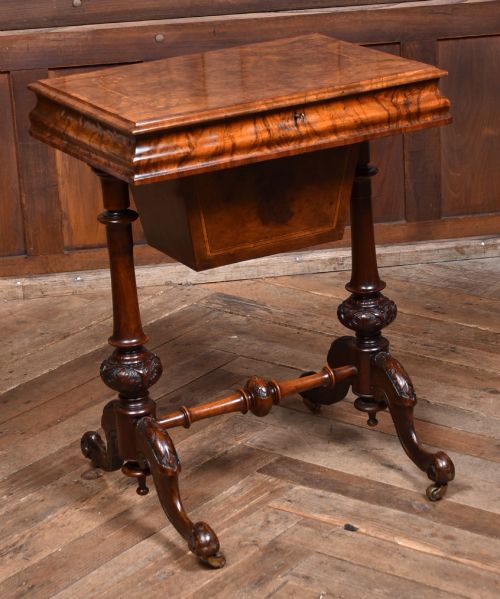
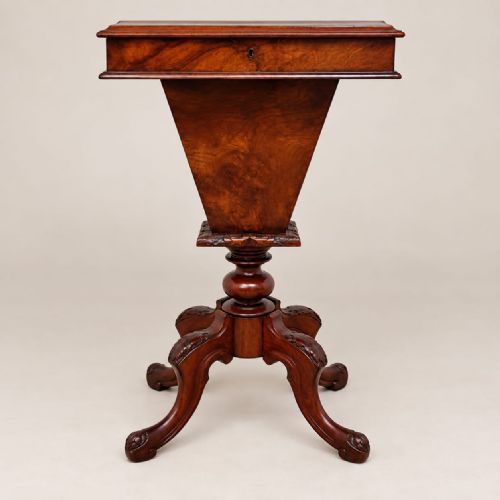
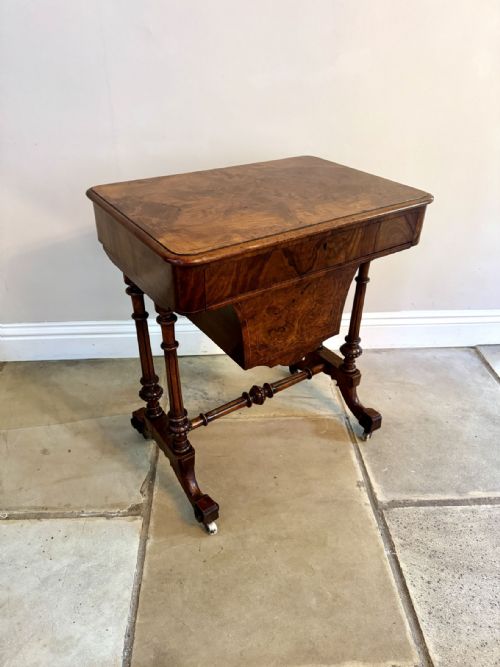
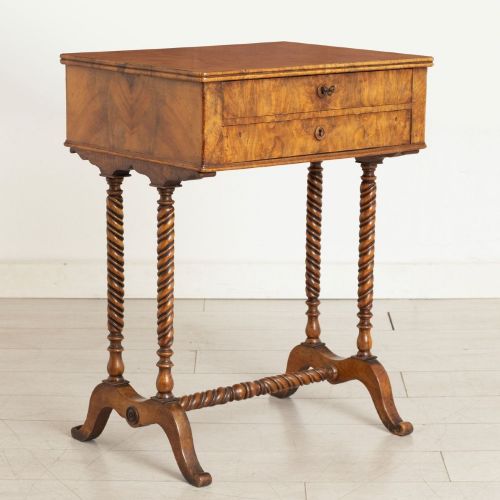
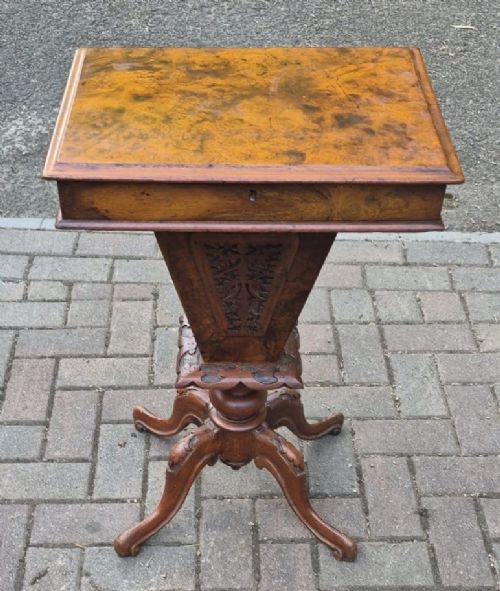
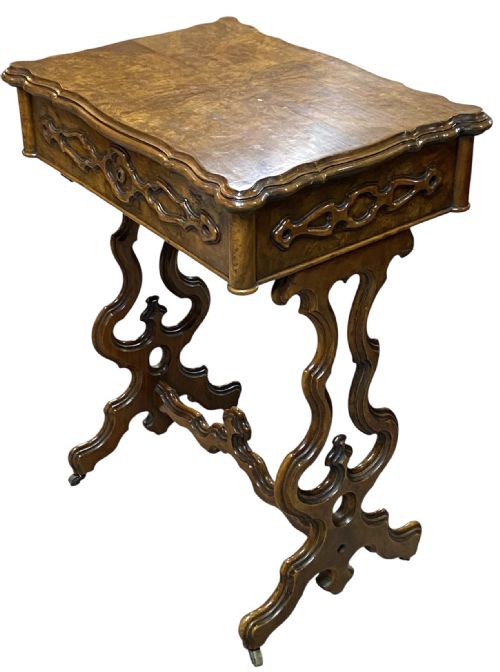
A victorian burr walnut sewing box encompasses both tabletop caskets and freestanding tables designed for domestic needlework. The evidence shows work tables, trumpet forms, and smaller decorative boxes spanning the mid to late nineteenth century.
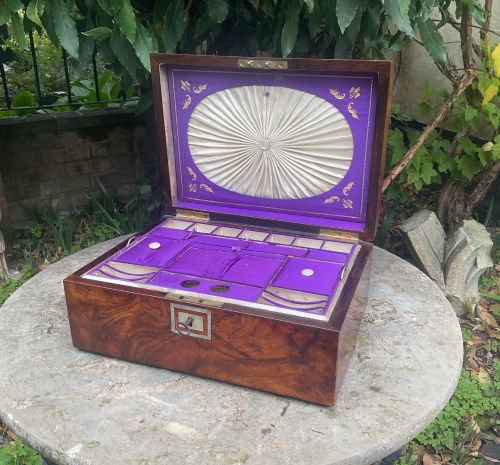
Freestanding examples often incorporate wool bags, games boards, and writing surfaces beneath their hinged lids. Smaller tabletop caskets remain portable, sitting upon side tables while preserving compartments for cottons and thimbles.
The prevalent timber is burr walnut, valued for its swirling grain patterns and deep brown tones. Makers combined this veneer with simpler solid walnut and applied it across various structural formats.
Judging the execution
Quality rests in the selection of the walnut burr and the precision of the wood inlay. Superior examples display symmetrical grain matching across the lid and crisp, unblemished boxwood stringing.
The internal organisation dictates distinction, separating simple compartments from multi-tiered fitted trays with intact lids. Sound structural joinery in the trumpet bases and sturdy hinge placement ensure longevity.
Victorian Burr Walnut Sewing Box Retail Price Guide 2026
Typical asking prices for victorian burr walnut sewing box among the pieces listed under this phrase on Sellingantiques today, from the lower quarter to the upper quarter. They describe what is for sale here now, not the wider market.
The listings show pieces dated across the Victorian era, utilising walnut, burr walnut, brass, and boxwood inlay.
Waring and Gillow
The Victorian Burr Walnut Sewing Box Glossary
- Burr walnut
- Timber taken from the growth excrescences of a walnut tree, producing swirling, knot-filled grain patterns. It provides highly decorative surfaces for Victorian veneered furniture.
- Trumpet table
- A freestanding sewing table featuring an octagonal or round body widening toward the base, resembling the bell of a musical instrument. They typically rest on carved tripod legs.
- Tunbridge ware
- Small wooden objects decorated with mosaic patterns created from thousands of tiny tinted wood prisms. These geometric designs appear on specific tabletop work boxes.
- Marquetry
- The art of applying pieces of veneer to a structure to form decorative patterns and pictures. Makers utilised this technique on table tops alongside boxwood inlay.
- Work table
- A multi-functional nineteenth-century table equipped with internal compartments and sometimes a fabric bag for storing sewing materials. They served ladies for needlework and correspondence.
Victorian Burr Walnut Sewing Box: Frequently Asked Questions
What is inside a typical sewing box?
These boxes contain fitted wooden trays, lidded compartments, and pin cushions designed to organise threads, needles, and small tools. Many retain their original paper linings or velvet-trimmed sections.
Larger freestanding versions add fabric catchment bags or compartments for games boards and writing equipment beneath the main lid.
How do I date these pieces?
Dating relies on stylistic shifts and structural clues found across the mid to late nineteenth century. Pieces range from early forms with simple proportions to later trumpet models and Empire Revival variants.
Specific design motifs, such as Tunbridge ware banding or elaborate marquetry, help narrow the decade of manufacture alongside documented cabinetmaker stamps.
Are tabletop boxes different from work tables?
Tabletop boxes are compact caskets intended to sit on chests or desks, whereas work tables are complete pieces of freestanding furniture. Both categories utilise burr walnut veneers and serve the same domestic needlework purpose.
Work tables incorporate legs, pedestals, and occasionally tripod bases, while caskets remain entirely portable.
How should I care for burr walnut?
Burr walnut benefits from stable room environments away from direct sunlight and strong heat sources. Excessive dryness can cause the delicate veneer to lift or crack over time.
Light dusting with a dry cloth maintains the surface. Professional wax polishing preserves the sheen without damaging the historic finish.