






Vintage Seaside Landscape Painting
A vintage seaside landscape painting captures the salt air, shifting coastal light, and historic shores of Britain and Europe through the eyes of artists from past eras.
Vintage Seaside Landscape Painting
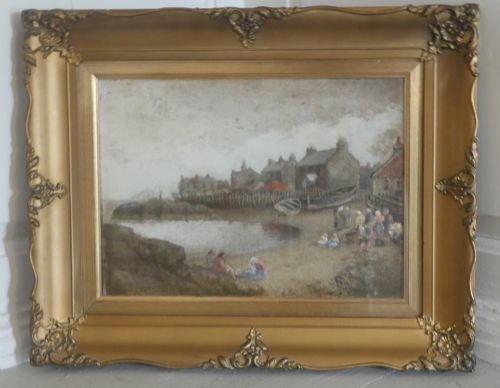
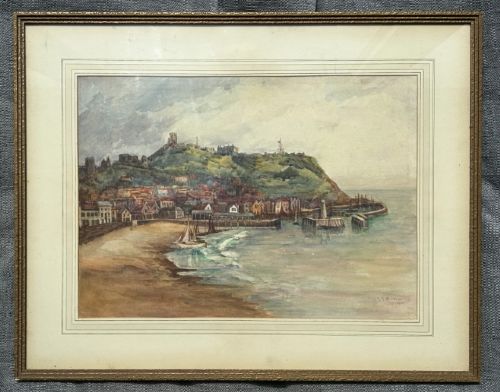
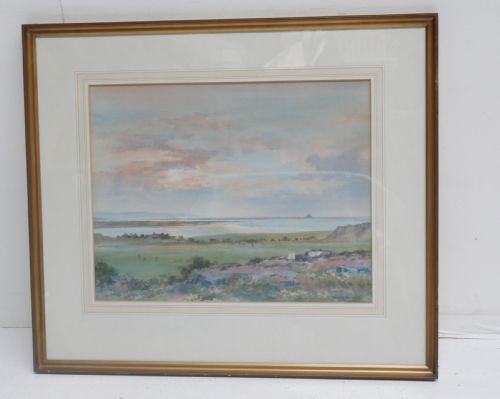
A vintage seaside landscape painting is a framed artwork depicting coastal views, harbours, beaches, and cliffs executed during the nineteenth and twentieth centuries. These works record specific topographical locations, from Yorkshire fishing ports and Dorset bays to French coastal cliffs and Scottish estuaries.
The selections on this page range from Victorian watercolours of bustling harbours to mid-century impressionist oils of deserted shores. Buyers encounter signed works by named regional painters alongside atmospheric topographical pieces that document changing coastal architecture and maritime life.
How they were made
Artists record coastal scenes primarily through oil paint on canvas or board, and transparent watercolour on paper. Oil paintings utilise heavy impasto to build texture on the surface, while watercolours rely on the white of the paper to capture bright sea spray and pale sunlight.
Framed works frequently combine wood and gilt mouldings to protect the delicate medium behind glass or to support heavy canvas supports. Painters often worked outdoors directly on location, applying rapid brushstrokes to capture fleeting weather conditions along the shoreline.
Listings feature watercolours and oil paintings spanning the nineteenth century through the mid-twentieth century.
What varies in quality
Quality rests in the artist's ability to render the specific atmospheric conditions of the coast, such as sea mist, breaking waves, and changing cloud formations. Superior compositions demonstrate a confident handling of light and shade that brings depth to the water and solidity to the cliffs.
The strength of the provenance and the clarity of the topographical detail elevate certain pieces above standard decorative watercolours. Skilled brushwork and an assured sense of colour harmony distinguish exceptional works from routine topographical records.
Clifford Hanney·Edward Mills·William Banks Fortescue·F A Roylance·Lionel Horsnell·John Bedloe Goddard·Norman Lloyd·William J B Jenkins·William Raymond Dommersen·Frank Wood·H E Tidmarsh·Alfred Henry Vickers·Percy Brooke·Alfred Robert Quinton·Jack R Mould·James George Bingley·John Sanderson Wells·Robert Macaulay Stevenson·John Abernethy Lynas-Gray·William Greaves·James Watson·Edwin Bagshaw·Yves Brayer·George Marks·Alfred Egerton Cooper
The Vintage Seaside Landscape Painting Glossary
- Watercolour
- A paint consisting of colour suspended in a water-soluble vehicle, traditionally applied to paper to achieve translucent washes of tone.
- Impressionism
- A style of painting that focuses on the visual impression of the moment, particularly regarding the shifting effects of light and colour.
- Gilt wood
- Wood coated with a thin layer of gold leaf or gilt paint, commonly used for traditional picture frames.
- Board
- A rigid flat surface made from wood pulp or panel material used as a durable alternative to stretched canvas.
Vintage Seaside Landscape Painting: Frequently Asked Questions
How do I date a vintage seaside painting?
Dating relies on stylistic clues, framing methods, artist biographies, and the clothing or vessels depicted in the scene. Victorian works often show meticulous detail, whereas mid-century pieces favour looser impressionistic brushwork.
Signatures, exhibition labels on the reverse, and the type of canvas or paper backing provide further chronological markers. Comparing the subject matter to historical photographs of piers and harbours helps narrow down the decade.
What is the difference between oil and watercolour coastal art?
Oil paintings utilise thick pigments on canvas or board, offering rich textures and deep colours that capture stormy seas and heavy skies. Watercolours use translucent washes on paper, excelling at bright coastal light and delicate atmospheric effects.
Watercolours require protection beneath glass to prevent moisture damage, while canvas oils are more durable but sensitive to extreme temperature shifts. Both mediums were widely used by artists working along the British coastline.
Where were most of these coastal scenes painted?
The majority of these works depict familiar British shores, including the Yorkshire coast, Dorset cliffs, Cornish fishing villages, and south coast seaside resorts. Popular painting colonies attracted artists to locations like St Ives, Whitby, and Scarborough.
Selected pieces also record continental shores, featuring French ports, Norman cliffs, and Mediterranean landscapes. Artists travelled extensively by railway during the nineteenth and twentieth centuries to reach these maritime destinations.
How should I frame and display a historic watercolour?
Historic watercolours need conservation framing with acid-free mounts to prevent the paper from yellowing over time. Keeping the artwork away from direct sunlight protects the delicate pigments from fading.
Displaying pieces on interior walls with stable humidity prevents warping of the paper and damage to the wooden frame. Original gilt frames should be preserved where possible, as they add historical context to the piece.