







British Watercolour Landscape Art
British watercolour landscape art captures rural views, coastal havens and townscapes across the nineteenth and twentieth centuries, offering intimate records of light and topography.
British Watercolour Landscape Art
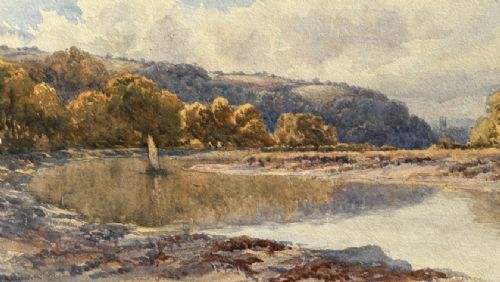
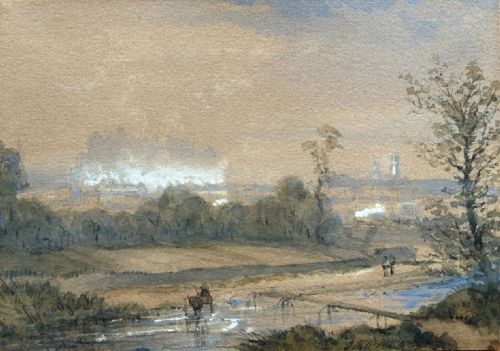
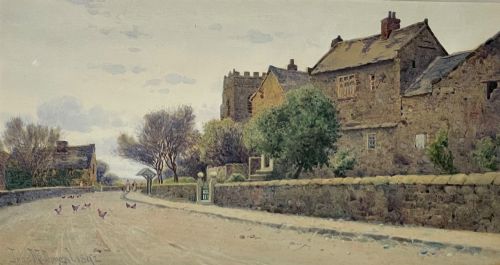
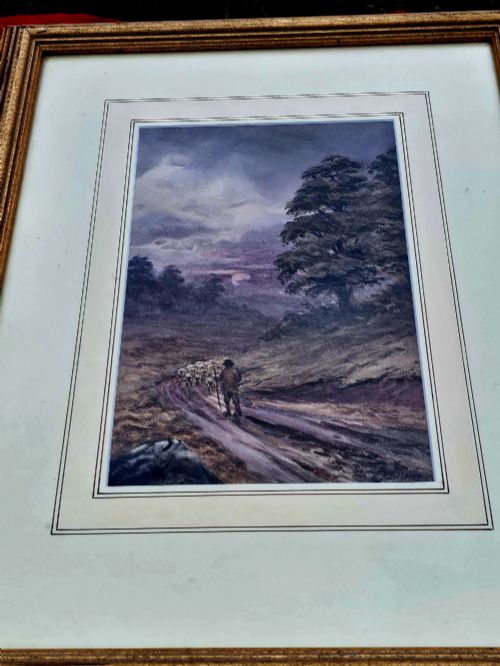
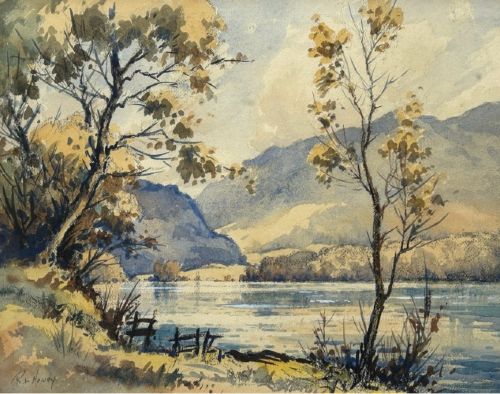
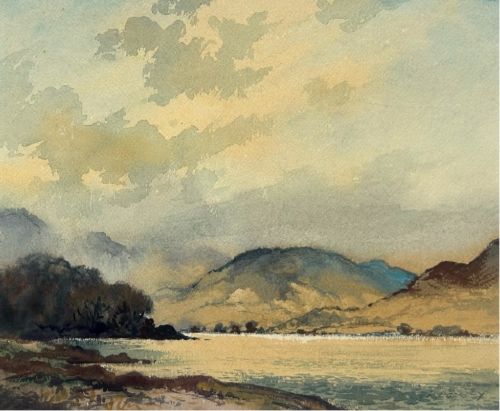
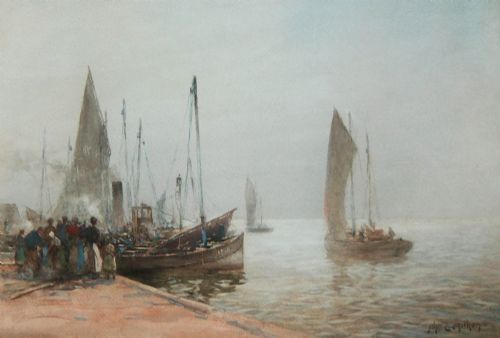
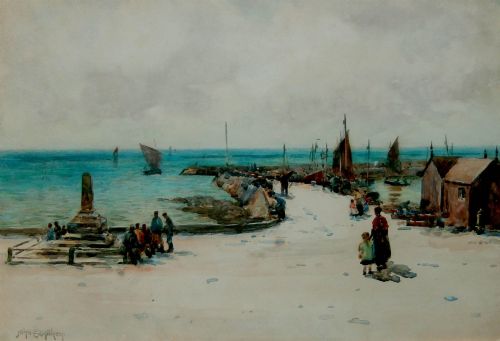
British watercolour landscape art encompasses original works on paper depicting rural, marine and urban scenes created by artists working from the nineteenth century through to the mid twentieth century. These paintings range from Victorian coastal depictions of fishing boats to early twentieth century pastoral views of fields and river valleys.
Buyers will most frequently encounter works dating from the Victorian and Edwardian periods, alongside pieces from the interwar years and the mid twentieth century. Common subjects include Scottish and Cumbrian lakes, Yorkshire market towns, Cornish harbours and Welsh river landscapes, usually housed behind glass within traditional frames.
How they were made
Artists painted primarily with watercolour pigment suspended in water, applied directly onto absorbent paper sheets to create transparent washes and fine linear details. Many works also incorporate touches of bodycolour, ink or gouache to build opacity and highlight foreground elements such as figures, boats or buildings.
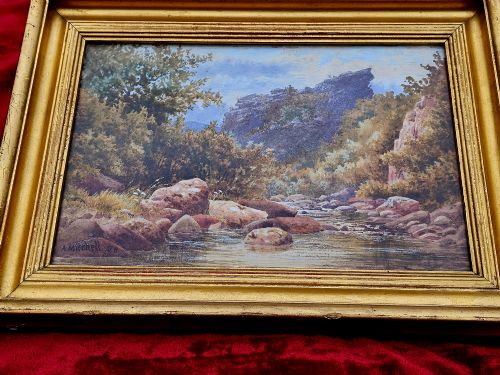
Finished watercolours were traditionally mounted behind protective glass and secured within wooden frames, often accented with gilt wood moulding. These protective housings preserved the delicate pigments and paper surfaces from moisture and atmospheric degradation over the decades.
The listings show works executed on paper using watercolour, ink and glass framing, spanning from the nineteenth century through the 1960s.
What varies in quality
Quality rests principally upon the artist's handling of light, atmosphere and perspective, where confident brushwork brings a scene to life rather than relying on stiff topographical tracing. Superior works demonstrate a assured command of transparent washes that convey weather and mood effectively across the paper.
The degree of preservation also determines standing, as works retaining their original pigment vibrancy without heavy fading command greater appreciation. Additionally, strong composition and detailed execution in secondary elements like shipping or foliage elevate a piece above routine topographical recording.
George Fotherly Hargitt·James Orrock·John R Prentice·Alfred Young Nutt·Percy Lancaster·John McDougal·EJ Letheren·Robert Leslie Howey·James E Aitken·William Banks Fortescue·William Joseph Boyes·Muriel Metcalfe·Thomas William Morley·Fred Lawson·Robert Thorne Waite·John Smith Atherton·Hector Caffieri·Richard Henry Wright·Thomas Maidment·George Oyston·Frederick James Kerr·Alfred G Morgan·Russell Sidney Reeves·William Matthison·Henry Martin Pope
The British Watercolour Landscape Art Glossary
- Watercolour
- A painting method where fine pigment is mixed with water-soluble binders and applied to paper. The technique relies on the white of the paper shining through translucent layers of colour.
- Gouache
- An opaque water-based paint containing pigment and a binding agent, sometimes mixed with white to create solid highlights. It provides heavier coverage than traditional watercolour.
- Bodycolour
- A term historically used interchangeably with gouache, describing watercolour paint rendered opaque through the addition of white pigment. It adds dense opacity to specific areas of a landscape.
- Wash
- A thin, fluid layer of watercolour paint spread evenly across the paper to create broad areas of sky, water or shadow. Skilled application avoids harsh edges and maintains luminous depth.
British Watercolour Landscape Art: Frequently Asked Questions
How should I frame and hang antique watercolours?
These works require framing behind glass with acid-free mounts to prevent paper degradation and pigment loss over time.
Position them away from direct sunlight and damp environments to protect the fragile water-based pigments from fading and moisture damage.
How do I distinguish between Victorian and mid twentieth century watercolours?
Victorian examples frequently display highly detailed, narrative-driven realism with dramatic lighting and traditional maritime or pastoral subjects. Mid twentieth century pieces often adopt looser impressionist brushwork, simpler compositions and a brighter or more modern palette.
The framing style, paper type and artist signatures also provide reliable clues for dating individual landscape paintings accurately.
Did artists paint these watercolours outdoors or in the studio?
Many landscape artists created preliminary sketches and rapid en plein air watercolours outdoors to capture immediate weather and lighting conditions. Finished exhibition pieces were frequently refined or completed later within the artist's studio using these field studies.
What subjects were most popular among British watercolourists?
Coastal scenes featuring fishing boats, harbours and stormy seas appeared frequently alongside tranquil river valleys and rural pastoral views. Regional landscapes from Scotland, Wales, the Lake District and Yorkshire also inspired enduring bodies of work.