


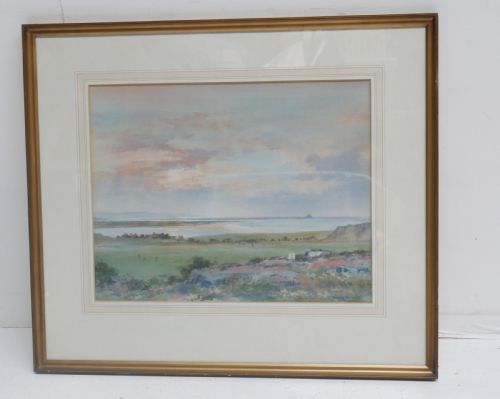


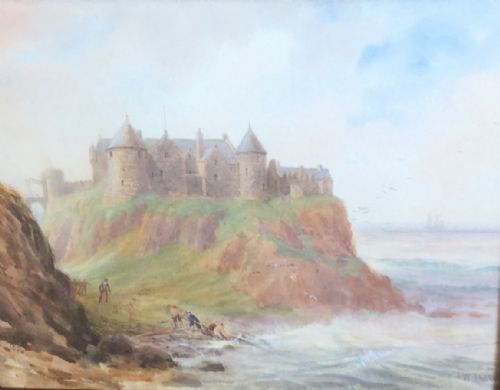
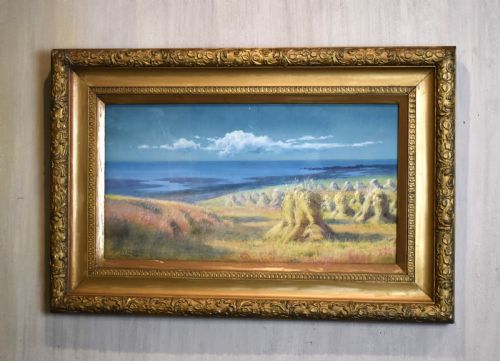

Coastal View Watercolour Picture
A coastal view watercolour picture brings the shifting light of shorelines and harbours straight to the wall.
Coastal View Watercolour Picture
A coastal view watercolour picture captures maritime scenes, bustling harbours, and serene shorelines using delicate pigments on paper. These works span from the Victorian era and 19th-century romanticism through Edwardian and mid-century maritime styles, reflecting changing artistic approaches to the sea. Buyers browsing this selection encounter framed paintings depicting specific coastal locations such as Whitby, Lake Garda, and Ballyholme Bay.
The pieces available on this page include works executed on paper using watercolour paint and pigment, often housed beneath glass within wooden or gilded wood frames. Dating ranges across the nineteenth and twentieth centuries, featuring named artists as well as atmospheric regional studies. Each framed artwork preserves the transient effects of coastal weather and light through transparent washes.
How they were made
Artists apply watercolour pigment suspended in water onto sheets of paper, building luminosity through thin, transparent washes that allow the white of the paper to reflect back through the colour. This technique requires swift and confident brushwork, as alterations are difficult to conceal once the pigment dries.
Finished watercolours are typically protected beneath glass and housed within wooden frames, sometimes enhanced with gilded moulding to complement the palette of the painting.
Coastal View Watercolour Picture Retail Price Guide 2026
Typical asking prices for coastal view watercolour picture among the pieces listed under this phrase on Sellingantiques today, from the lower quarter to the upper quarter. They describe what is for sale here now, not the wider market.
Listings feature works from the Victorian era up to the mid-twentieth century, utilising paper, watercolour pigment, and wooden frames.
What varies in quality
The distinction between standard and exceptional works lies in the sureness of the brushwork and the artist's ability to capture the atmospheric conditions of the coast. Superior pieces demonstrate accomplished handling of light, shadow, and spatial depth within the marine landscape.
The quality of the framing also contributes to the overall presentation, with period gilded wood frames providing appropriate historical context for nineteenth and early twentieth-century works.
Alfred George Morgan·William Tuck·Frank Wood·Frederick William Booty·Albert Robert Quinton·Peter Ghent·Joseph William Carey
The Coastal View Watercolour Picture Glossary
- Watercolour
- A painting method in which the paints are made of pigments suspended in a water-based solution. It relies on the transparency of the layers to create luminous effects.
- Pigment
- The finely ground natural or synthetic coloured powder that gives paint its hue. In these works, pigments are bound with water-soluble agents for application on paper.
- Gilded wood
- Wood that has been coated with a thin layer of gold leaf or metallic gilt finish. Such frames are frequently found on nineteenth-century and Victorian art.
- Newlyn School
- An art colony movement based in Cornwall focusing on plein air painting and coastal life. Works associated with this circle capture authentic maritime conditions.
Coastal View Watercolour Picture: Frequently Asked Questions
How should I hang a watercolour?
Watercolours are sensitive to strong sunlight and can fade over time if exposed to direct rays. Hang them away from bright windows and maintain stable indoor humidity.
Ensure the frame is properly sealed behind glass to protect the delicate paper surface from atmospheric moisture and dust.
Are these paintings original works?
The pieces listed here are original hand-painted watercolours rather than mass-produced prints or reproductions. Each brushstroke is applied directly to the paper by the artist.
Signatures, framing details, and period materials help confirm the individual authenticity of each artwork.
How do I identify the period?
Dating relies on stylistic markers, framing methods, and signatures recorded across the nineteenth and twentieth centuries. Victorian and Edwardian works often feature specific framing styles and paper types common to those decades.
Inscribed titles on the reverse or mount frequently provide historical context regarding the depicted location and date.
What framing is appropriate?
Many works retain their period wooden or gilded wood frames, which complement the aesthetic of the artwork. When reframing, use acid-free mounts to prevent discolouration of the paper over time.
Glazing is essential to protect the watercolour pigments from dust, handling, and airborne pollutants.