
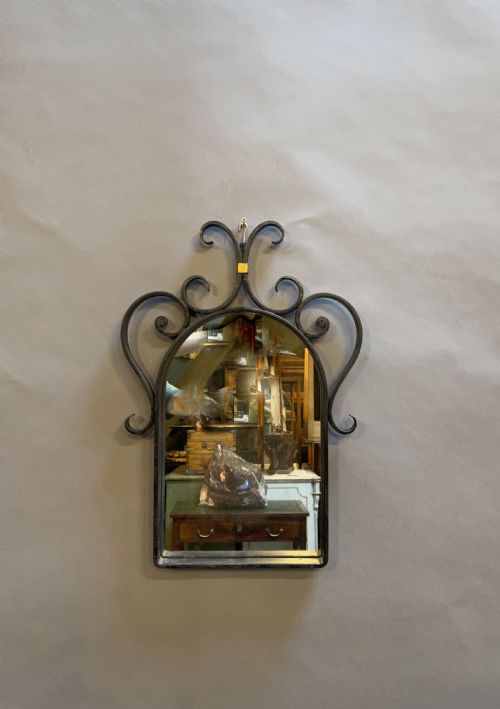


Vintage Scrollwork Wall Mirror
A vintage scrollwork wall mirror brings architectural depth and reflected light to a room through carved timber or gilded plaster.
Vintage Scrollwork Wall Mirror
A vintage scrollwork wall mirror takes several forms across this selection, ranging from carved wooden frames to ornate plaster mouldings. Buyers searching for a vintage scrollwork wall mirror most frequently encounter pieces spanning the nineteenth and early twentieth centuries, particularly within Rococo Revival, Georgian, and Victorian styles.
The objects listed include substantial overmantel mirrors alongside compact wall-hung examples in walnut, mahogany, and giltwood. Regional variations appear across French, Italian, and English traditions, each bringing distinct carving depths and border treatments to the surface.
Materials and construction
Makers constructed these frames from native hardwoods such as walnut and mahogany, or applied gesso and gold leaf over a carved wooden base. Artisans shaped intricate scrolls using hand-carving chisels, fret-cutting saws, and applied composition ornament for relief details.
Giltwood and brass frames utilise metallic leaf or cast metalwork to achieve a reflective, luminous border. Backboards typically consist of timber panels secured behind original or historic mirror glass.
Periods represented span from the eighteenth century through Victorian and Edwardian eras into the early twentieth century.
Quality factors
Depth of carving and sharpness of detail separate finer pieces from simpler productions, particularly where acanthus scrolls and pierced fretwork meet at the corners. Crisp undercutting in wood and well-defined moulding in gesso indicate superior workshop execution.
The integrity of the original gilding and the preservation of the silvered glass plate influence the character of the piece. Hand-carved timber construction with traditional joinery displays a higher grade of craftsmanship than mass-produced alternatives.
The Vintage Scrollwork Wall Mirror Glossary
- Gesso
- A plaster-like mixture applied to wood frames as a base for gilding or painting. Artisans build up layers to carve fine ornamental details before applying gold leaf.
- Fretwork
- Openwork ornamentation cut with a fine saw from thin boards of timber. This technique creates lightweight, geometric or scroll patterns on mirror frames.
- Overmantel mirror
- A large horizontal looking glass designed specifically to hang above a fireplace mantelpiece. These pieces anchor the visual weight of a chimney breast.
- Giltwood
- Timber carved and subsequently covered with thin sheets of gold leaf. It reflects ambient light and provides a warm, metallic lustre.
- Rococo Revival
- A nineteenth-century design movement favouring asymmetrical scrolls, C-curves, and naturalistic shell motifs. It draws inspiration from earlier eighteenth-century continental decorative arts.
Vintage Scrollwork Wall Mirror: Frequently Asked Questions
How do I hang a heavy carved mirror?
Heavy frames require secure wall fixings anchored directly into masonry or timber studs using appropriate brackets.
Professional mirror hangers often utilise split battens or heavy-duty strap hangers to distribute the weight evenly.
Can I clean the original glass?
Original glass plates benefit from gentle cleaning with a soft cloth and mild, non-ammonia-based glass cleaner. Avoid spraying liquid directly onto the edges where moisture might seep behind the silvering.
Patina and foxing spots on older glass should remain untouched as they indicate age.
How do I date a wooden frame?
Dating relies on examining the timber species, tool marks on the reverse, and the construction of the mitres and backboards. Secondary woods often provide clues to the region of manufacture.
Nail types and screw heads also help establish the approximate decade of assembly.
Where should I place an overmantel mirror?
An overmantel sits naturally above a fireplace hearth to reflect light and draw the eye upward in a reception room. It also functions effectively on a blank dining room wall opposite a window.
Positioning the glass at the correct height ensures it captures room reflections rather than the ceiling.