




Chippendale Fret Mirror
A chippendale fret mirror brings fluid symmetry and crisp pierced woodwork to a room, drawing the eye with its intricate scrollwork and polished glass.
Chippendale Fret Mirror
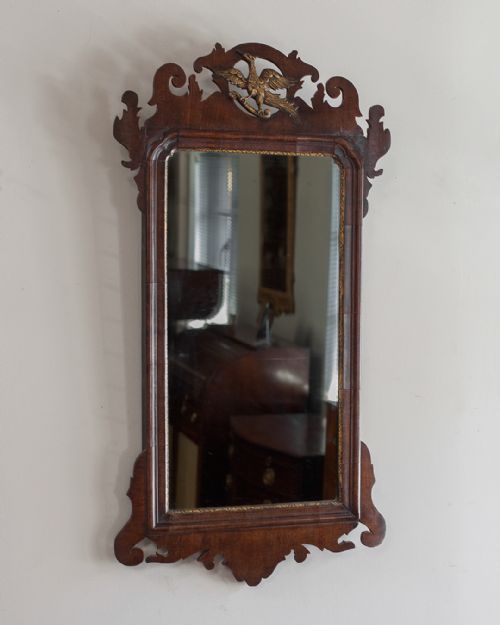
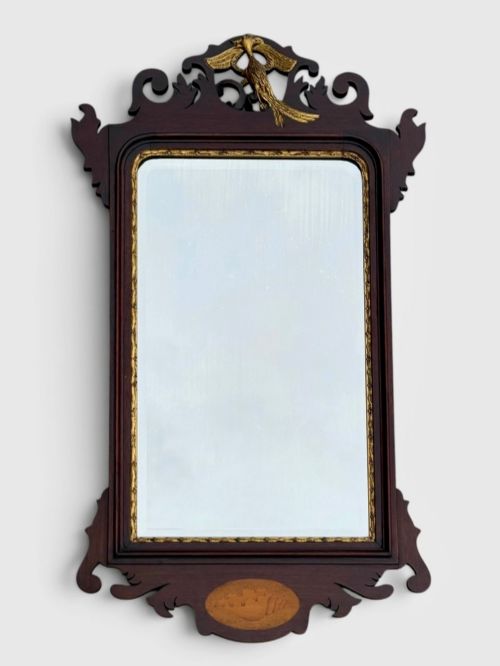
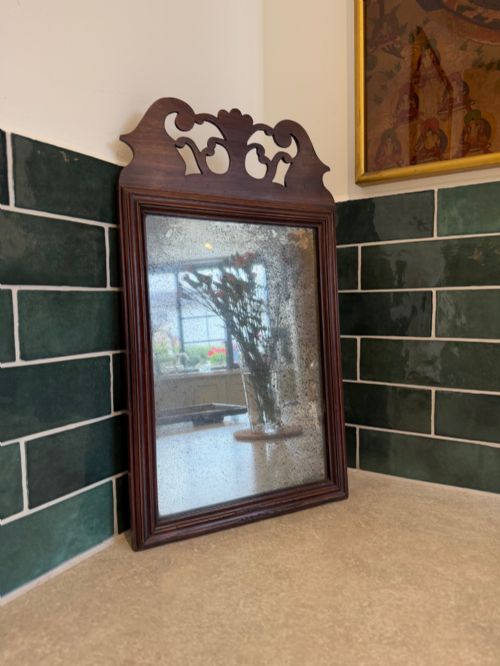
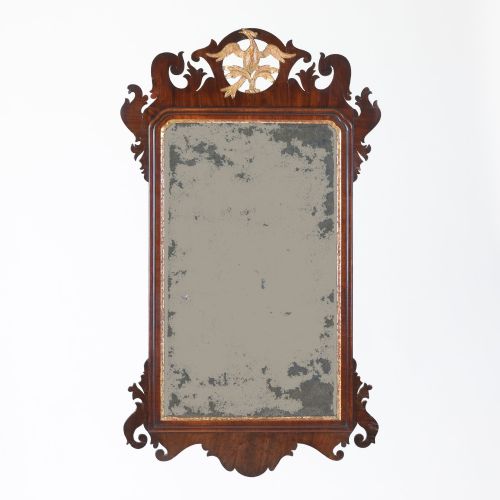
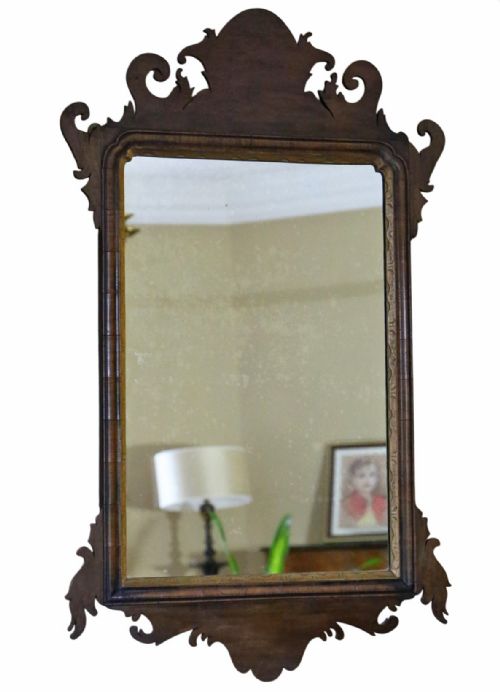
A chippendale fret mirror is a wall-hanging pier glass defined by its delicate pierced wooden frame and scroll-cut silhouette. When you search for a chippendale fret mirror, you encounter wall mirrors spanning the eighteenth century alongside revival pieces from the Edwardian era and the nineteen-twenties.
The material palette centres on rich timbers like mahogany and walnut, frequently accented with gilt details or parcel-gilt highlights. Examples range from compact Georgian hangings to large Edwardian and Victorian interpretations designed to command a wall.
Construction and materials
Cabinetmakers constructed these frames from dense timbers such as mahogany and walnut, selecting boards with deep grain patterns. Craftsmen utilised fine saws to pierce the wooden borders into intricate geometric and scroll patterns.
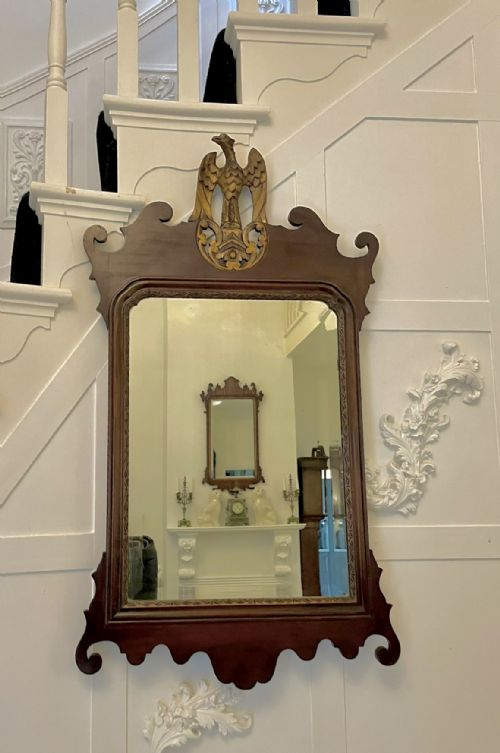
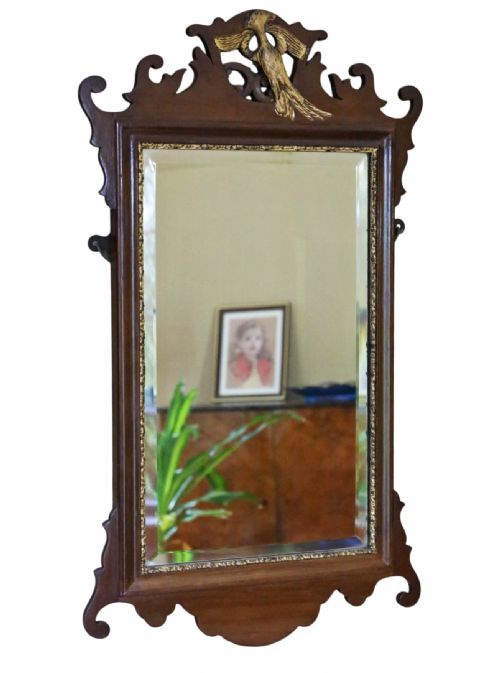
Giltwood elements and parcel-gilt highlights were applied to carved ornaments like the iconic Ho-Ho bird surmounting the crest. Mirror glass was set into the rebated back of the frame, occasionally retaining original Vauxhall plates.
Listings feature walnut and mahogany timbers alongside giltwood accents, spanning the Georgian period, the Edwardian era, and the early twentieth century.
Assessing craftsmanship and execution
Quality rests in the crispness of the pierced fretwork and the depth of the carving on the crest and ears. Superior examples display sharp internal corners and confident scroll execution rather than soft, mechanical rounding.
The choice of timber grain and the preservation of original gilding separate standard production from exceptional pieces. Attention to proportion in the scrolling silhouette dictates the visual balance of the finished mirror.
The Chippendale Fret Mirror Glossary
- Fretwork
- Pierced decorative woodwork cut with a fine saw to create geometric or organic patterns. It forms the signature silhouette of these frames.
- Parcel-gilt
- Partially gilded woodwork where gold leaf highlights specific carved details against a contrasting timber background. This technique draws attention to the crest and ears.
- Pier glass
- A tall mirror designed to hang on the wall space between windows. These pieces often feature elaborate fret-cut borders.
- Vauxhall mirror
- An early type of mirror glass featuring a bevelled edge ground by hand. It appears in mid-eighteenth-century examples.
- Ho-Ho bird
- A mythical Chinese phoenix carved into the crest of the mirror. It represents a common motif in eighteenth-century and revival designs.
Chippendale Fret Mirror: Frequently Asked Questions
How do I date a chippendale fret mirror?
Dating relies on examining the timber construction, backboards, and the wear on the mirror plate. Eighteenth-century examples show hand-cut joinery and aged patination on the wood.
Revival pieces from the Edwardian period or the twentieth century often utilise machine-sawn backing and modern screw fixings while imitating earlier George II and George III styles.
Where should I hang this mirror?
These mirrors suit spaces above mantelpieces, console tables, or narrow wall sections between windows where their vertical proportions work best. The reflective glass brightens darker corners and adds depth to a room.
Ensure the wall fixing is secure because heavier mahogany and walnut frames require proper support to bear the weight safely.
What is the Ho-Ho bird?
The Ho-Ho bird is a stylized phoenix derived from Chinese aesthetic influences popular during the Georgian period. It sits atop the crest of the mirror frame with outspread wings.
Carvers rendered this creature in wood, often highlighting its form with gilt accents to create a focal point.
Are original eighteenth-century mirrors different from revival pieces?
Original eighteenth-century mirrors exhibit the tool marks, timber shrinkage, and oxidized mirror plates associated with age. The wood grain carries a deeper patina developed over centuries.
Revival pieces built around nineteen hundred replicate the Georgian fretwork style with clean execution and occasionally bevel-edged modern glass.