
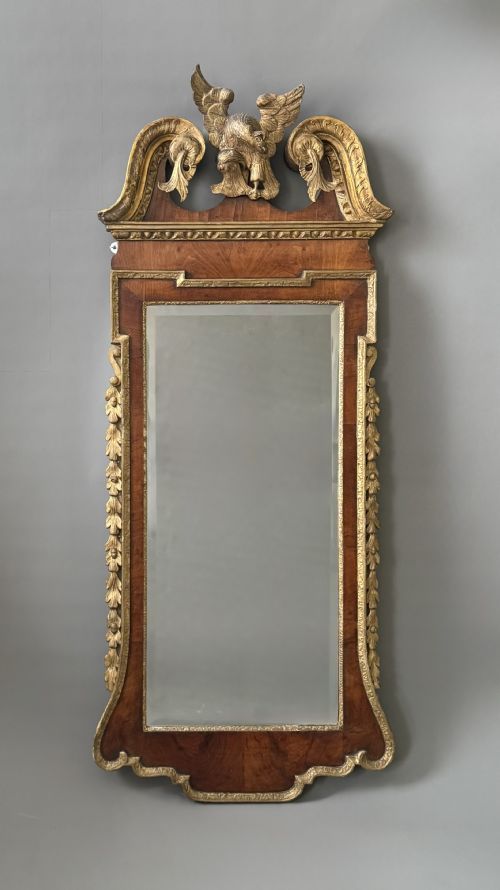
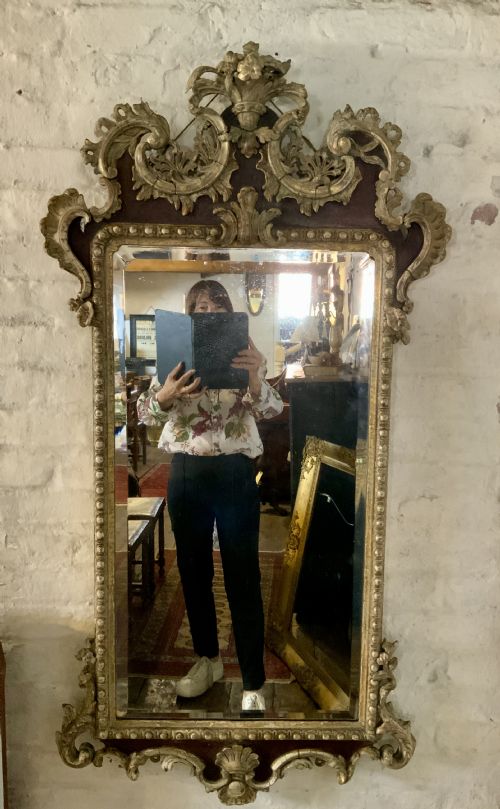

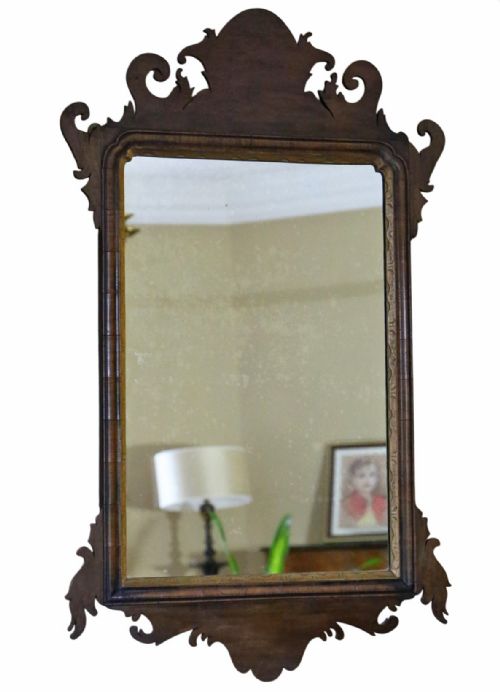


Chippendale Walnut Wall Mirror
A Chippendale walnut wall mirror brings rich timber tones and intricate fretwork into a room, offering both history and decorative focal presence.
Chippendale Walnut Wall Mirror
A Chippendale walnut wall mirror combines the warm, figured grain of walnut with the scrollwork and fret-cut silhouettes typical of the Georgian era. Buyers seeking a chippendale walnut wall mirror encounter pieces ranging from 18th-century originals to later revivals from the Victorian period and the nineteen-twenties.
The prevailing form on this page is the hanging wall mirror, often featuring scrolled crests, ears, and parcel-gilt details or carved giltwood highlights. Surviving examples span the George II and George III reigns, alongside revival pieces that imitate the earlier proportions and fretwork patterns.
Makers and craftsmen of the period utilised timber veneers and solid boards to construct these frames, sometimes incorporating carved motifs such as hoho birds. Whether dating to the seventeen-sixties or the nineteenth century, these mirrors serve as traditional hanging wall accents.
Materials and construction methods
Makers constructed these frames using walnut, often applying wood veneer over a secondary timber foundation or working with solid red walnut and burr walnut boards. Giltwood and parcel gilt elements were added to highlight carved mouldings, fretwork edges, and internal slips.
Glass plates were traditionally hand-silvered and fitted into the timber rebate, with Vauxhall mirror plates appearing in mid-Georgian examples. Fretwork silhouettes were cut using precise piercing techniques, creating the characteristic pierced ears and scroll pediments associated with the style.
Listings feature walnut, giltwood, and wood veneer across Georgian, Victorian, and nineteen-twenty periods.
Markers of quality and craftsmanship
Quality rests in the crispness of the fret-cut edges and the depth of the carved scrollwork, where finer pieces display sharp corners and well-defined profiles. The choice of timber also dictates distinction, with heavily figured burr walnut or rich red walnut commanding greater visual presence than plain grain.
The retention of original components, such as early mirror glass and historic gilt highlights, distinguishes superior examples from heavily restored or later replacement pieces. Proportions remain balanced on better-executed mirrors, whereas lesser items may exhibit heavier, clumsier fretwork outlines.
The Chippendale Walnut Wall Mirror Glossary
- Parcel Gilt
- Partially gilded woodwork where gold leaf highlights specific carved details against a painted or polished ground. This technique draws the eye to decorative crests and ears.
- Fretwork
- Openwork patterns cut into thin boards using a fretsaw, creating the pierced scroll designs characteristic of mid-eighteenth-century frames. It defines the silhouette of the mirror.
- Vauxhall Mirror
- A type of antique mirror plate featuring a bevelled edge, historically associated with London mirror production. These plates often show subtle ageing and distortion.
- Pier-glass
- A tall mirror designed to hang on the wall between windows, frequently placed above a pier table. They reflect light into darker corners of a Georgian interior.
- Hoho Bird
- A mythical Chinese bird motif frequently carved into the crests of mid-Georgian mirrors. It reflects the eighteenth-century taste for Chinoiserie design.
Chippendale Walnut Wall Mirror: Frequently Asked Questions
How do I date a walnut mirror?
Dating relies on examining the construction timber, the style of the fretwork, and the characteristics of the glass plate. Eighteenth-century examples typically show hand-cut dovetails, aged pine backboards, and old mirror plates.
Revival pieces from the Victorian era or the early twentieth century often display machine tooling, modern fixings, and cleaner backing boards. Comparing the joinery and timber patination clarifies the age of the frame.
Where should I hang a wall mirror?
These mirrors suit placement above a mantelpiece, a sideboard, or a hall console table where they anchor the wall space. Hanging them at eye level maximises their reflective function and showcases the carved crest.
Ensure the wall fixings match the weight of the timber and glass frame. Positioning them opposite a window helps bounce natural light deeper into the room.
Are these mirrors fragile?
The pierced fretwork ears and scrolled crests are susceptible to knocks if placed in busy walkways or high-traffic zones. Careful handling during movement prevents damage to the delicate timber edges.
Original glass plates also require gentle cleaning without harsh chemical sprays. Secure wall mounting protects the frame from accidental slips.
What is parcel gilding?
Parcel gilding involves applying thin gold leaf selectively to raised carved sections while leaving the surrounding walnut timber exposed. This creates a contrast between the metallic gold and the dark wood grain.
The technique was popular during the Georgian period to accentuate ears, mouldings, and bird motifs. Over time, the gold leaf develops a softened patina.