



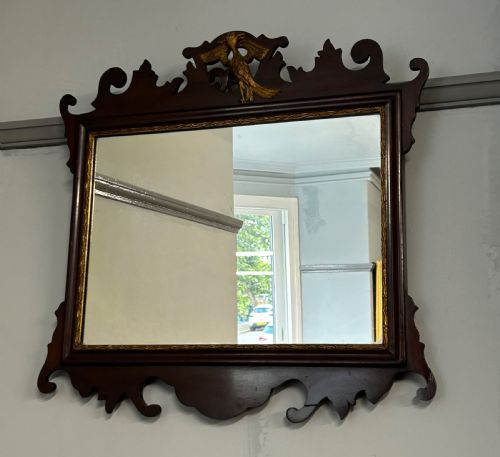

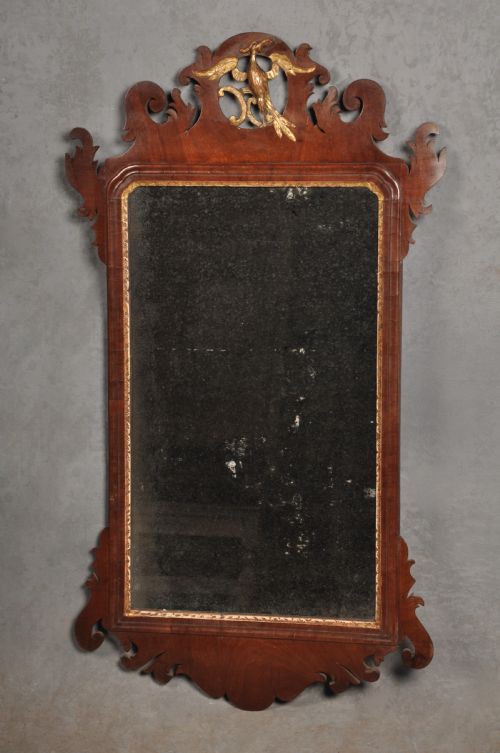


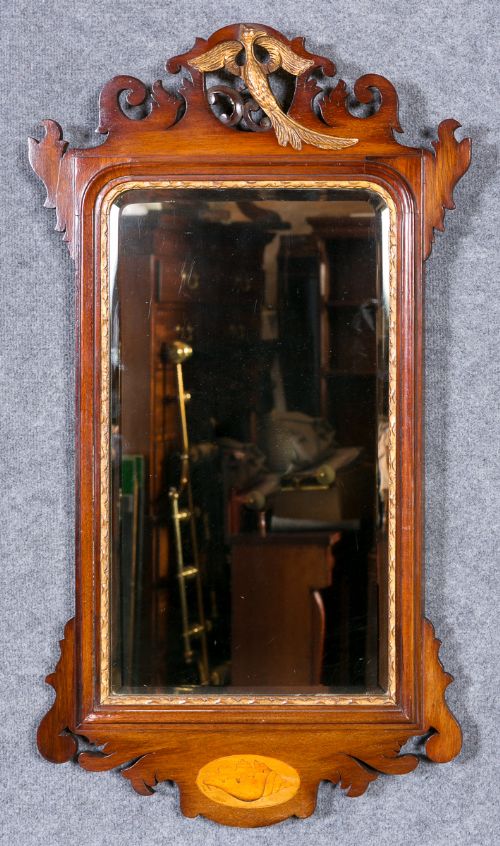
Georgian Phoenix Crest Mirror
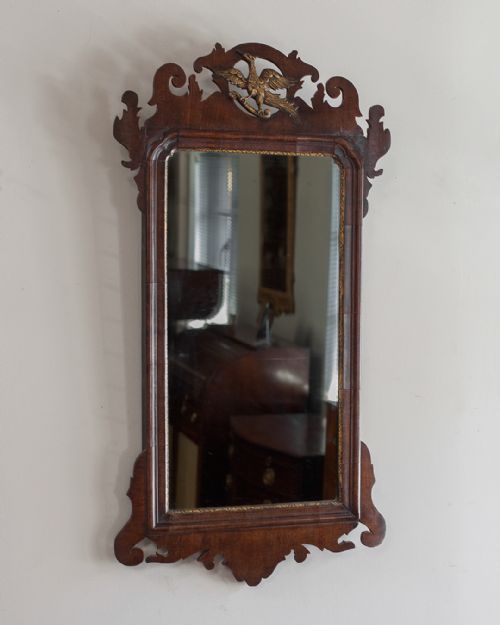
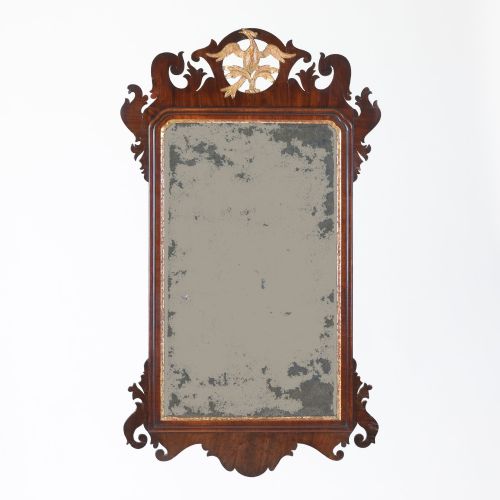
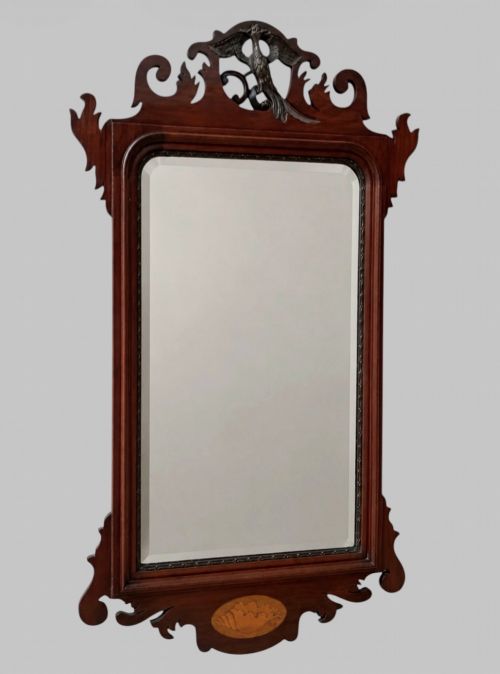
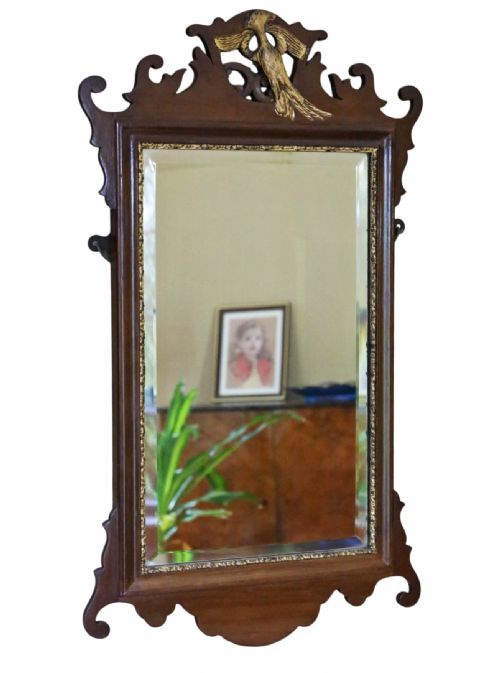
A georgian phoenix crest mirror brings classical carving and dramatic fretwork into a room, prized for the mythical bird crowning its frame.
Georgian Phoenix Crest Mirror
A georgian phoenix crest mirror is a wall mirror defined by its pierced fretwork wooden frame and the distinctive carved bird, often known as a ho-ho bird, perched atop the crest. These pieces originate across the eighteenth century, the regency era, and later revival periods like the victorian age.
Buyers look for these mirrors to anchor a hallway or reception room with period character and vertical presence. The combination of fret-cut wooden silhouettes and the iconic phoenix motif delivers a focal point that has remained sought after through centuries of interior design.
Materials and construction
Makers shaped these frames from dense cabinet timbers including mahogany and walnut, frequently applying gesso and giltwood details to accentuate the carved crests and borders. The woodworking relies on delicate fret-cutting techniques to achieve the intricate scrollwork and symmetrical outlines characteristic of the style.
Glass plates vary from early mirror construction to bevel-edged glass found in later revival pieces. The integration of gilded highlights against dark wood grain required skilled craftsmanship in both joining and surface finishing.
Materials recorded across the inventory include mahogany, walnut, giltwood, glass, and gesso.
Distinctions in quality
Quality in these mirrors rests on the crispness of the fret-cut carving and the depth of the silhouette, where sharper lines and more articulate bird crests distinguish superior examples. The choice of timber also plays a role, with finely figured mahogany and rich walnut offering greater visual depth than plainer woods.
The integrity of the surface finish, whether original gilding or polished wood, separates standard decorative pieces from those retaining finer craftsmanship. Proportion and balance in the scrollwork determine how successfully the mirror holds the wall.
The Georgian Phoenix Crest Mirror Glossary
- Fretwork
- Openwork patterns carved or pierced into thin wood boards. This technique creates the delicate, geometric borders typical of these frames.
- Giltwood
- Wood carved and coated with a thin layer of gold leaf or gilt preparation. It catches the light and highlights decorative crests.
- Gesso
- A plaster-like material applied to wood as a base for gilding or painting. It allows craftsmen to sculpt sharp ornamental details.
- Vauxhall mirror
- A term historically applied to high-quality English mirrors with bevelled edges. It reflects the early British plate glass industry.
- Ho-ho bird
- A mythical Chinese phoenix adapted into eighteenth-century European design. It sits as the carved crowning motif on many mirror crests.
Georgian Phoenix Crest Mirror: Frequently Asked Questions
What is a ho-ho bird?
A ho-ho bird is the eighteenth-century European adaptation of a Chinese phoenix, commonly carved as the crowning crest on these mirrors.
It appears perched at the top of the fretwork frame, adding a distinct mythological motif to the classical wall mirror form.
How do I date a mirror?
Dating relies on examining the timber species, the style of the fret-cut woodwork, and the characteristics of the glass plate. Eighteenth-century pieces show different construction traits compared to nineteen-hundred revival interpretations.
Checking the backing boards and fixings also offers clues regarding the age of the frame.
Where should I hang one?
These wall mirrors suit formal reception rooms, hallways, or above a fireplace where their vertical proportions can be fully appreciated. Their carved crests draw the eye upward, making them effective feature pieces.
Ensure the wall fixings can support the weight of a solid wood and glass mirror.
What woods were used?
Cabinet makers utilised dense hardwoods such as mahogany and walnut for the primary frames. These timbers provided the structural stability needed for intricate fret-cutting.
Secondary materials like gesso and paint were often applied to create gilded or decorated highlights.