
Vintage Rug
A vintage rug brings warmth and history to a room through its woven patterns and time-softened hues.
Vintage Rug
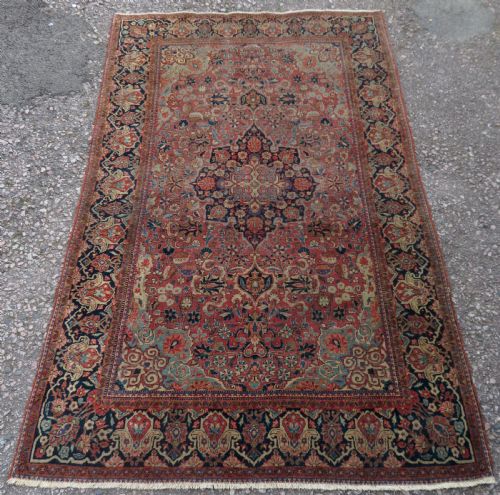
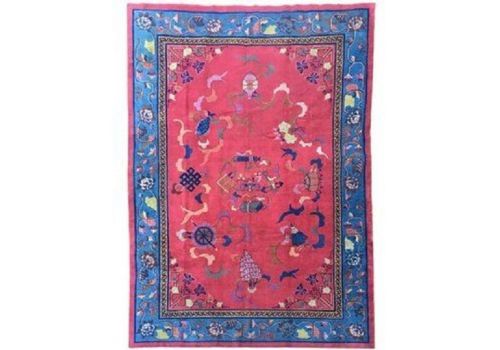
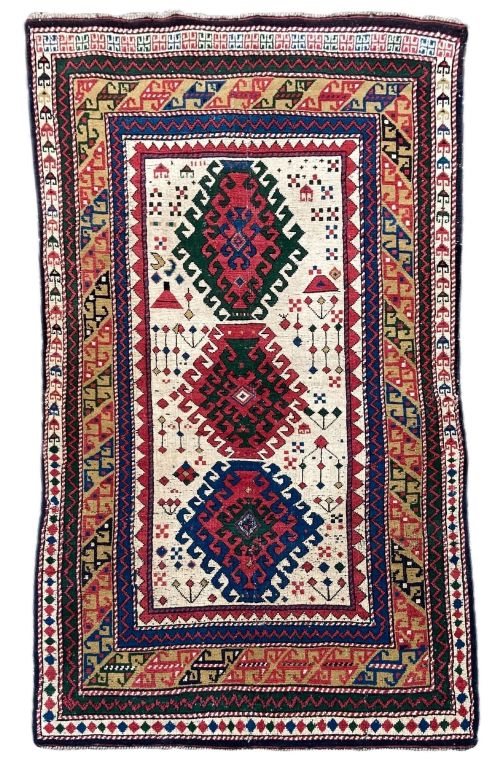
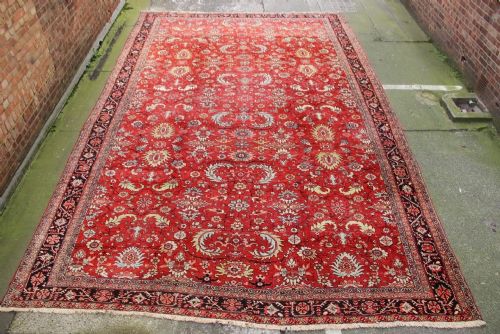
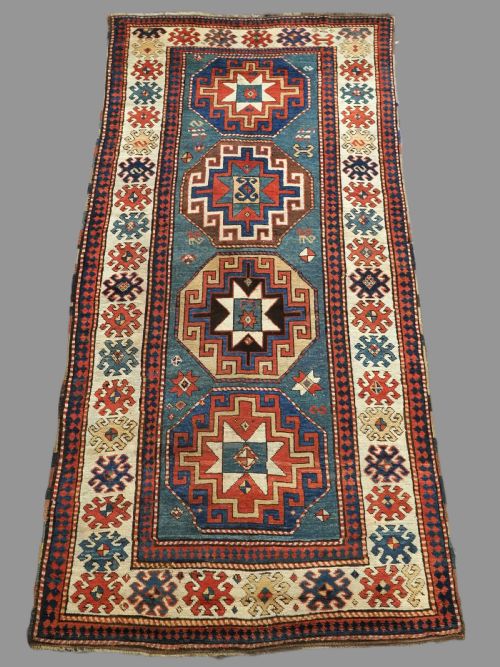
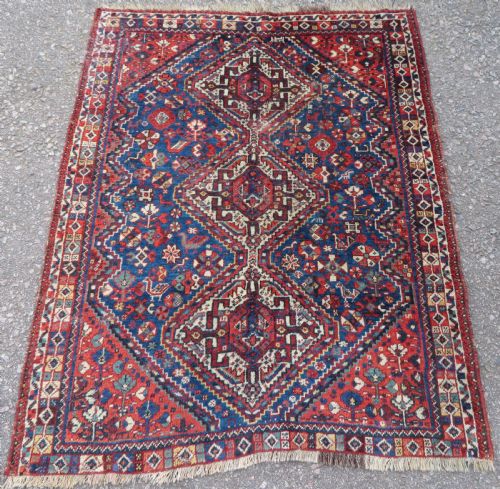
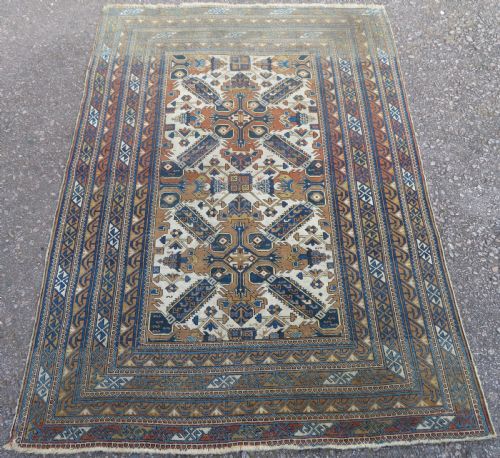
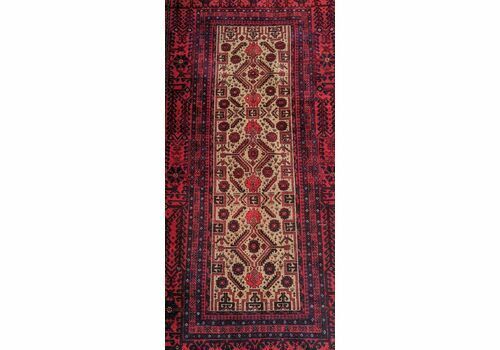
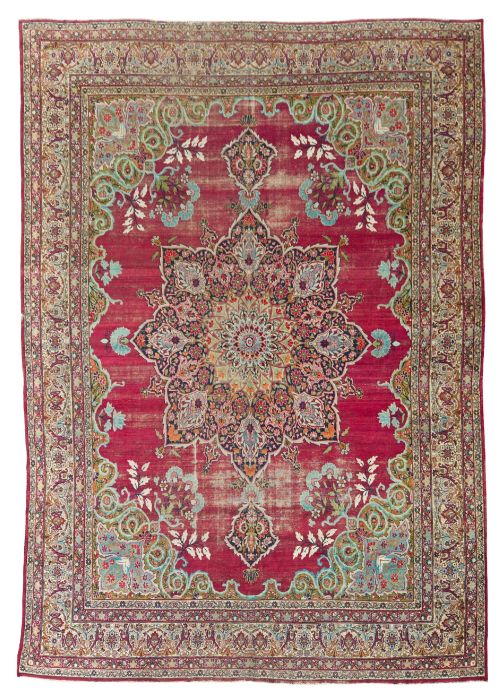
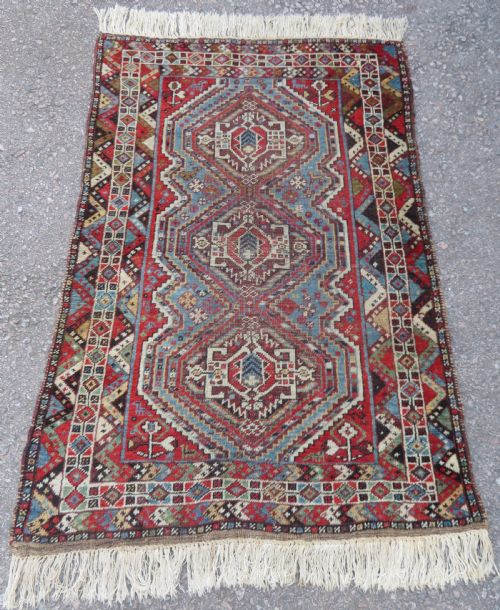
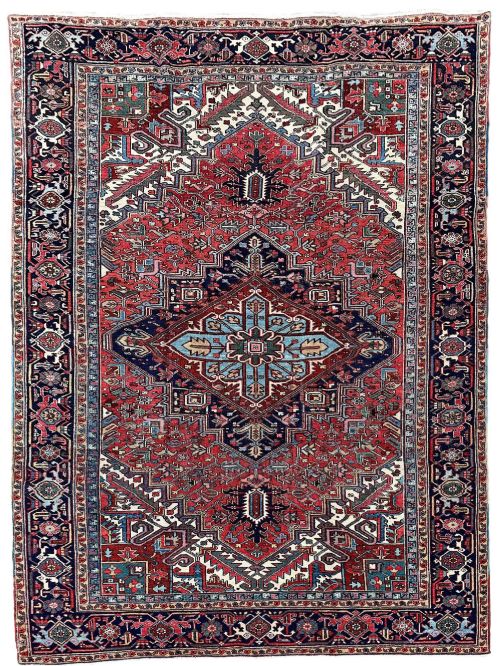
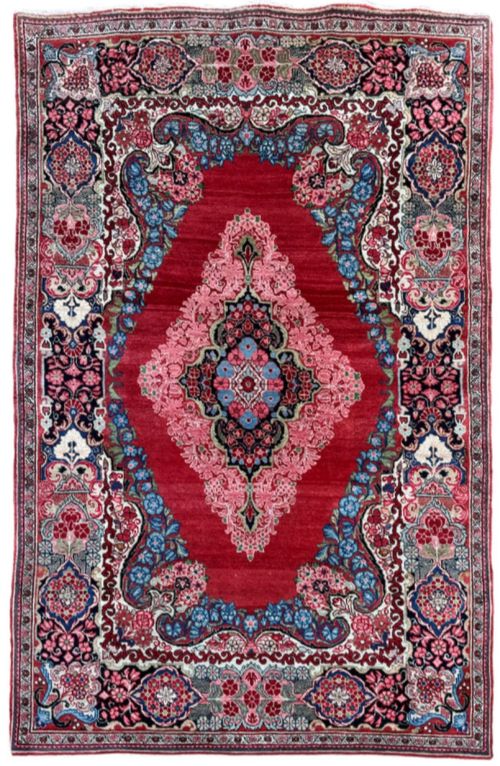
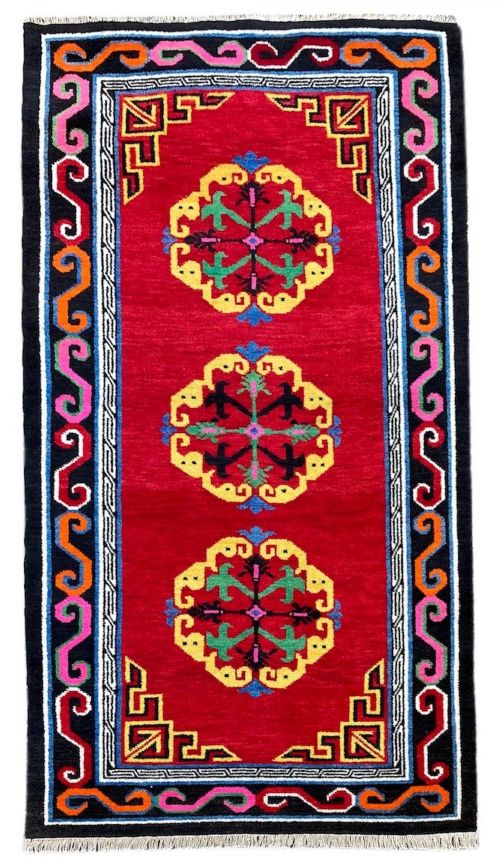
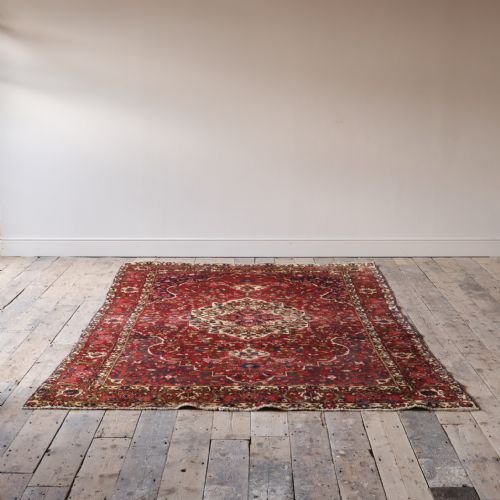
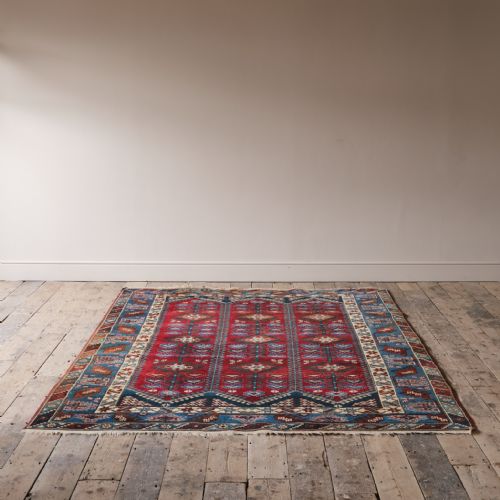
A vintage rug covers woven floor coverings and decorative textiles produced from the late nineteenth century through to the early decades of the twentieth century. These pieces encompass room-sized carpets, smaller area rugs, narrow runners for hallways, and tribal weavings originating from Persian, Caucasian, Turkish, and Central Asian workshops.
The most common versions met on this page are Persian village and tribal pieces, alongside Turkish Oushak carpets and Caucasian geometric runners. Makers from regions such as Hamadan, Tabriz, Heriz, and Kerman produced durable floor coverings designed for everyday utility as well as decorative impact.
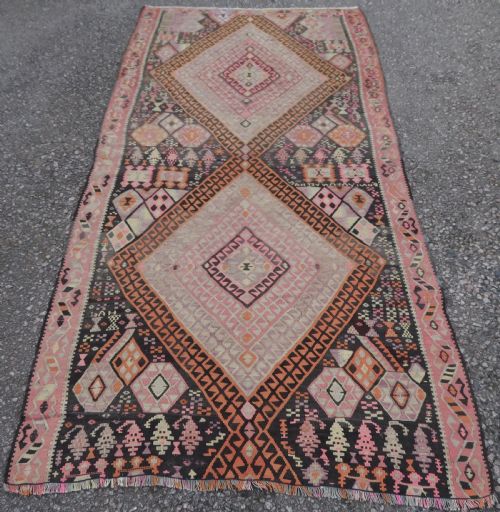
Beyond traditional room carpets, buyers encounter specialised textile forms including prayer rugs, saddle covers, and flat-woven kilims. These items bridge domestic utility and textile art, reflecting the specific regional traditions of Kurdish, Afshar, Baluch, and Turkmen weavers.
Materials and construction
Production relies heavily on natural materials, with pure wool serving as the primary foundation for pile rugs, often paired with cotton warps and wefts. Silk appears selectively in finer examples, either as structural thread or as highlights to accentuate specific motifs within the design.
Weavers utilised natural dyes to achieve deep reds, blues, and earth tones that mellow gradually over decades of light and wear. Hand-knotting and flat-weaving techniques dominate the construction, creating dense, resilient structures designed to withstand heavy domestic use.
Some nineteenth-century nomads tucked tiny protective amulets directly into the wool pile to ward off bad luck.
Factors of quality
Quality rests upon knot density, the precision of the tribal or traditional design, and the stability of the natural dyes used across the field. Finer wool preparation and careful spinning yield a softer handle and a tighter foundation that holds its shape over generations.
Artistic execution distinguishes standard commercial pieces from exceptional tribal and workshop rugs. A balanced composition, harmonious colour palette, and crisp rendering of geometric or floral motifs separate the finest examples from simpler regional outputs.
The Vintage Rug Glossary
- Pile
- The upright yarn loops forming the soft surface of a rug. This wool or silk layer absorbs wear and displays the woven design.
- Warp
- The stationary lengthwise threads stretched on a loom. Foundation threads provide the structural skeleton supporting the knots and wefts.
- Weft
- The horizontal threads passed across the warp threads between rows of knots. These binding threads secure the pile firmly in place.
- Kilim
- A flat-woven carpet or textile lacking a raised pile. These lightweight pieces rely on interlocking weft techniques to create sharp geometric patterns.
- Prayer rug
- A small textile featuring a niche or arch design indicating the direction of Mecca. These portable mats served devotional purposes in domestic settings.
Vintage Rug: Frequently Asked Questions
How do I choose the right size rug?
Measure your floor space carefully, allowing clear margins of exposed flooring around the perimeter of the room. Runners suit narrow hallways and corridors, while larger area rugs anchor furniture groupings in living spaces.
Consider door clearance and furniture placement when selecting dimensions. A well-proportioned rug connects the elements of a room without overwhelming the floor area.
Where were these rugs made?
Production spans traditional weaving centres across Persia, Turkey, the Caucasus, and Central Asia. Specific towns and nomadic tribes, including Tabriz, Heriz, Oushak, and the Baluch people, developed distinct regional styles.
Local materials and indigenous dye recipes shaped the visual character of each weaving region. Tribal groups often favored geometric motifs, while urban workshops produced intricate floral carpets.
How do I care for a vintage wool rug?
Vacuum gently using suction attachments without rotating bristle brushes to protect the delicate wool pile. Professional cleaning removes embedded grit safely without damaging natural dye structures.
Rotate the rug periodically to ensure even exposure to light and foot traffic. Promptly blot liquid spills with a clean, dry cloth rather than rubbing the fibres.
What is the difference between tribal and city rugs?
Tribal rugs feature spontaneous geometric designs, animal motifs, and rich, saturated wools woven by nomadic or village communities. City rugs display precise, symmetrical floral medallions and intricate curvilinear patterns from established urban workshops.
Nomadic weavers relied on memory and local symbolism, whereas urban workshops utilised master cartoon drawings. Both approaches produced durable floor coverings with distinct aesthetic qualities.