






Vintage Rose Still Life
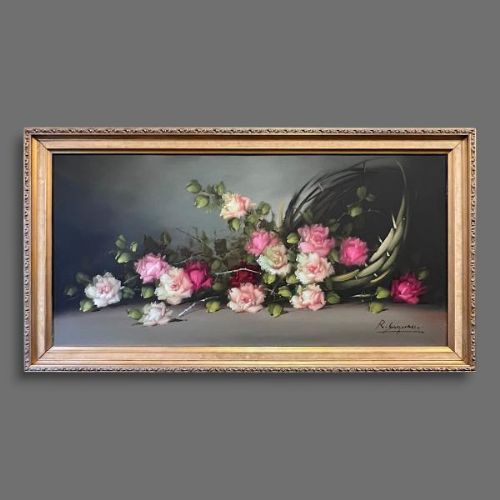
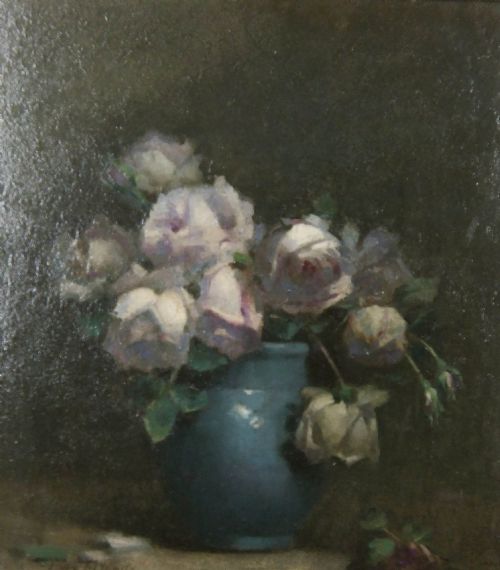
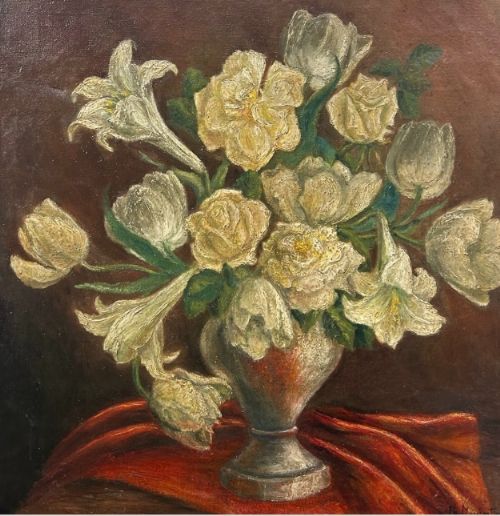
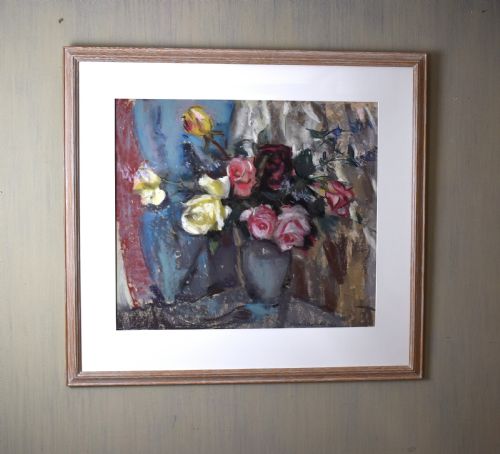
A vintage rose still life captures the fleeting beauty of blooms in oil, watercolour, and pastel across various periods from Victorian times to mid-century modern.
Vintage Rose Still Life
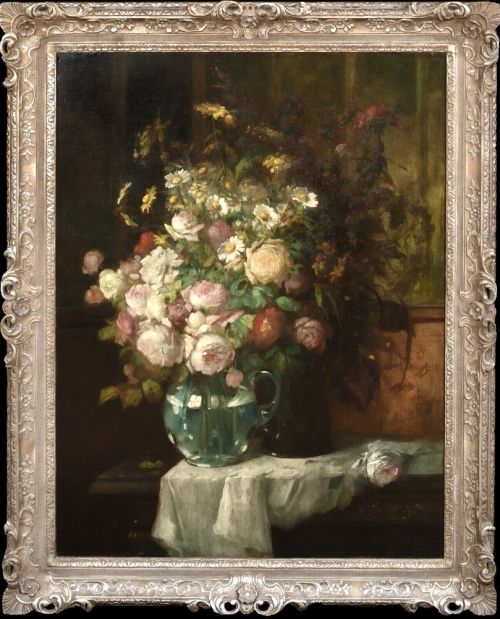
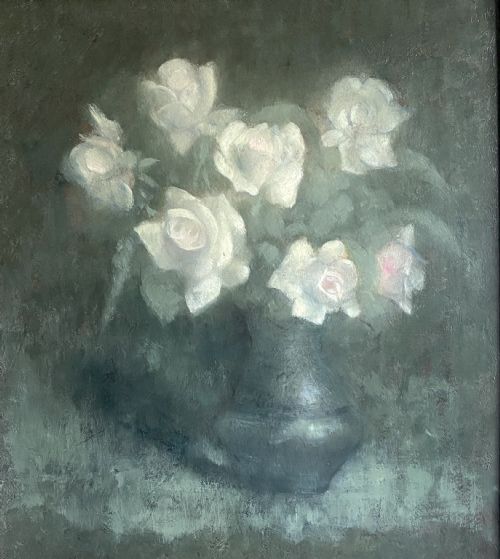
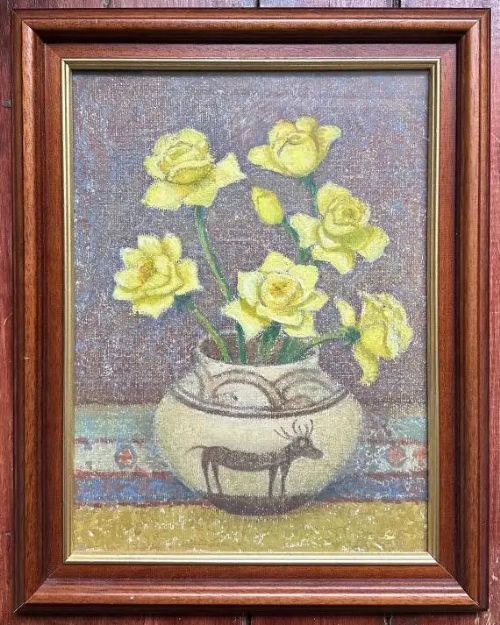
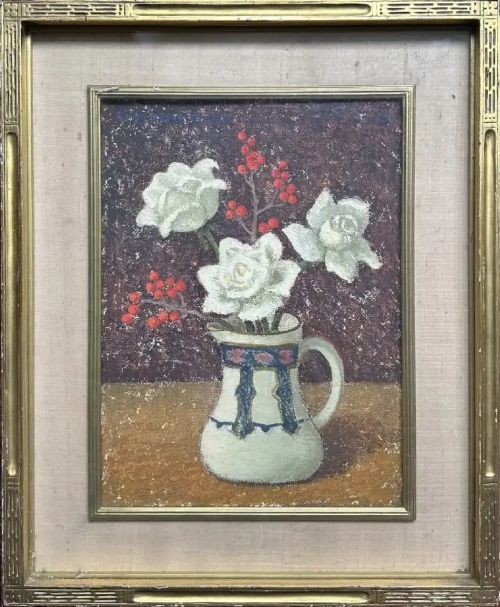
A vintage rose still life brings botanical subjects into interior spaces through oil paintings, watercolours, and pastels. These works capture floral arrangements in vases, baskets, or bowls, reflecting changing artistic tastes from the nineteenth century through the mid-twentieth century.
The pieces on this page span the Victorian period, the Art Nouveau era, British and American Impressionism, and mid-century modern design. Subjects range from simple studies of garden roses to complex arrangements alongside fruit and draped cloth.
Most examples rely on traditional canvas or board supports, often housed within wood and gesso frames. Buyers encounter everything from intimate watercolours to large framed canvases bearing signatures from established artists.
What varies in quality
Quality rests on the handling of light, shadow, and botanical form by the artist. Stronger works demonstrate confident brushwork and depth, whereas lesser examples rely on flat application and stiff arrangements.
The integration of the supporting frame also influences the overall standard of the piece. Original wood and gesso frames that match the era of the painting elevate the presentation compared to later replacements.
Listings feature works spanning the 19th Century, Victorian era, 1910, 1920, 1930, 1950, and 1960.
Konstantin Stoitzner·Emma Fordyce MacRae·William Thomas Wood·Stuart Armfield·Owen Bowen·Ernest Higgins Rigg
The Vintage Rose Still Life Glossary
- Impressionism
- A style of painting that focuses on light and its changing qualities rather than precise detail. Artists in this tradition use visible brush strokes to capture the atmosphere of floral subjects.
- Gesso
- A plaster-like mixture applied to wood frames as a base for moulding ornamental details. This material allows for intricate decorative relief work around the edge of the artwork.
- Tempera
- A permanent, fast-drying painting medium consisting of coloured pigments mixed with a water-binder such as egg yolk. It creates a matte finish often seen in mid-century works.
- Still life
- A work of art depicting mostly inanimate subject matter, typically commonplace objects which may be either natural or man-made. In these pieces, the focus remains on floral arrangements.
- Board
- A rigid substrate used instead of canvas for painting. Artists frequently applied oil paint directly to this flat surface during the early twentieth century.
Vintage Rose Still Life: Frequently Asked Questions
How do I date a still life?
Dating relies on stylistic clues, framing materials, and artist signatures recorded in the historical record. Victorian works often feature heavy gilded frames and darker backgrounds, while mid-century pieces lean towards brighter palettes.
Examining the canvas backing and any inscriptions on the reverse provides further evidence of the period of creation. Comparing the technique to known works by the same artist helps narrow down the decade.
Where should I hang these paintings?
These floral works suit dining rooms, living spaces, and hallways where natural light enhances the painted colours. Pairing the wood frame with existing room furnishings helps integrate the piece into the interior.
Avoid placing canvases in direct sunlight or damp areas to protect the oil paint and gesso frames. Proper placement ensures the longevity of both the support and the pigments.
What is the difference between oil and watercolour?
Oil paint offers rich texture, deeper tones, and the ability to blend colours directly on the canvas. Watercolour creates a translucent, lighter effect on paper, often preserved beneath glass.
Oils usually require a sturdy wood frame, whereas works on paper need matting and glazing for protection against moisture and fading.
How do I clean an antique frame?
Dusting gently with a dry, soft-bristled brush removes surface particles without damaging delicate gesso mouldings. Liquid cleaners should be avoided to prevent moisture seeping into older wood and plaster.
Professional conservators should handle any repairs to cracked gesso or damaged gilding to preserve the integrity of the original frame.