
Floral Still Life Artwork
Floral still life artwork brings centuries of cultivated blooms into interior spaces through oil, canvas, and wood panel.
Floral Still Life Artwork
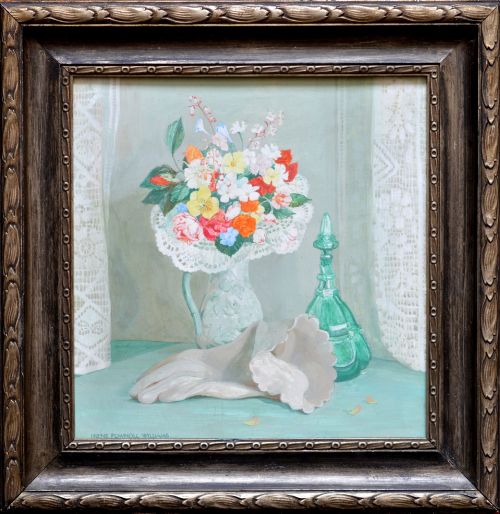
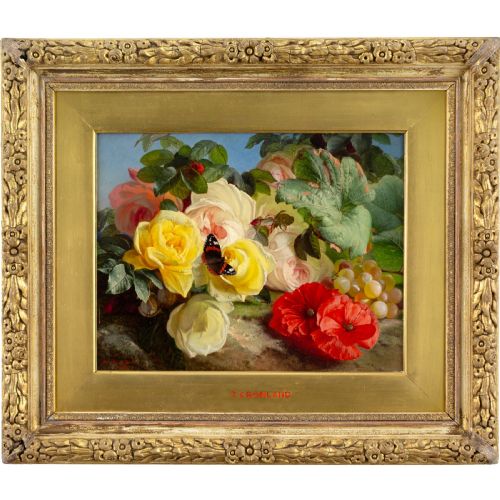
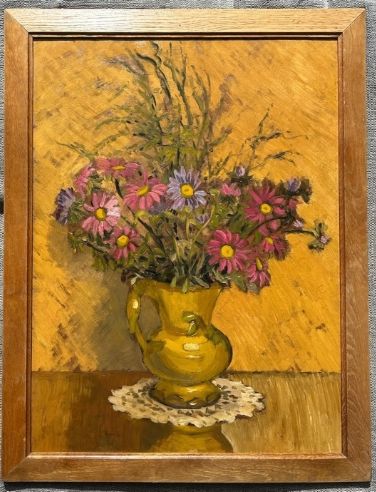
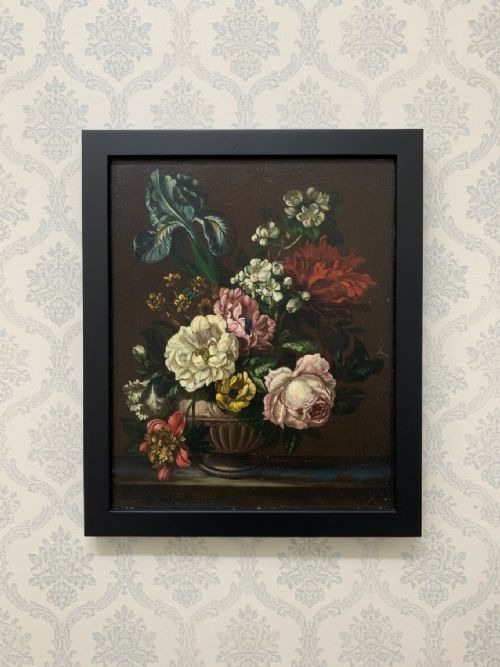
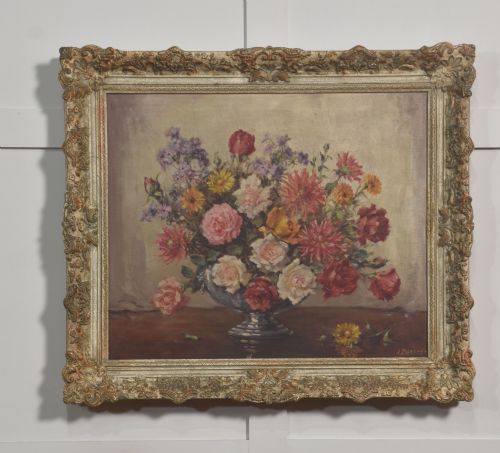
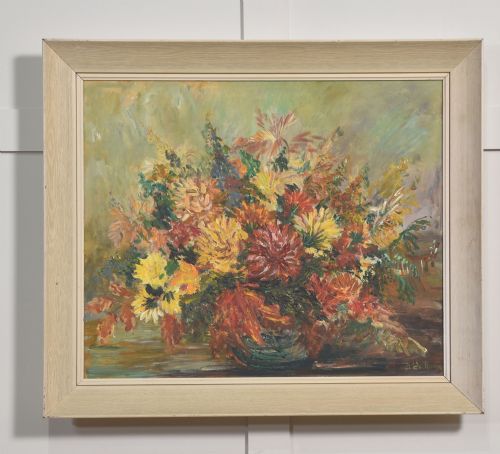
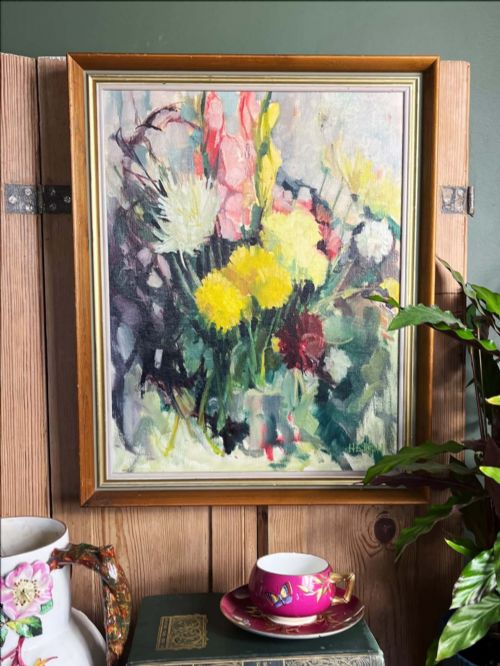
Floral still life artwork captures arranged blossoms, vases, and baskets across centuries of painterly tradition. When exploring these pieces, collectors encounter everything from moody 17th-century compositions to vibrant mid-century impressionist interpretations.
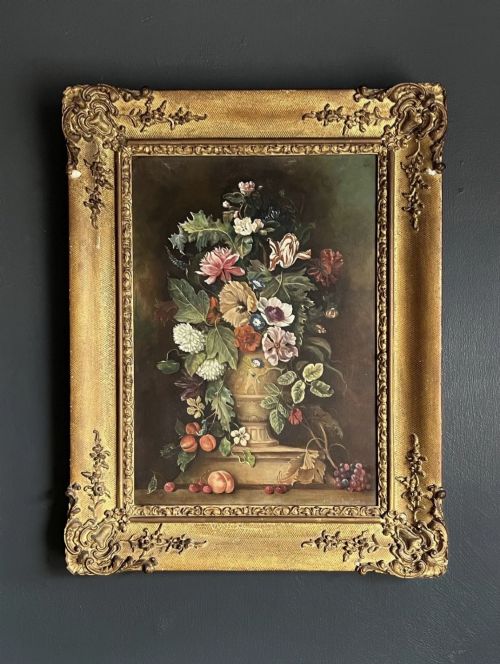
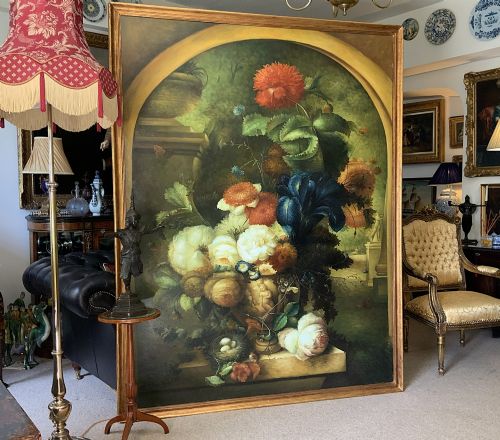
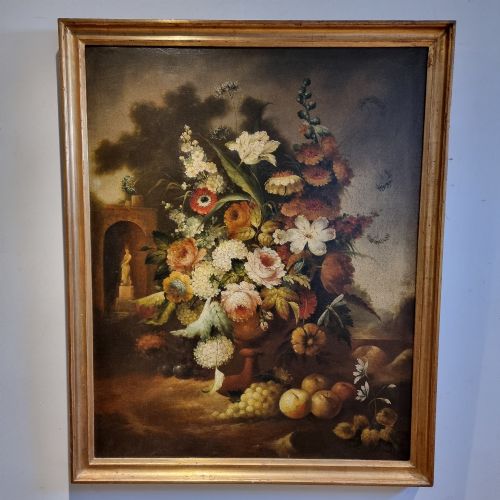
The selection ranges from intimate cabinet pieces on board to monumental canvases referencing the Dutch Golden Age. Mid-century and Victorian examples appear frequently, alongside works executed in watercolour and pastel.
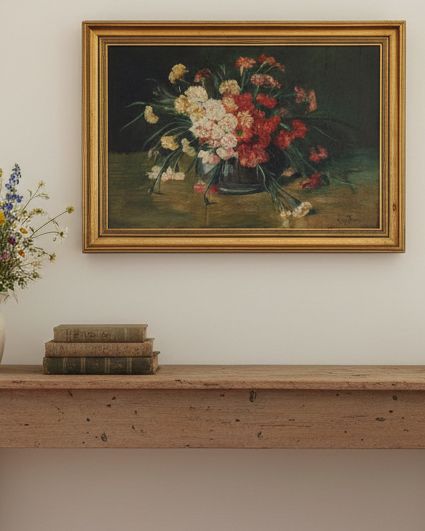
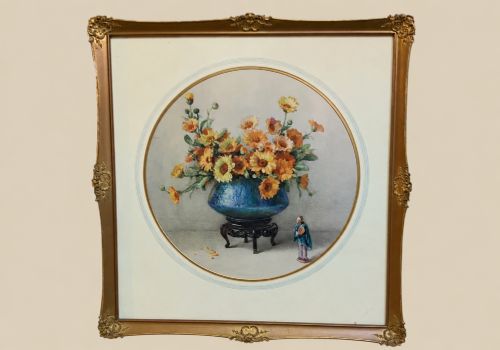
Subjects stretch from simple jugs of garden roses to complex arrangements featuring Chinese objects or wicker baskets filled with fruit. Each piece records a distinct period's approach to colour, light, and botanical arrangement.
Materials and Techniques
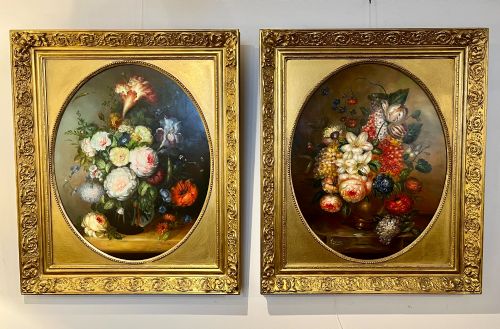
Oil paint applied to canvas, wood panels, or board forms the primary medium for these compositions, often housed within gilt gesso frames. Artists built texture through layered brushwork, capturing the delicate translucency of petals against dark backgrounds.
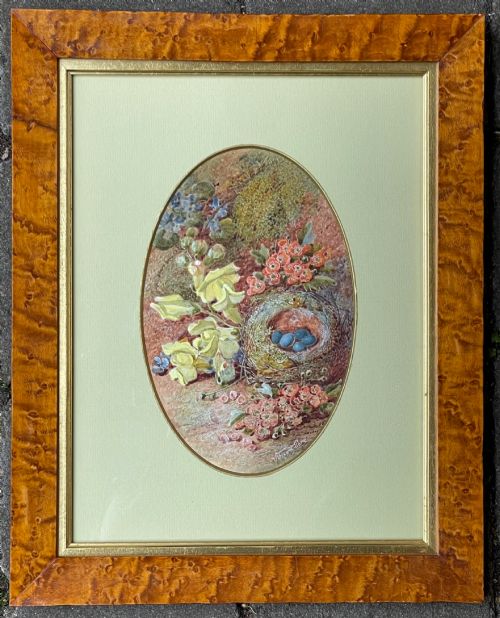
Watercolour and pastel on paper also appear, offering a lighter touch in depictions of marigolds and seasonal blooms. Gilding and gold leaf occasionally accent the frames, enhancing the decorative presence of the wall art.
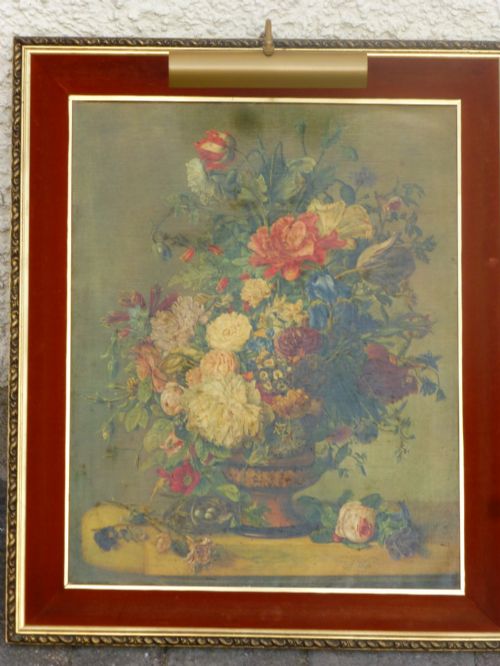
Support materials evolved from heavy timber panels in earlier centuries to prepared canvas and modern boards by the mid-20th century. Oleographs and print reproductions also emerge alongside original hand-painted works.
Listings feature works spanning from the 17th century through the mid-20th century, executed in oil, watercolour, and pastel.
Markers of Quality
The success of a floral still life rests on the artist's command of light, shadow, and botanical structure. Superior examples display convincing depth within the arrangement, where individual petals and stems retain natural weight and botanical accuracy.
Frame integration plays a significant role, as period-correct gilt or carved surrounds elevate the presentation of the painting. Condition of the underlying canvas or panel, minimal retouching, and stable pigment adherence further distinguish finer pieces from standard decorative works.
Oliver Clare·Edward Ladell·Emma Fordyce MacRae·Gaspar Peeter Verbruggen·James Tower
The Floral Still Life Artwork Glossary
- Oil on Canvas
- Pigment mixed with drying oil applied to stretched fabric. This method allows for rich colour blending and textured impasto work.
- Gilt Gesso
- Plaster mixture applied to a wooden frame and coated in gold leaf. It provides an ornate, reflective border typical of traditional picture framing.
- Impressionism
- A style focusing on light and unblended brushstrokes rather than precise detail. Artists working in this manner capture the fleeting atmospheric quality of the flowers.
- Oleograph
- A mechanical colour print imitating an oil painting, often textured to resemble canvas. These reproductions became popular as affordable wall art in later periods.
Floral Still Life Artwork: Frequently Asked Questions
How do I date a floral still life painting?
Dating relies on examining the canvas preparation, stretcher frames, pigment types, and the stylistic conventions of the period. Victorian and 17th-century works often employ darker backdrops and heavier wooden panels.
Mid-century impressionist examples introduce looser brushwork and brighter, modern colour palettes that reflect the artistic shifts of the 1900s.
What is the difference between panel and canvas works?
Wooden panels provide a rigid, stable support frequently utilised in older or smaller compositions. Canvas offers flexibility and supports larger, more expansive wall art.
Both materials require stable environmental conditions to prevent warping of the wood or slackening of the fabric over time.
How should I display antique floral paintings?
Position these artworks away from direct sunlight and fluctuating heat sources to protect sensitive oil pigments and paper supports. Maintaining stable indoor humidity prevents cracking in both the painted surface and the wooden frame.
Pairing the piece with appropriate wall lighting enhances the depth and colour saturation of the floral arrangement.
What subjects accompany the flowers in these artworks?
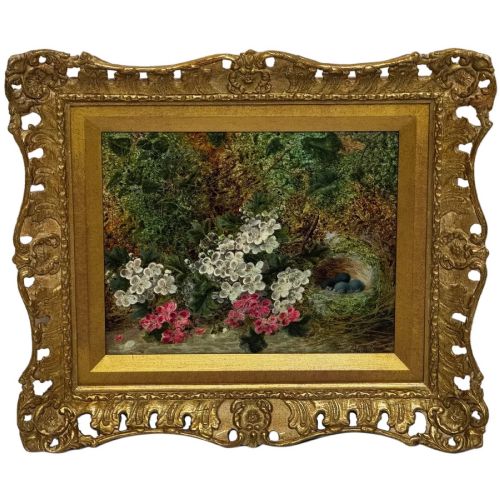
Compositions frequently incorporate porcelain jugs, wicker baskets, bird's nests, and seasonal fruits like apples and berries. Some pieces integrate cultural items such as Chinese objects to add narrative complexity to the floral display.
These secondary elements help art historians and collectors contextualise the provenance and stylistic period of the painting.