
Vintage Roman Numeral Watch
These vintage roman numeral watch pieces span late Victorian engineering through to mid-century design, offering classic dial work and mechanical movement.
Vintage Roman Numeral Watch
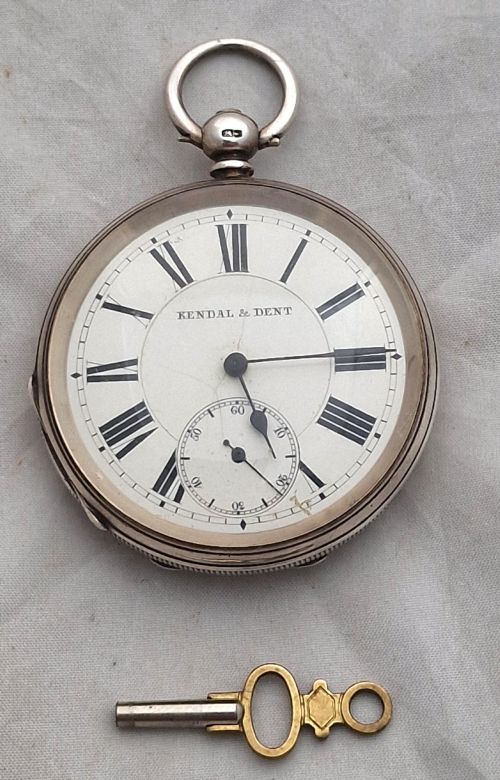
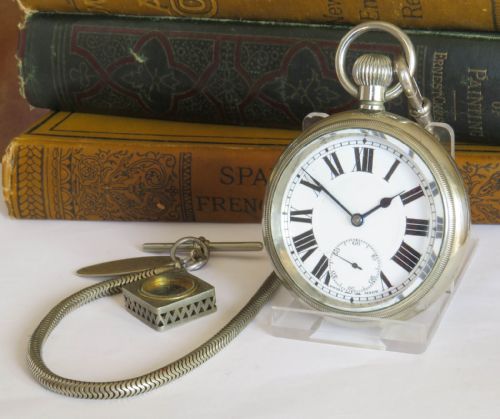
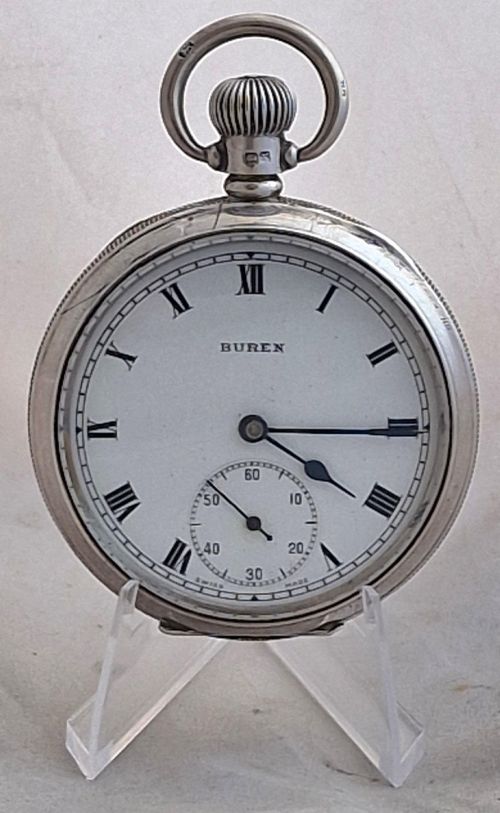
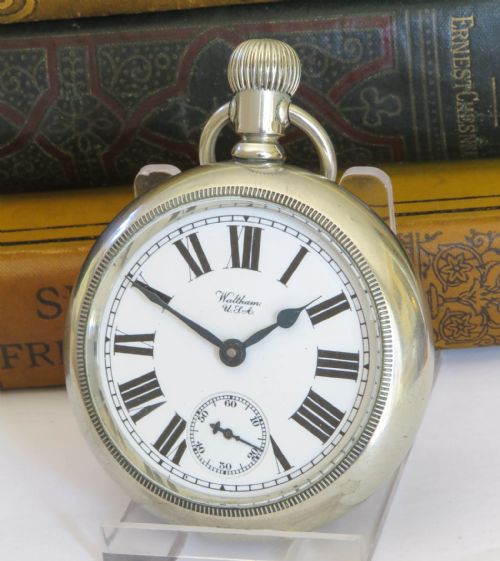
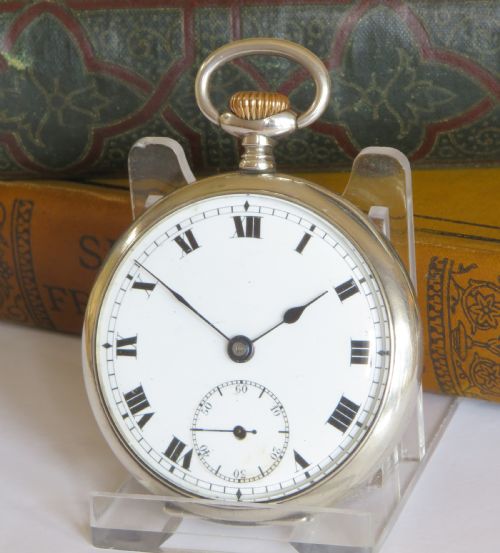
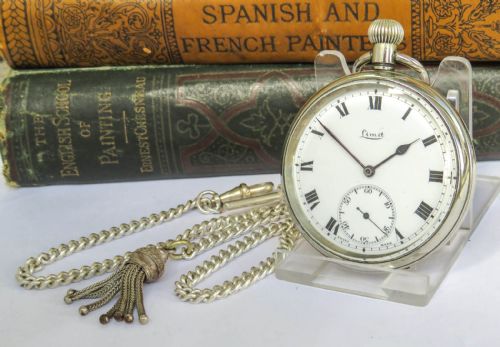
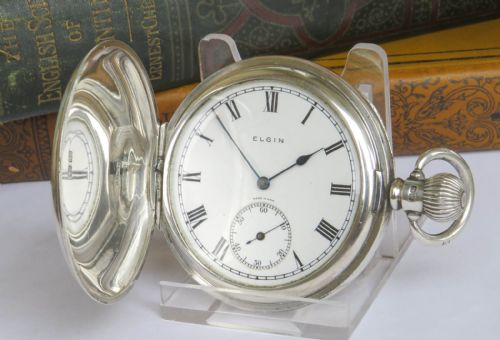
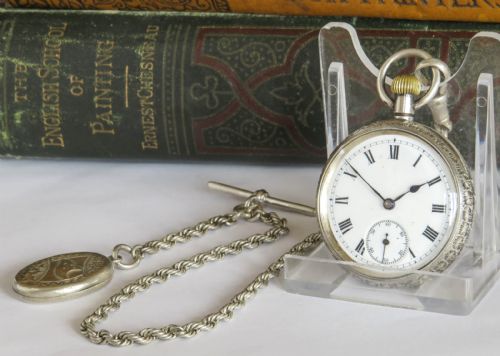
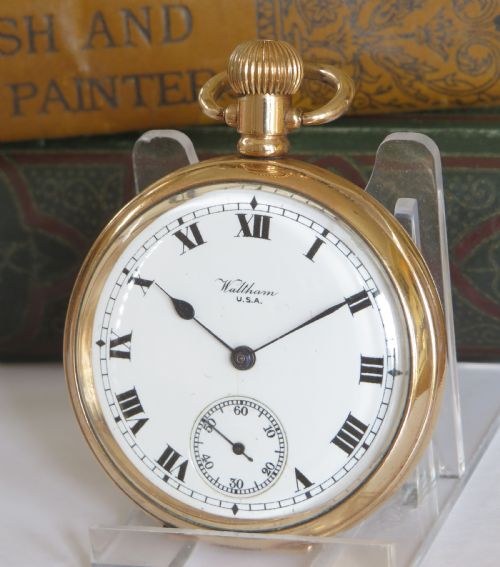
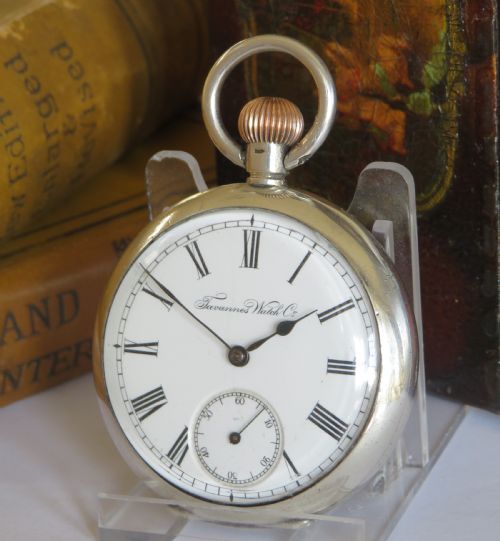
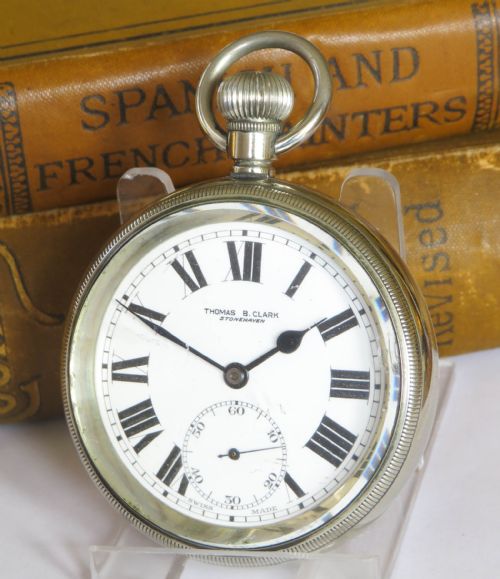
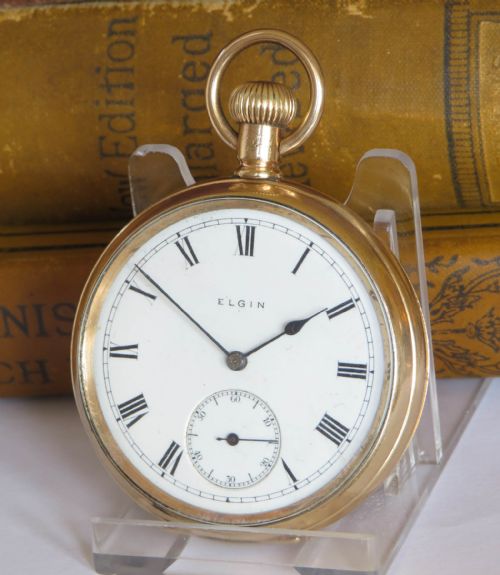
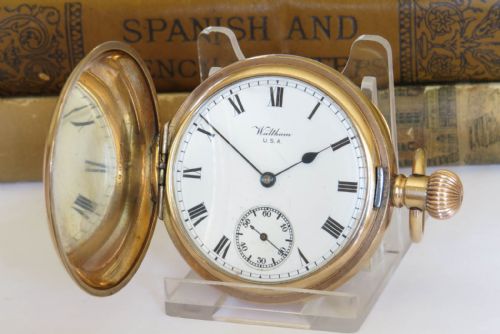
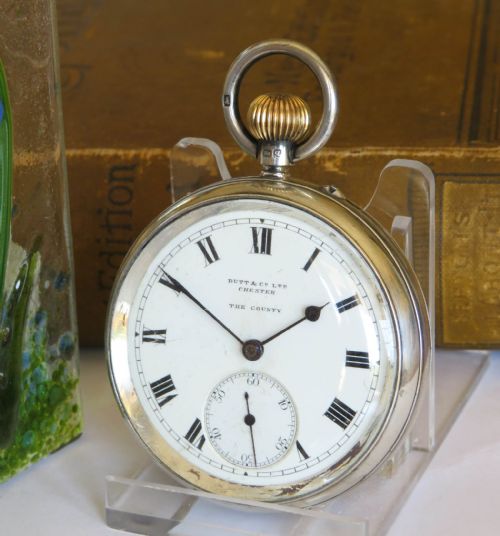
A vintage roman numeral watch primarily takes the form of a pocket watch, originating from periods spanning the late Victorian era through the 1940s. These timepieces display traditional numeric markings on dials paired with pocket watch chains, albert chains, or fob attachments.
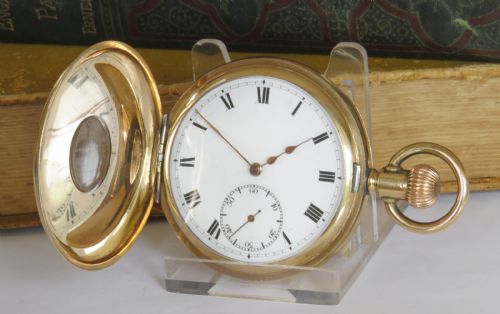
The pieces appearing on this page draw from Victorian, Edwardian, Art Deco, and 1940s British aesthetics. Buyers frequently encounter silver or gold-plated full hunter and half hunter designs carrying standard mechanical movements.
Materials and construction methods
Internal mechanisms rely on traditional metal gear trains and escapements assembled by watchmakers. Many examples combine precious metal cases with robust brass and steel internal movements designed for daily railway or personal use.
Some oversized goliath watches required custom leather travel cases just to sit upright on a Victorian bedside table.
Assessing quality in early timepieces
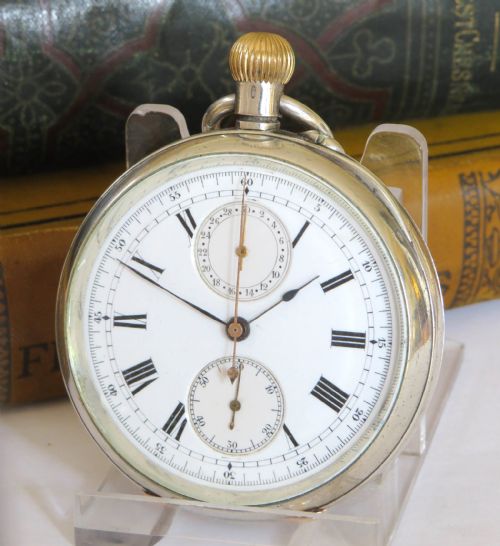
Quality diverges between standard mass-produced retail models and specialised precision instruments such as chronographs or railway-grade watches. The reputation of the maker and the complexity of the movement dictate the upper tier of the range.
Material choice and dial preservation significantly influence the overall standard of a piece. Clean, undamaged enamel dials paired with hallmarked silver or solid gold cases represent superior manufacture compared to basic plated brass equivalents.
Waltham·Elgin·Omega·Longines·Zenith
The Vintage Roman Numeral Watch Glossary
- Half hunter
- A pocket watch case featuring a glazed central aperture on the outer cover, allowing the wearer to read the hands without opening the case.
- Full hunter
- A pocket watch with a spring-loaded metal cover that completely protects the dial and glass until released via the crown button.
- Albert chain
- A chain attached to a pocket watch, designed to secure the timepiece to a waist-coat buttonhole through a decorative bar or fob.
- Chronograph
- A watch equipped with an independent sweep-second hand that can be started, stopped, and returned to zero for timing intervals.
- Goliath
- An oversized pocket watch, substantially larger than standard examples, often housed in a dedicated desk stand or travel case.
Vintage Roman Numeral Watch: Frequently Asked Questions
How do I wind a mechanical pocket watch?
Wind the crown at the top of the watch gently clockwise until you feel firm resistance. Stop immediately to avoid damaging the mainspring inside.
Most vintage mechanical movements require winding once a day to maintain accurate timekeeping throughout use.
What is a railway pocket watch?
Railway watches were high-precision timepieces issued to or required by railway staff for strict timetable adherence. They feature high-contrast dials and robust movements built for accuracy under heavy vibration.
These models often bear specific railway names or inscriptions on the dial or movement back.
Can I wear a pocket watch daily?
Daily wear is entirely possible if the movement has been recently serviced by a professional horologist. Ensure you secure the attached albert chain properly to a waistcoat or belt loop to prevent accidental drops.
Keep the watch away from modern magnetic fields and moisture to preserve the internal components.
How do I identify the production era?
Examine the hallmarks stamped inside the metal case, which indicate the assay office and year of manufacture for precious metals. Serial numbers engraved on the inner movement plates can also be cross-referenced with maker archives.
Stylistic cues such as Art Deco geometric detailing or Victorian flourishes provide further dating evidence.