




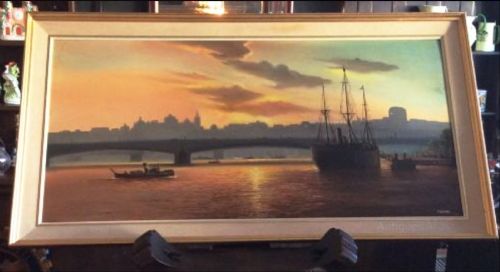
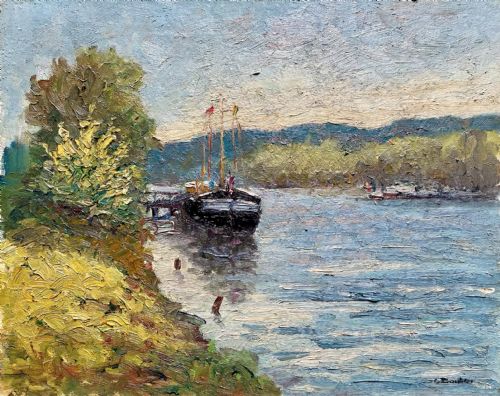
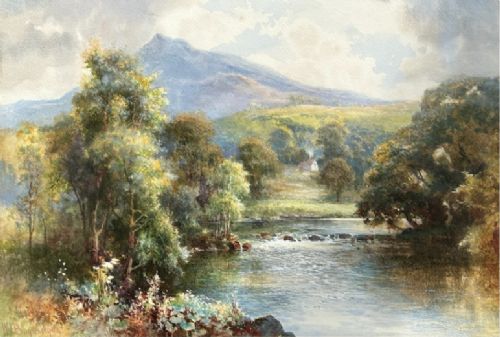
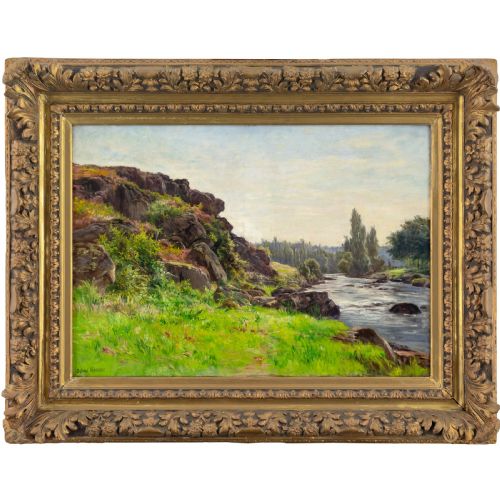
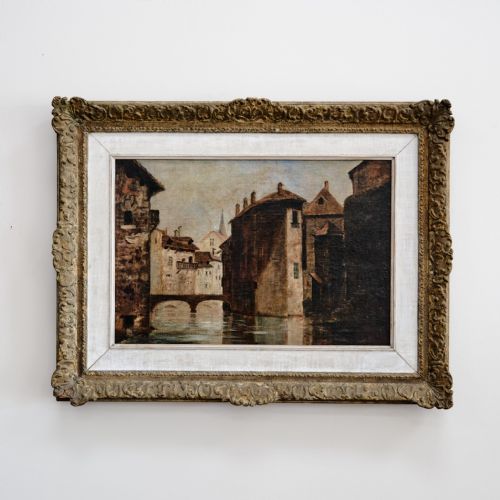
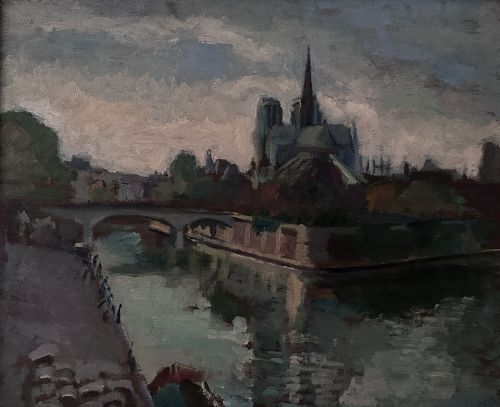
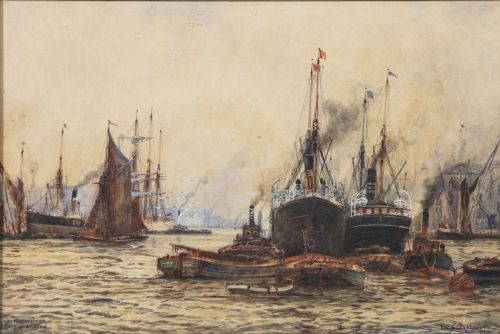
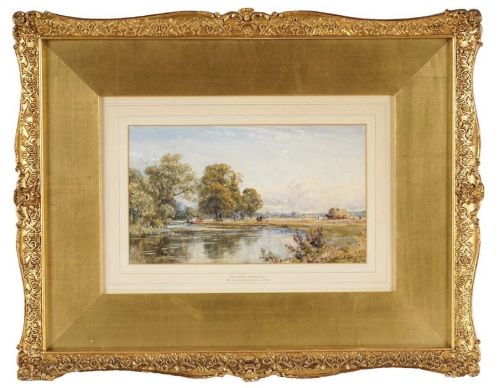
Vintage River Painting
When you search for a vintage river painting, you enter a quiet world of pastoral scenes, bridges, and waterways captured across the nineteenth and twentieth centuries.
Vintage River Painting
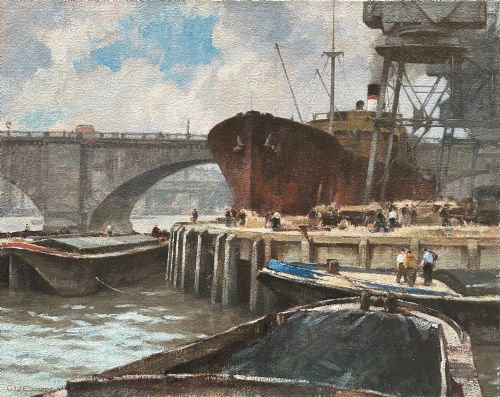
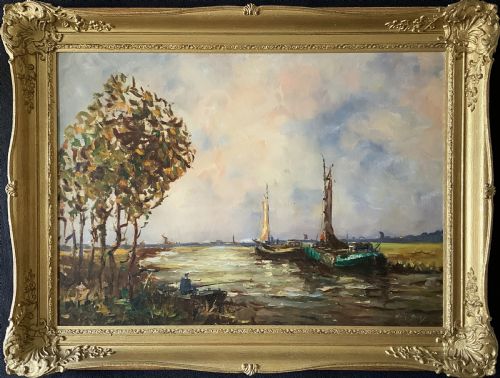
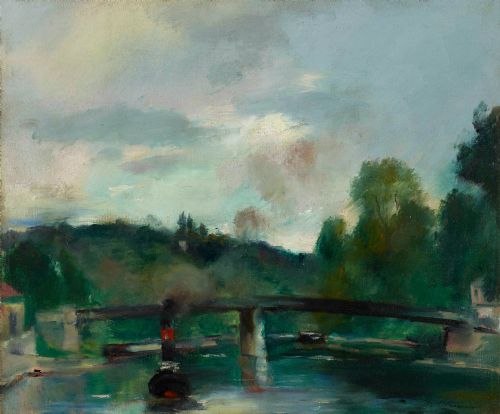
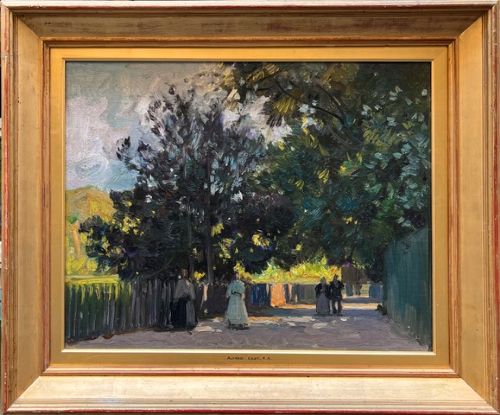
A vintage river painting brings together landscapes, marine views, and pastoral scenes executed across the nineteenth and twentieth centuries. The selection spans the Victorian and Edwardian periods, British and French Impressionism, and mid-century works.
Most pieces depict British and European waterways, including the Thames, Seine, canals, and rural streams. You will encounter formats ranging from intimate watercolours on paper to large oil paintings on canvas and wood panel.
Makers and schools represented include nineteenth-century British painters, Dutch landscape artists, and post-impressionists. These artworks record changing artistic interpretations of water, light, and rural architecture over many decades.
Materials and methods
Artists relied primarily on oil paint applied to canvas, board, or wood panel, alongside watercolours worked on paper. Canvas supports often show traditional stretchers, while panel and board preparations reflect specific period practices.
Techniques range from detailed nineteenth-century academic brushwork to loose impressionistic strokes and heavy opaque gouache. Pigments were manipulated to capture reflective surfaces, atmospheric skies, and moving water across diverse regional schools.
The selection includes British, French, and Dutch regional schools spanning the nineteenth and twentieth centuries.
Judging the quality
Quality rests in the handling of light, atmosphere, and spatial depth rather than the mere subject matter. Stronger works demonstrate confident brushwork and a coherent tonal balance that brings the water and surrounding landscape to life.
Condition plays a central part, particularly the stability of the canvas or panel and the preservation of the original paint layer. Signed works by documented painters or pieces with clear school attributions generally hold greater historical interest.
Alfred Young Nutt·Frederick Marriott·Frank William Scarbrough·Robert Thorne Waite·Willem Bos·Sir Alfred East·Herbert Royle·Florence Adelina Hess·Sydney Yates Johnson·Henri Jaques Delpy·William Frederick Settle·Alexandre Le Bihan·Percy Lancaster
The Vintage River Painting Glossary
- Watercolour
- A painting method where fine pigments are suspended in a water-based, translucent solution. It is typically applied to textured paper.
- Impressionism
- An art movement focusing on accurate depiction of light in its changing qualities, often using small, visible brush strokes.
- Canvas
- A closely woven heavy fabric used as a support surface for oil paintings. It is usually stretched over a wooden frame.
- Gouache
- A method of painting using opaque water-based pigments. It includes a white pigment mixed with the colour to create a denser, heavier finish.
Vintage River Painting: Frequently Asked Questions
How do I identify the age of a river painting?
Age is determined by examining the materials, such as the type of canvas, stretcher frames, or paper backing, alongside any signatures and framing styles. Stylistic clues like Victorian clothing or Edwardian architecture also offer precise chronological markers.
Comparison with documented works by known painters from specific periods helps confirm the dating of unsigned compositions.
What is the difference between oils and watercolours here?
Oil paintings utilise pigment suspended in drying oils applied to canvas or wood, offering rich textures and deep colour layering. Watercolours employ water-soluble pigments on paper, producing a lighter, more translucent quality.
Oils are generally heavier and require protective varnishes, while watercolours need glazing to prevent moisture damage.
Where were these landscape scenes typically painted?
The pieces record locations across Britain, France, and the Netherlands, featuring specific sites like the Thames, the Seine, Welsh rivers, and Dutch canals. Artists often worked plein air, capturing direct observations of local waterways and bridges.
Studio finishing was also common, synthesizing field sketches into larger exhibition canvases.
How should I care for an antique painting?
Protect the artwork from direct sunlight and extreme fluctuations in temperature and humidity to prevent canvas warping or paint cracking. Keep paintings away from high-moisture environments such as unventilated kitchens or bathrooms.
Dust surfaces gently with a soft, dry brush and avoid chemical cleaners entirely.