



Ochre Landscape Oil Painting
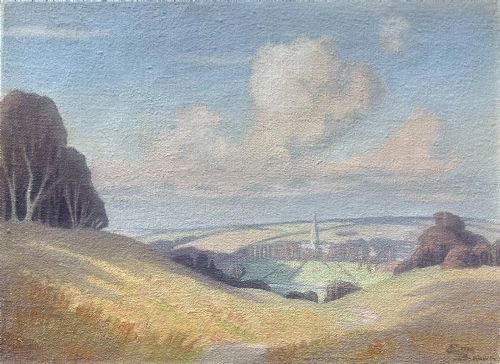
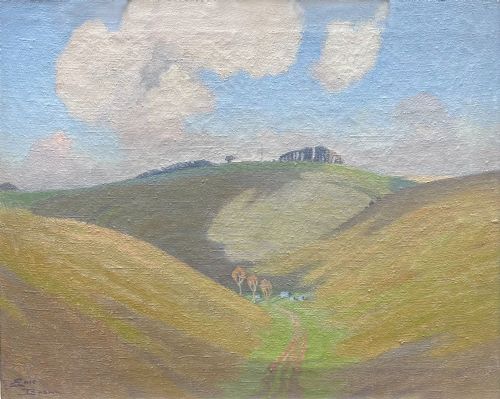
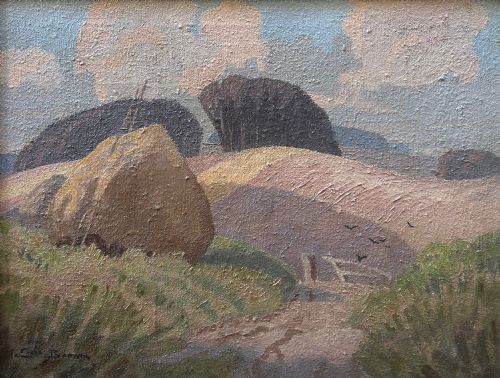
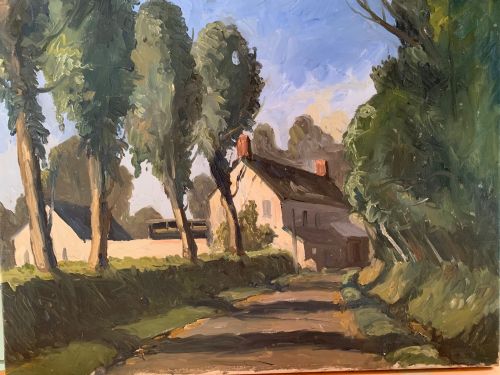
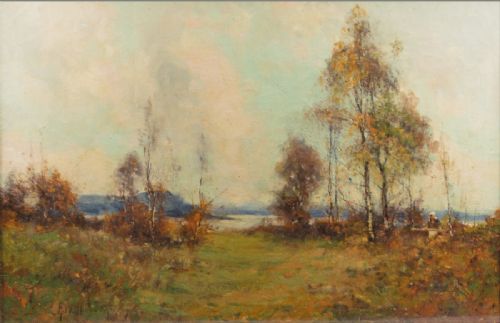
An ochre landscape oil painting brings warm, earthy tones of yellow and brown into a room, capturing rural scenery through expressive brushwork.
Understanding the style
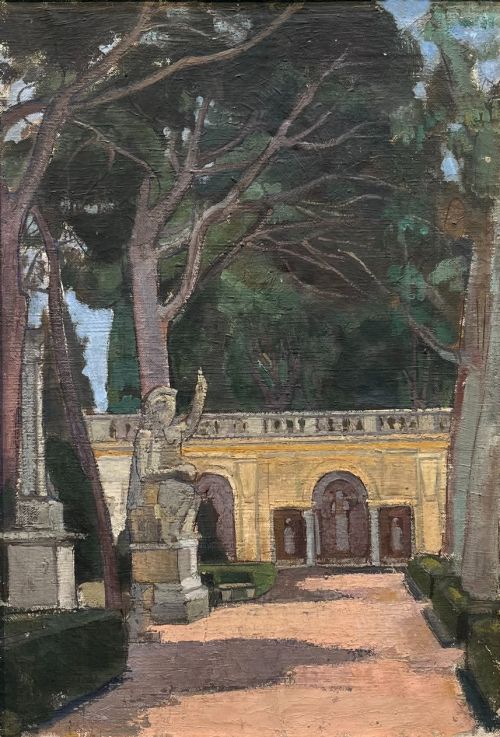
An ochre landscape oil painting captures outdoor scenery using a dominant palette of warm yellow-brown pigments. These works appear across several distinct periods, including Victorian, early twentieth century, and mid-century modern eras.
Buyers encounter diverse regional interpretations ranging from Scottish and British impressionism to French coastal views and Australian river scenes. The subjects span tranquil hay fields, evening light over Yorkshire hills, and dramatic northern French cliffs.
The format varies between stretched canvas and rigid supports such as wood boards. Frames range from traditional timber mouldings to simpler mid-century profiles that complement the painted surface.
Materials and execution
Artists apply oil paint directly onto prepared canvas or wooden board using traditional bristle brushes and palette knives. The slow-drying nature of the medium allows painters to blend warm ochre tones and build rich textures across the surface.
Support materials include sturdy timber frames and fabric stretched over wooden bars to hold the weight of the heavy pigment. Early twentieth-century and Victorian works rely on traditional ground preparations before the final landscape layers go down.
Retail Price Guide 2026
Typical UK retail prices for ochre landscape oil painting, calculated from the Sellingantiques database of over a million retail prices indexed since 2003. This retail price guide relies exclusively on Sellingantiques data; no external sources or auction records are used, so the figures do not describe the wider market.
One mid-century canvas captures autumn fields so vividly you can almost smell the damp timber frame.
Judging the work
Quality rests in the confidence of the brushwork and the artist's ability to manipulate light and shadow within a restricted earth palette. Stronger pieces demonstrate assured handling of space and atmosphere rather than mere mechanical recording of scenery.
The relationship between the painted composition and its original or period frame adds considerable merit to the piece. Works bearing signatures from established regional painters or documented historical exhibitions command greater attention from serious collectors.
Alexander Wellwood Rattray·Reginald Grange Brundrit·James William Booth
The Ochre Landscape Oil Painting Glossary
- Ochre
- A natural earth pigment containing hydrated iron oxide that produces a range of yellow, brown, and reddish-brown shades. Painters rely on this mineral colour to establish warmth and depth in natural landscapes.
- Impressionism
- A nineteenth and twentieth-century painting style focused on capturing the visual impression of a moment through visible brushstrokes and natural light. Artists working in this manner prioritize atmospheric effects over strict academic detail.
- Canvas
- A heavy woven fabric stretched tightly across a wooden frame to serve as a durable painting surface. This textile support has remained a primary choice for oil painters across centuries.
- Board
- A rigid wooden or composite panel used as a firm alternative to stretched fabric. Artists frequently utilised boards for outdoor sketching and smaller landscape studies.
Frequently Asked Questions
How do I clean an old oil painting?
Surface dust accumulates on older canvases over decades and requires very gentle removal using a soft, dry brush without any liquids or cleaning agents.
Professional conservators handle deeper cleaning and varnish removal to prevent accidental damage to the delicate pigment layers beneath.
Can I hang these paintings in direct sunlight?
Direct sunlight causes gradual fading in natural oil pigments and accelerates the yellowing process of traditional varnish layers over time.
Positioning the artwork away from intense south-facing windows preserves the subtle ochre tones and overall balance of the landscape.
How do I date an antique landscape painting?
Examination of the canvas weave, framing style, and stretcher construction provides reliable clues regarding the period of creation.
Artist signatures, exhibition labels on the reverse, and stylistic markers such as mid-century or Victorian brush techniques narrow down the timeline further.
Do these paintings require special framing?
Period frames provide structural stability and complement the aesthetic context of Victorian and early twentieth-century works.
Ensure the hanging wire and wall fixings match the substantial weight of timber frames and heavy canvas supports.