


Vintage Retail Glass Showcase
A vintage retail glass showcase offers a practical way to exhibit small wares, bringing authentic shop history into modern rooms.
Vintage Retail Glass Showcase
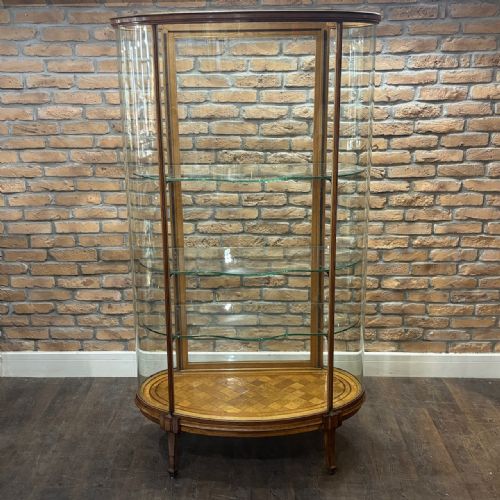
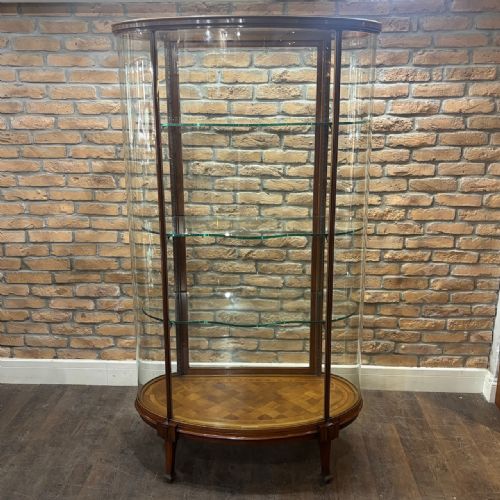
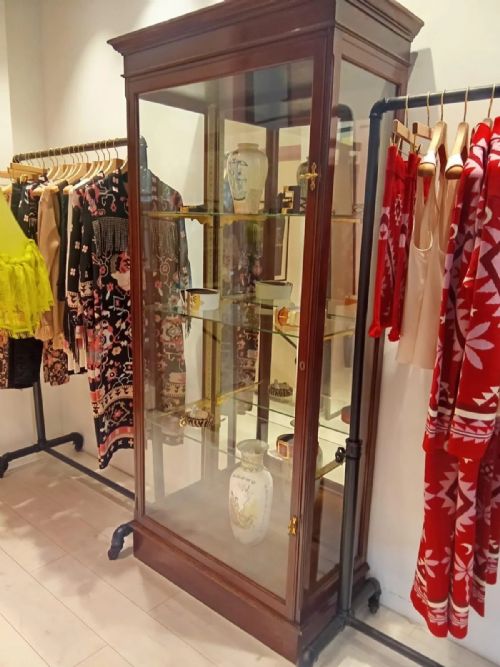
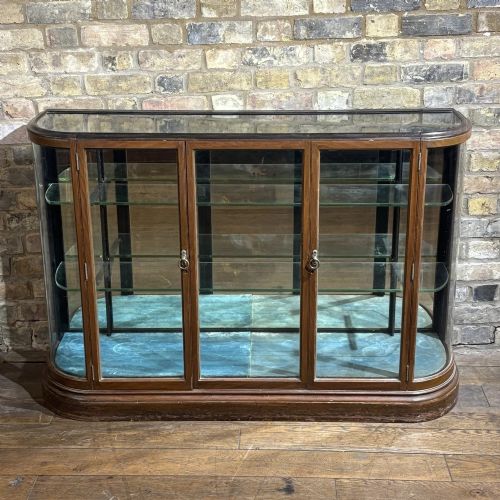
A vintage retail glass showcase takes the form of countertop units, tall freestanding towers, or expansive shop counters designed for commerce. These pieces originate from commercial spaces, apothecary shops, and confectioners operating during the Victorian, Edwardian, and Art Deco periods.
Buyers meet sturdy mahogany, oak, and ebonised timber frameworks enclosing generous glazed panels. Many examples retain original maker branding or sign-written advertising from historic confectioners and watchmakers.
The selection ranges from intimate table-top bijouterie cases to large commercial serving counters built to display goods securely.
Materials and Construction
Cabinet makers constructed these commercial fixtures using solid hardwoods like mahogany and oak, frequently housing adjustable glass shelving to maximise visibility. Brass, chrome, aluminium, and steel frames reinforced the glazed panels on later twentieth-century iterations.
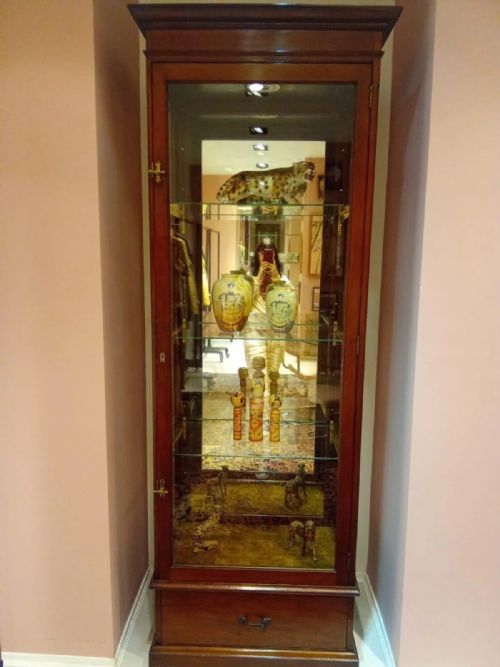
Mirrored interiors often line the back of these cabinets to reflect light through the display space. Velvet linings and leather accents frequently cushion the interior bases of countertop and table-top versions.
Listings feature robust commercial display furniture spanning the late nineteenth century through to the 1930s Art Deco era.
Assessing Quality
The calibre of a vintage retail glass showcase rests on the integrity of its timber frame and the clarity of its original glazing. Robust joinery and well-fitted doors distinguish sturdier commercial builds from lighter domestic adaptations.
Original hardware, working locks, and intact maker plates elevate a piece above standard utility examples. The presence of authentic sign-written advertising adds distinct character and historical depth.
F. Sage & Co·Dudley & Co
The Vintage Retail Glass Showcase Glossary
- Bijouterie table
- A glass-topped display table originally utilised for presenting small valuable items, jewellery, or curiosities. These pieces often feature hinged lids for easy access.
- Haberdashery counter
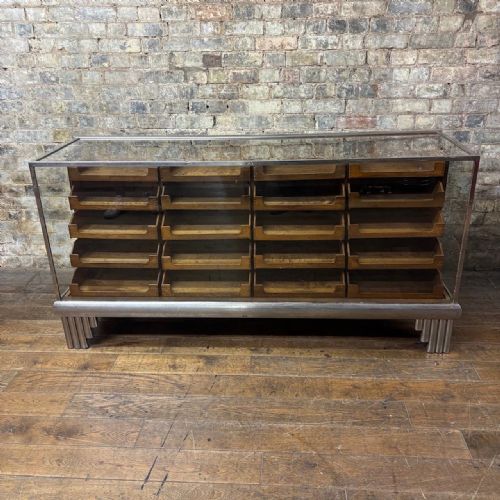
- A long shop counter incorporating multiple drawers and glazed compartments designed for sorting and displaying textiles or small merchandise. They provide practical storage alongside surface display space.
- Bow end
- A curved glass end profile found on specific display counters and cabinets. This shaping softens the rectilinear geometry of standard shop fittings.
- Countertop cabinet
- A smaller display case designed to sit upon existing shop furniture to capture customer attention at eye level. These units frequently feature rear sliding doors.
Vintage Retail Glass Showcase: Frequently Asked Questions
How do I clean the glass safely?
Use a gentle glass cleaner applied to a cloth rather than directly onto the surface to protect surrounding historic wood or metal frames.
Avoid harsh chemical ammonia sprays that might degrade aged mirror silvering or historic painted advertising script.
Can I adjust the internal shelves?
Many period cabinets incorporate adjustable glass shelving resting on original brass supports, allowing you to customise interior heights.
Heavier fixed-shelf configurations require you to arrange objects according to pre-set vertical clearances.
Where should I place a countertop cabinet?
Countertop units look striking positioned on sideboards, larger desks, or dedicated low tables where their glazed panels catch ambient light.
Ensure the supporting surface comfortably bears the weight of the dense hardwood and glass structure.
How do I identify an Edwardian showcase?
Edwardian examples typically feature warm mahogany or oak timber frames combined with clear bevelled or sheet glass and simple classical mouldings.
Maker plates and trade labels from this era often point to specialised London shopfitters active around the turn of the twentieth century.