


Vintage Recording Barometer
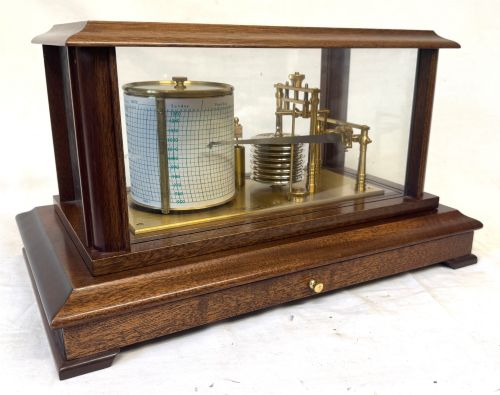
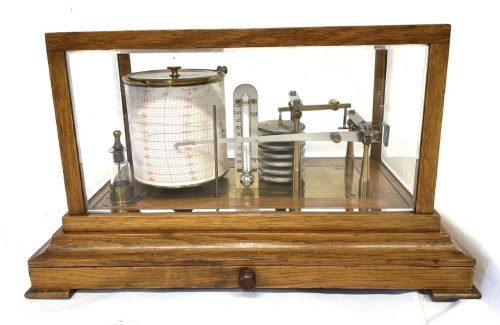
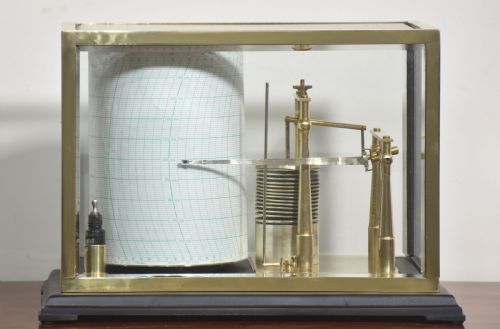
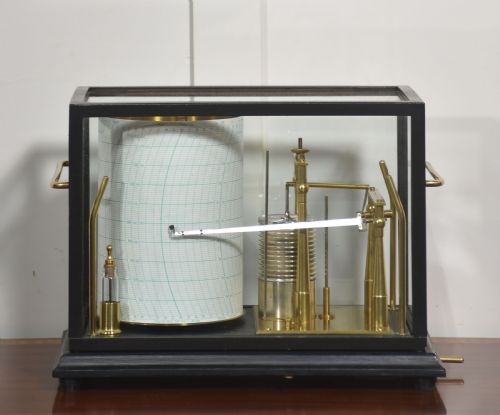
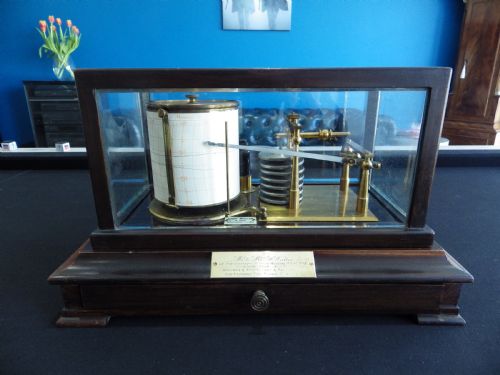
A vintage recording barometer charts atmospheric pressure over time inside a glazed timber case, offering mechanical accuracy alongside period presence.
Vintage Recording Barometer
A vintage recording barometer, commonly known as a barograph, plots continuous weather changes on a revolving paper chart rather than simply showing the current pressure. These instruments combine scientific utility with fine cabinetmaking, serving as decorative and functional objects in a room.
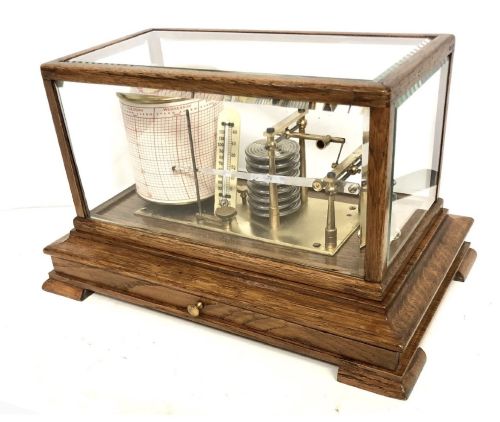
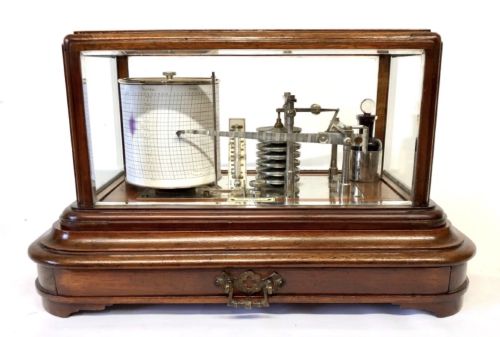
The versions met most frequently on this page sit inside five-glass wooden enclosures, allowing a clear view of the brass mechanism, the stacked aneroid diaphragms, and the pen arm at work. Many examples also include a thermometer mounted on the top plate and a fitted drawer beneath to store spare recording charts.
Examples span the Victorian, Edwardian, and interwar periods, with production stretching into the mid-twentieth century. Makers housed these mechanisms in polished mahogany or oak cases, whilst occasional pieces utilise walnut or feature specific retail signatures.
Materials and construction methods
Cases rely on seasoned hardwoods such as mahogany and oak, joined securely to house the heavy metal components and glass panels. Bevelled glass sits within frames to enclose the delicate barometer mechanism while maintaining all-round visibility.
Internal parts depend on brass for the levers, gears, and frames, working alongside steel springs and vacuum chambers that expand or contract with air pressure. Paper charts printed with weekly or daily grids receive ink from a small nib mounted to the recording arm.
Some vintage barographs recorded sudden drops in pressure caused by passing railway trains or historical local events.
Assessing quality in recording barometers
Quality reveals itself in the calibre of the movement and the reputation of the maker supplying or signing the dial. Instruments produced by established scientific firms demonstrate superior mechanical finish and more responsive aneroid stacks compared to unsigned workshop variants.
Cabinetwork further distinguishes the range, where thick timber, tightly fitted dovetails, bevelled glass panes, and integrated chart drawers mark out superior execution. The presence of original paperwork or intact recording mechanisms adds tangible integrity to the piece.
Short and Mason·Negretti and Zambra·Casella London·Richard Freres·R Fuess
The Vintage Recording Barometer Glossary
- Barograph
- An automated recording barometer that traces atmospheric pressure onto a rotating paper drum over a set period. This instrument provides an unbroken graphical history of weather patterns.
- Aneroid
- Operating without liquid, this mechanism uses flexible metal vacuum chambers that respond to changes in air pressure. The movement expands or contracts to shift the recording arm across the paper.
- Chart drawer
- A shallow compartment built into the base of the wooden housing beneath the main glass chamber. This space holds spare weekly recording papers and spare ink bottles.
- Bevelled glass
- Glass panes with angled edges fitted into the corners and top of the wooden case. This technique adds depth and light reflection to the viewing windows.
- Thermometer
- A temperature-measuring scale mounted alongside the barometer mechanism on the brass bedplate. It provides a secondary meteorological reading inside the same case.
Vintage Recording Barometer: Frequently Asked Questions
How does a vintage recording barometer work?
A stack of sealed metal chambers expands and contracts as atmospheric pressure rises and falls. A system of brass levers magnifies this movement, guiding an inked arm across a paper chart wrapped around a clockwork drum.
Clockwork mechanisms inside the rotating drum slowly turn the cylinder over the course of a week. This continuous rotation creates an unbroken ink trace that maps out the weather trends.
Where should I place a barograph at home?
Position the instrument on a sturdy piece of furniture away from direct sunlight, heating vents, and exterior doors. Rapid temperature shifts or vibrations can interfere with the mechanical balance and alter the pressure readings.
Because these devices operate best in stable environments, a quiet hallway or a living room table works well. Keep the case away from high moisture areas to protect the wooden finish and internal brass work.
How do I change the recording paper?
Lift the glass cover and gently release the pen arm from the paper surface using the small lever. Lift the rotating drum off its central spindle to slide away the used chart.
Wrap a fresh weekly paper tightly around the cylinder, secure the edge, and return the drum to its mount. Lower the pen back onto the paper and ensure the ink flows freely along the printed grid lines.
How do I identify the date of a barograph?
Examine the style of the wooden case, the typography printed on the paper charts, and any maker signatures engraved on the brass bedplate. Edwardian and Victorian models often display heavier timber mouldings and distinct maker plaques.
Makers frequently registered their designs or included patent dates within the metal casting or paper instructions. Comparing these details against known working periods of the firm helps narrow down the decade of manufacture.